For me it was my grandfather’s watch. It lay in a drawer, the leather stiff, the crystal marred by a scratch no one could date, the back engraved with words I had to decipher. I pulled the crown, turned it a few times, and it ran. After decades in a drawer, it ran. Try that with a phone from two years ago.
Quick Facts
- The thesis: one proper watch beats ten. Not because ten is too many, but because none of them know you. Value is made by wearing, not by swapping.
- The mechanical argument is honest: a fine movement can be serviced and repaired for generations. A quartz module is electronics: at some point the part is gone and the watch is scrap.
- The classic code has stayed stable for decades: one slim dress watch for shirts, one steel sports watch for everything else. Most lives rarely need more than these two.
- The smartwatch has its place; it does things no mechanical watch can. But it’s a device with an expiry date, not an heirloom. Both can be true.
That’s the whole idea. A proper watch isn’t an accessory you rotate with the season. It’s the one thing that outlasts the season – and you in the end. That’s why one beats ten.
This isn’t a crusade against the joy of beauty. If you collect, collect on; it’s its own legitimate pleasure. Yet between owning many and wearing one lies a difference, and in that difference lives this story.
Why Ten Are Less Than One
Ten watches in a winder are ten things waiting on you. One watch on your wrist is one thing that goes with you. The difference sounds like wordplay, yet it’s the core: an object isn’t yours because you buy it, but because you use it until it carries your marks.
The collection scatters your attention. Today this one, tomorrow that one. Each stays foreign because none lingers long enough to become familiar. The single watch, however, learns you. It gathers the fine scratches from the door frame you always misjudge, the bleached patch on the strap from your summer. It becomes a map of your days. A new watch every few months wipes that map clean each time.
Add a simple truth about style: the person who wears a watch makes a choice. The person who owns ten postpones that choice daily. Posture means deciding and then staying long enough for a patina to form.
An object isn’t yours because you buy it. It’s yours because you wear it until it bears your marks.– The whole economy of the one watch
Mechanical Arguments, Honestly Made
People often talk nonsense here, so let’s keep it clean. A mechanical watch is not a better timekeeper than a quartz watch-in fact, it’s the opposite. Quartz keeps time more accurately, often within seconds per month, while a fine automatic deviates by a few seconds per day. If your only concern is knowing the time, quartz wins, and the phone in your pocket wins anyway.
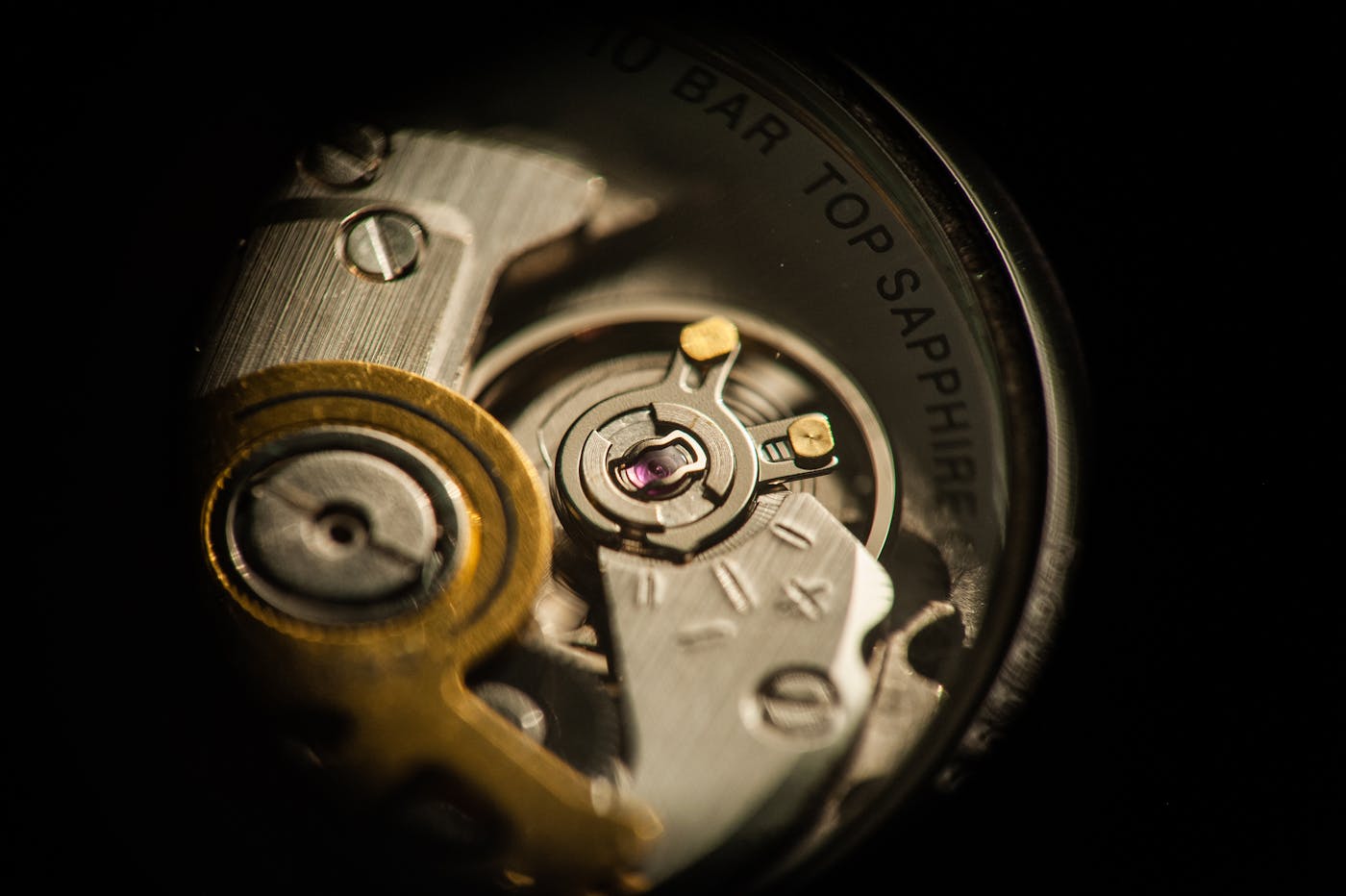
The case for mechanical timepieces is different. A mechanical movement consists of parts a watchmaker can disassemble, clean, oil, and reassemble. With service at reasonable intervals, it can run for decades, even generations. It’s a mechanism, not a device. Wear parts can be fabricated. There’s no firmware to expire, no circuit board a manufacturer may stop producing one day.
A quartz watch, by contrast, is fundamentally electronic. As long as the module remains available as a spare, it can be revived; once it’s no longer supplied, the watch becomes a pretty case with a dead interior. That’s no criticism: quartz is precise, affordable, and low-maintenance, and for many purposes it’s exactly right. But the object you’ll still be able to keep running in forty years is almost certainly the mechanical one.
That’s the point where a consumer good becomes an heirloom. A watch you can maintain is a watch you can pass on. And a watch you can pass on is no longer just an object. It becomes a vessel. It carries an engraving, a date, a story that lives on with the movement.
Patek Philippe turned this very idea into perhaps the smartest advertising slogan the industry has ever produced. I’ve thought of it often since my grandfather’s watch now rests on my wrist.
A Patek Philippe is never fully yours. You enjoy it for a lifetime, but in truth you’re already preserving it for the next generation.– Patek Philippe, “Generations” campaign, since 1996
That’s advertising, to be sure. It’s also simply true.
The Two Watches That Carry a Life
If you must choose just one, classic horology already has the answer – and it’s remained stable for decades. There are two archetypes that never go out of style because they never depended on fashion. They were right from the start and have stayed right.
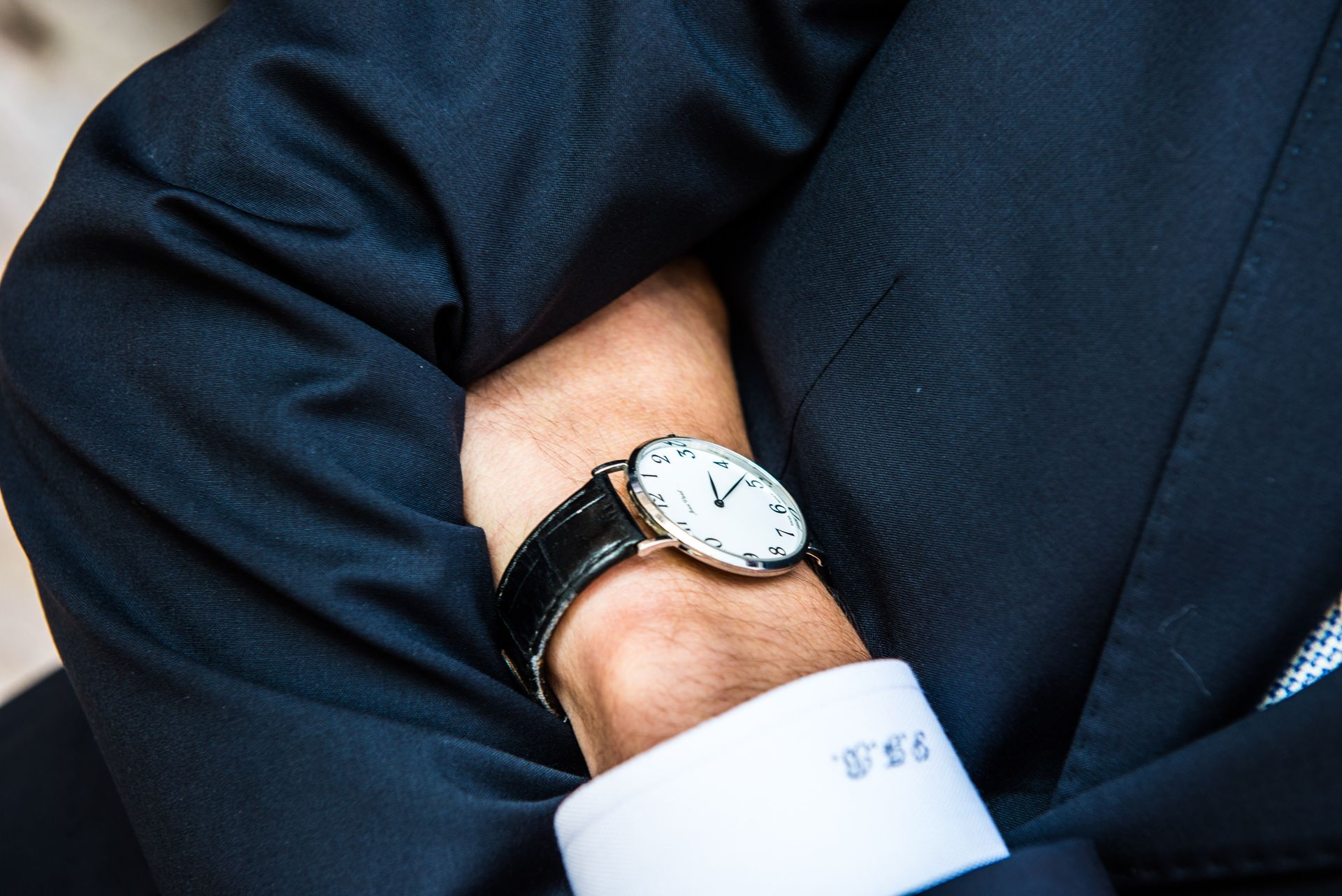
The first is the dress watch: slim, understated, a clean dial without fuss, on a leather strap. It slips beneath a cuff and only emerges when you lift your hand. It says nothing, and that silence is its language. A flat, quiet watch is the one that fits a suit as well as a funeral or a wedding, for forty years, never once looking out of place.
The second is the steel sports watch: a rugged case, a metal bracelet, water-resistant, legible in the dark. It’s the watch for everything else: the open-collar office, the weekend, travel, and water-environments no dress watch would ever acknowledge. The iconic divers and tool watches from the great houses have barely changed since the 1950s and ’60s because in a good design there’s nothing to improve except to leave it alone.
Between these two lies almost everything a lifetime needs. And yes, names may be mentioned here. At the summit of the craft have always stood the holy trinity of watchmaking: Patek Philippe, Audemars Piguet, and Vacheron Constantin-with the latter the oldest continuously operating manufactory in the world, founded in 1755. Their movements set the standard against which everything else is measured, and for most of us they remain a longing rather than a drawer. That’s fine, because the lesson holds at every price tier: buy the type, not the hype. An honest three-hand watch from a serious house outperforms any limited special edition you’ll cringe at in five years.
The Code of Life
A dress watch with a slim profileminimalist dial, leather strap, disappears beneath the cuff. For occasions that demand dignity.
A steel sports watchrugged case, metal bracelet, water-resistant. For the rest of your life.
Mechanical, if it’s meant to lastserviceable, repairable, heirloom-worthy; a mechanism instead of a device with an expiration date.
Substance over hypean honest three-hand watch outlasts any limited-edition whim.
What the Smartwatch Can Do – and What It Can’t
To be fair: the smartwatch is a fine piece of technology, and it does things no mechanical watch will ever do. It measures your pulse, wakes you smarter, displays messages without you reaching for your phone, and in an emergency it has already saved lives by detecting a fall or a stumbling heart. If you need that, wear it. No one should apologize for a function that helps.
But be honest about what it is: a device. A computer on your wrist, with a battery that ages, an operating system that eventually stops receiving updates, and a new model unveiled on stage every autumn. A smartwatch isn’t built to outlive you; it’s built to be replaced. That isn’t a flaw-it’s its nature.
No one will open a drawer in thirty years and find their father’s smartwatch inside, wind the crown, and watch it spring to life. It will long since lie on a scrap heap, the account deleted, the warranty expired. The two worlds don’t even compete. Wear the device if you need the device. But the one thing you keep and pass on is something else entirely.
The smartwatch isn’t built to outlive you; it’s built to be replaced. That isn’t a flaw-it’s its nature.– On the difference between device and heirloom
The value isn’t in the price tag
There’s a convenient lie about expensive watches: that they’re status symbols, a price tag on your wrist. It’s the dullest possible reading, and it misses the point entirely. The value a watch brings to life isn’t what it costs, but three things that only brush against money at the edges.
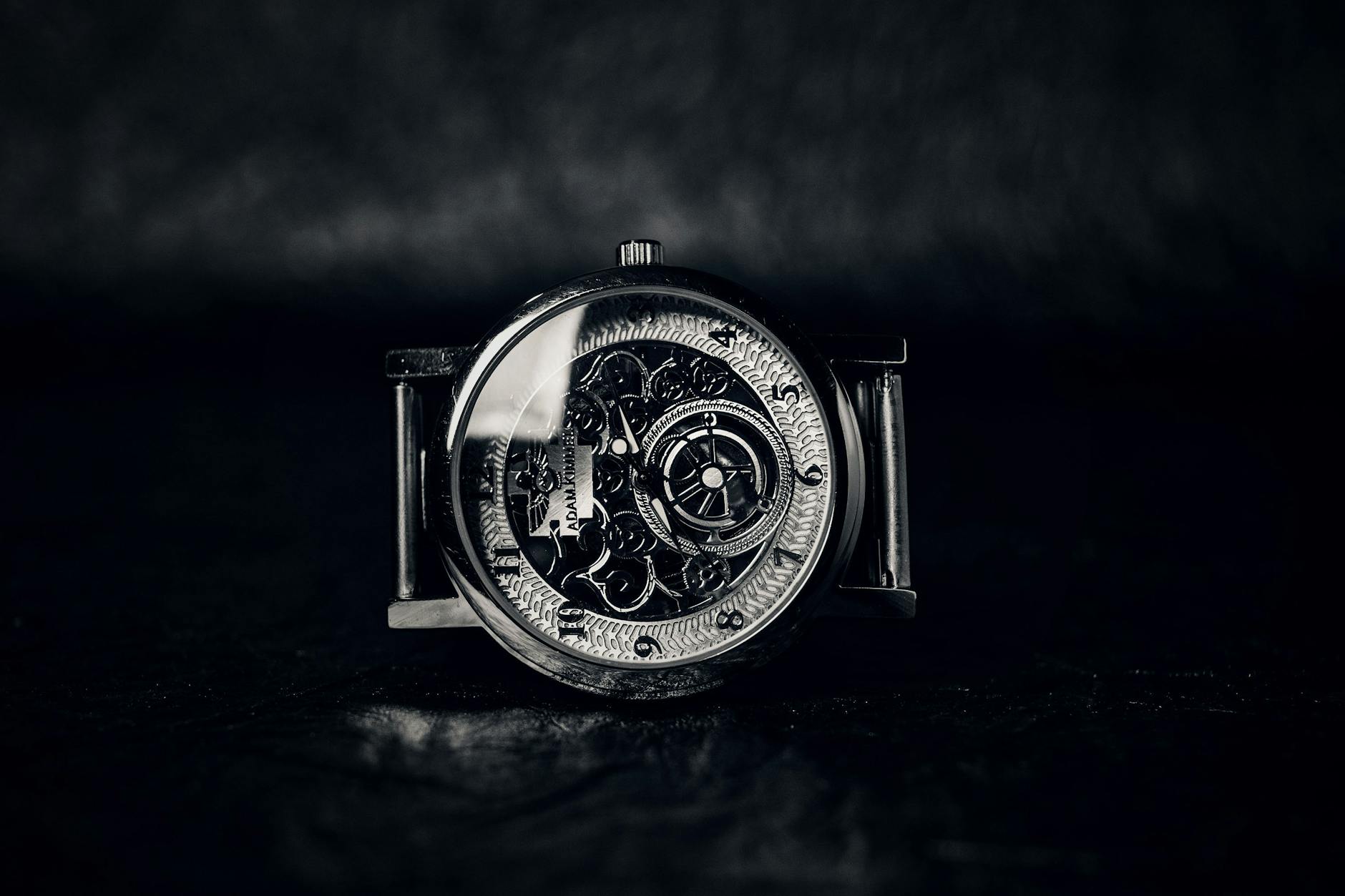
The first is craftsmanship. In a fine movement, dozens of parts mesh in the tightest space, adjusted by hand, often refined by hand: bridges chamfered where no eye will ever see, screws blued even though they’d do their job unblued. That’s the definition of luxury that has nothing to do with volume: care where it’s never demanded.
The second is serviceability. A watch you can strip down and bring back to life carries a value no disposable electronics can match: a view of the future. It isn’t finished when the battery dies. It’s never finished as long as there’s a watchmaker.
The third is memory, and it’s the greatest. A worn watch is a chronicle. It was there on the wedding day, the first paycheck, the funeral. It bears the scratch from the trip you never want to erase because the scratch is the trip itself. None of this can be bought, and none of it appears in a revolving collection. It grows only from loyalty to a single thing.
1
A worn watch collects a story. Ten rotating ones stay strangers.
Generations
That’s how long a mechanical movement stays serviceable and repairable, across more than one lifetime.
0
A mechanical watch needs no updates. It runs as long as someone winds it.
Buying a watch for life isn’t therefore an investment in the sense of return. Some models hold value, some rise, most do neither, and nobody should carry a hunk of steel like a savings account. The real return is different: a thing you don’t have to replace. In a world that tries to sell you a new model every year, that’s almost stubborn.
You open the drawer. The watch sits there, thirty years old, with a scratch whose date no one can place. You pull the crown, turn it a few times, and it runs. It’s been waiting for you, just as it waited for the person before you. This isn’t an accessory. It’s a line in a story you keep writing and passing on. One is enough. But it has to be the right one.
Details
Does that mean quartz and smartwatches are bad?
No. Quartz is more accurate than any automatic and requires little maintenance; the smartwatch can do things no mechanical watch can, from pulse measurement to fall detection. It’s not about better or worse, but purpose: one is an everyday tool, the other is the thing you keep and pass on.
Which watch if only one is allowed?
A slim, plain steel sports watch on a metal bracelet. It covers the widest range, from office to weekend, travel to water, and with the right proportions never looks out of place even with a suit. If you mostly dress formally, choose the slim dress watch instead.
How often should a mechanical watch be serviced?
At sensible intervals: manufacturers recommend every few years depending on the model. That’s the point: service is possible. The movement is dismantled, cleaned, oiled and regulated, then runs again for years. Dead electronics have no such path.
Is a watch for life an investment?
Better not to think of it that way. Some models hold or increase in value, many do not, and the market fluctuates. The real return is something you never have to replace and a story that grows with you. Buy for joy and loyalty, not speculation.
❖
Source cover image: Pexels / mauro manigrasso · Movement shot: Pexels / Gunnar Hoffmann
Jakob Bach writes for InspiredByLuxury about what’s worth it and what endures. This column is a personal stance, not a verdict on technology. The magazine wears both on its wrist, depending on the day.
//Style
More from //Style
What remains when the trend fades. Material, craftsmanship and the value of true quality. Stay in //STYLE.
Visit Section →

 //STYLE