Route note · Slow travel across the Alps
The Via Claudia Augusta: Rome’s Slowest Alpine Road
A road Rome built for wagons over the Alps is now fascinating precisely because it forces you to dawdle instead of speeding through.

 Via Claudia Augusta
A road Rome built for wagons over the Alps is now fascinating precisely because it forces you to dawdle instead of speeding through.
Some roads exist to get you somewhere. Others exist for the sheer joy of the journey. The Via Claudia Augusta belongs to the second category – and that’s the delicious irony: it was built for precisely the opposite purpose.
Rome didn’t design it for dawdlers; it designed it for cargo. This was the first continuous route on which you could haul wagons over the Alps, from northern Italy up into southern Germany. The empire began paving it in Raetia as part of the Augustan Alpine campaigns launched in 15 BCE, and it took its name from Emperor Claudius, under whose rule the crossing became wagon-friendly. What started as a military and trade artery-a route meant to move goods, troops and administration across the mountains as quickly as possible-is now compelling for exactly the reverse reason. It forces you to slow down. And in that slowness lies its entire allure.
It’s easy to underestimate what an Alpine road meant in antiquity. A path for people and mules is one thing; a drivable route for heavily laden wagons is quite another. It needs width, gradients gentle enough for a team to manage, surfacing that doesn’t collapse in the first downpour, and crossings over streams and gorges. When you lay that kind of thoroughfare over an Alpine crest, you’re not building a little lane-you’re erecting infrastructure on a scale meant to last centuries. The Romans thought in generations, not days. A road wasn’t a structure you used up; it was one you passed down.
That changes how we see the roads we drive today. Most modern routes are compromises dictated by money: as cheap as possible, finished as fast as possible, renewed as soon as possible. A Roman trunk road was the opposite-it was a wager on permanence. When a stretch of alignment still describes the most plausible line through a valley two millennia later, it isn’t happenstance; it’s because someone laid it out so that later centuries could scarcely improve on it. Medieval pack-animal drivers, early-modern teamsters, modern highway engineers-wherever they could, they stuck to the same guiding idea.
That’s exactly why the route still follows a logic that becomes obvious the moment you read the alignment on a map. It doesn’t chase the shortest line; it hunts the drivable one. In today’s Bavaria it hugs the Lech, passes through Augusta Vindelicorum-modern Augsburg-then continues to Füssen. From there it climbs via the Fern Pass and the Lower Engadin, crosses the Reschen Pass, and descends again through the Vinschgau along the Adige toward Bolzano and Trento. It’s a line that respects the terrain instead of ignoring it. Whoever follows it never fights the landscape; they travel with it.
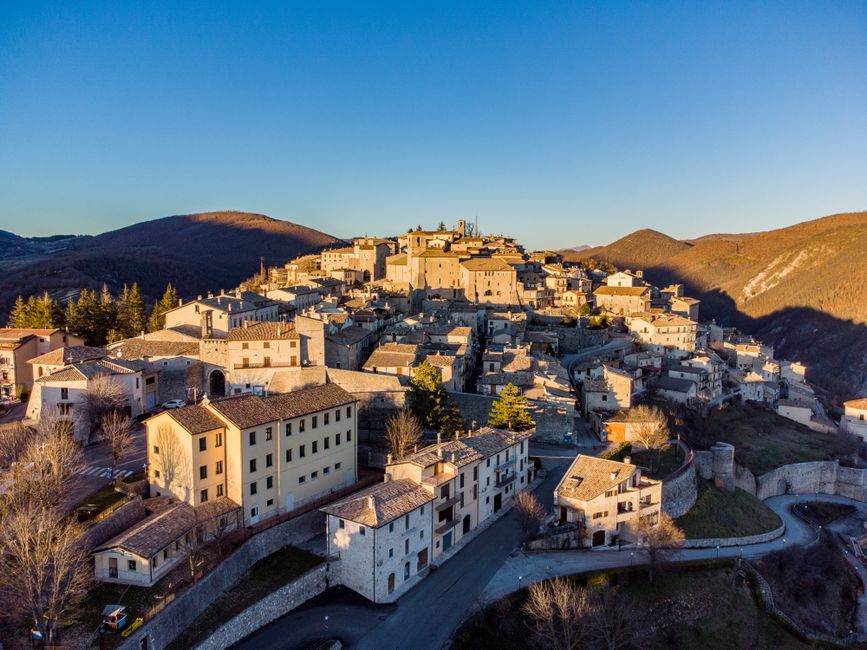
Those names aren’t a vocabulary list; they’re a fast-forward through climate change. At the Lech the route begins in the broad, cool pre-Alpine light, with gravel bars, riparian woodland, and the pale green ribbon of the riverbed. Over the passes everything turns stark: rock, short grass, wind that even in summer demands a jacket. And in the Vinschgau, once the Adige takes charge, the scene turns Mediterranean-orchard terraces, dry-stone walls, a sun that feels different on your skin than it does two hundred kilometres further north. You don’t merely cross space on this line; you traverse three climate belts packed closer together than they ought to be.

This choice of alignment isn’t a footnote for historians; it’s the reason the Via Claudia Augusta works as a travel route today. A Roman freight road had to climb gently enough for an ox team to manage. What held true for those animals then holds true for bicycles and human legs now. The gradients are human-scale. The route demands stamina, but not despair.
A road by itself does not make a journey. What turns the Via Claudia Augusta into an experience are the places where it intersects with something else. The finest proof of this lies on the Lechrain: Abodiacum, today’s Epfach. Here the Via Claudia Augusta crossed the great west-east trunk route from Salzburg to Bregenz, one of the region’s key cross-connections. Where two such axes meet, more than a milestone is born. A place arises where goods were trans-shipped, horses changed, and stories exchanged.
Such nodes are the real gold of the route. You do not drive from one sight to the next; you drive through a stratification. Beneath the asphalt and cycle path lies an order two thousand years old, and in places it peeks through: a crossroads, a river crossing, a name that sounds Roman because it is Roman. This is the kind of history you do not consume in a museum but feel as you pass by.
And it is a history without staging. At a hub like Abodiacum no triumphal arch stands today to explain the significance. It is landscape, a site, a quiet intimation that once more was happening here than meets the eye today. Those who do not know drive past. Those who do pause briefly and suddenly see the valley differently: not as scenery but as an old switchyard. This dual readability is the charm. The route gives only to those prepared to listen.
Speed as a Misjudgement
A road built for heavy wagons cannot be outsmarted. It dictates the tempo it has always had.
It is worth being honest at this point. Anyone who expects the Via Claudia Augusta to be a sealed, perfectly paved premium cycle trail will encounter stages that are rougher, sections over gravel, stretches that run closer to the modern federal highway than feels comfortable. That is no flaw; that is character. A historic trunk route is not a curated experience; it is a grown corridor. That is precisely what sets it apart from an invented theme route.
In the south the story grows even richer. In Trento the route splits into two strands. One heads west toward the Po Plain, the other east to the Adriatic at Altinum, into the lagoon landscape north of what would later become Venice. This was no whim of antiquity but logic: an imperial road needed links to the great waterways and ports through which the real volume moved. The Alps were the bottleneck; the plain was the destination.
For a modern journey this means: the Via Claudia Augusta has no single, photogenic end where you snap a sign and call it done. It offers a choice. You can think of the line heading north, from the Italian plain up over the passes to Augsburg, or conversely from Bavaria down into the south, with the gradient and the warmer light. Both directions tell the same stretch of road, yet they feel different. Uphill it is a promise; downhill it is a reward.
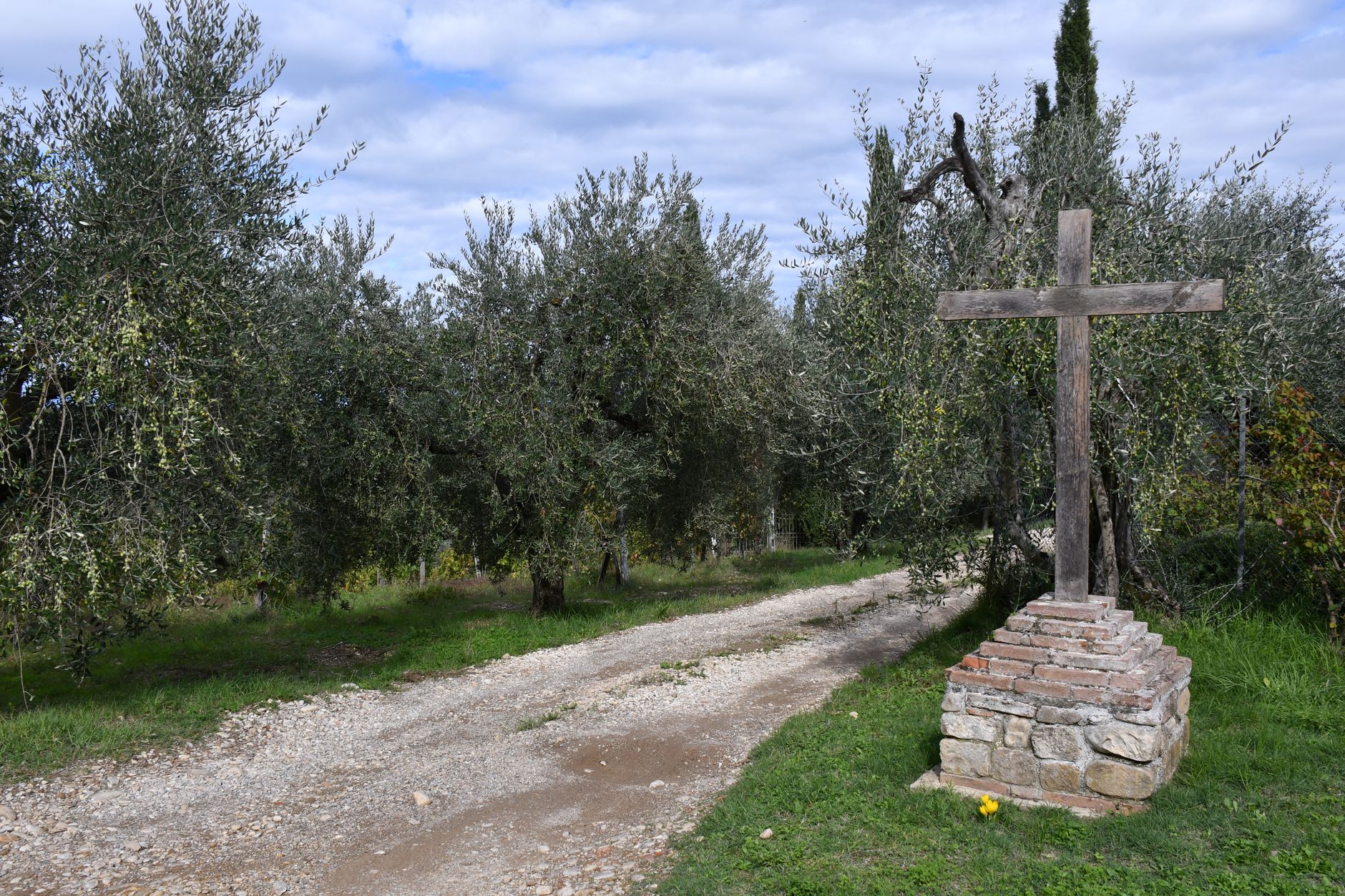
What distinguishes this route from many modern long-distance paths is its unassuming nature. It does not stage itself. There is no brand presence, no slogan telling you what to feel. There is landscape, an old line within it, and enough quiet to interpret both for yourself. That is a rare quality these days. Most trails want to sell you an experience. This one simply wants you to ride.
Studying the route map quickly reveals that the Via Claudia Augusta is no weekend snack. It’s long, it’s mountainous, and it demands a decision many modern travellers have forgotten how to make: committing to one thing and giving it time. You don’t ride it on the side. You ride it as a project.
That has consequences for planning. Starting from the south, you begin warm and finish cool, with the big climb in the first third and a gentler ride home through the foothills. Coming from the north, you rack up kilometres in flatter Bavaria before the passes get serious, and you’re rewarded in the south with light and warmth. Neither direction is right or wrong-it’s a question of temperament whether you want the tough stage first or last.
What you need to bring isn’t so much gear as the willingness to match the pace. This route punishes impatience. At the passes, no amount of pushing helps-only pedalling. The pretty stretches along the rivers lose their meaning if you treat them as transfer corridors. And the historic junctions reveal themselves only to those ready to dismount. It’s a route that educates you, willing or not, and perhaps that’s its greatest gift: it removes the option of riding it wrong by making speed simply unattractive.
“Slow travel” is a term that quickly rings hollow because every tourism brochure uses it. On the Via Claudia Augusta it actually has a hard foundation. This route wasn’t built for speed but for endurance. It was meant as a connection that lasts, not a stretch to be rushed through. Whoever rides it today inherits that quality, whether they like it or not. You can’t really hurry here without losing the point.
And so the original purpose flips. What Rome built as the most efficient solution is today the decelerated one. The passes that were once obstacles are now the highlights. The river courses the road follows because the terrain demanded it are the most beautiful sections. The junctions where trade once flowed are the places where you now pause. The logic of antiquity and the longing of the present align remarkably along this track.
Maybe that’s the real punchline. A good travel route doesn’t need inventing. Sometimes it’s already there, two thousand years old, waiting only for someone slow enough to read it. The Via Claudia Augusta isn’t a secret tip or a luxury product. It’s something rarer: a route with provenance that works best when you’re trying to prove nothing.
From northern Italy across the Alps into southern Germany. In the south it splits at Trento into one branch toward the Po Plain and another to the Adriatic at Altinum. Via the Reschen and Fern passes it crosses the Vinschgau, follows the Adige to Bolzano and Trento, and in the north passes Füssen and Augsburg, running along the Lech.
Construction in Raetia began during the Augustan Alpine campaigns from 15 BCE. It bears the name of Emperor Claudius, under whom continuous Alpine crossing by wagons became possible.
Abodiacum, today’s Epfach on the Lech, was a major crossroads. Here the Via Claudia Augusta met the great west-east trunk route from Salzburg to Bregenz.
Yes-today it’s used as a slow long-distance trail. Because the ancient route had to climb gently for heavily laden wagons, the gradients are manageable. The character varies, though: well-built sections alternate with rougher stretches and gravel.