Restomod, Peak Analogue
The V8 That Roars and the Cockpit That Clicks
How Evoluto breathes new life into the last analogue Ferrari-without stripping away its soul.

 Evoluto
How Evoluto breathes new life into the last analogue Ferrari-without stripping away its soul.
Some cars you recognise by their sound before you even see them. The Ferrari F355 is one of them. That high-revving V8, which only reveals its true character just before 8,500 rpm, shaped an entire generation-mine included.
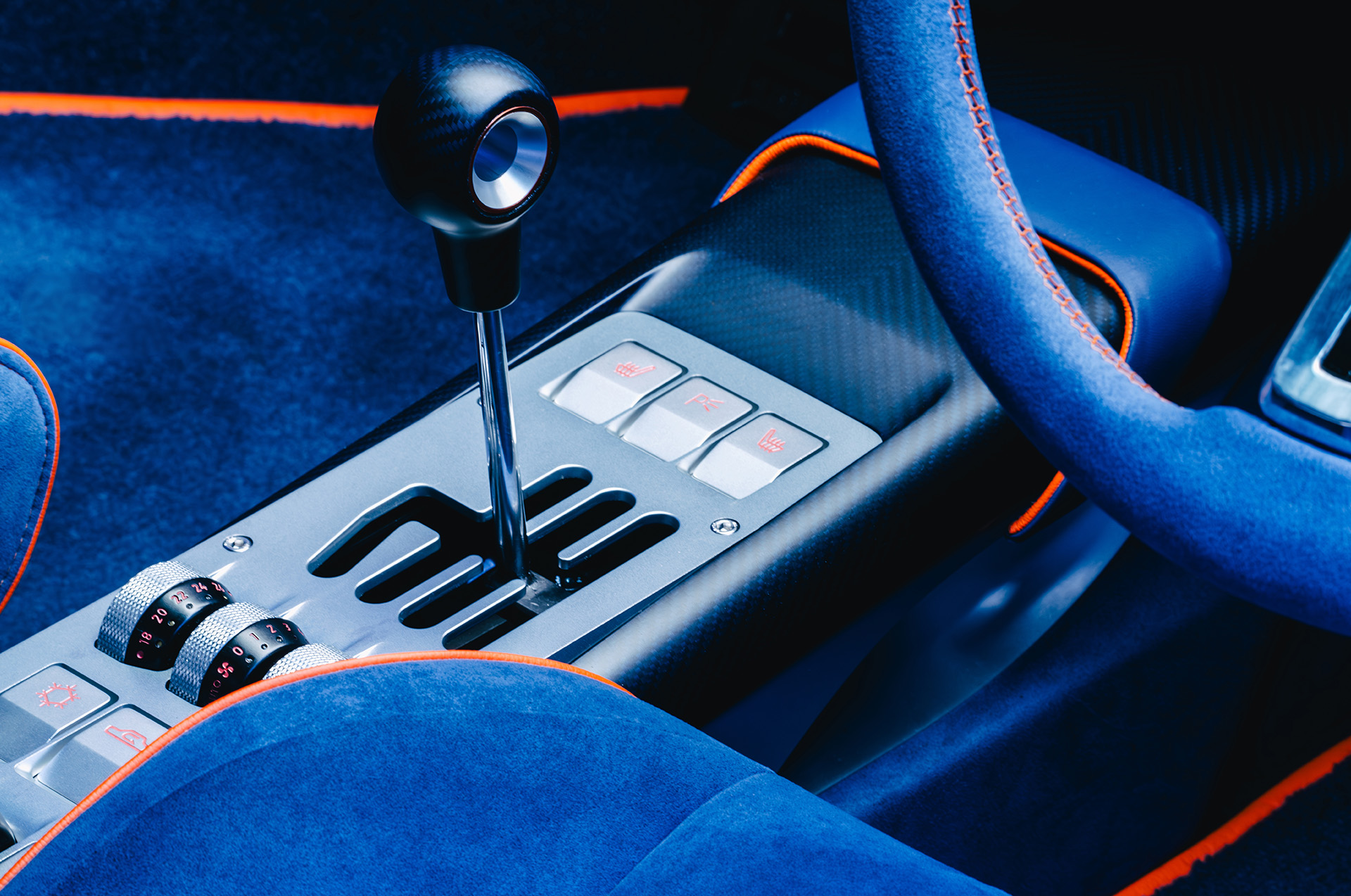
The F355 was the car that taught us what a naturally aspirated engine could do when no software held it back. Pininfarina penned its lines, and the 3.5-litre V8 once held the record for the highest specific output of any production NA engine. In 1997, it became the first Ferrari to feature paddle-shift gear changes. That marked the beginning of Ferrari’s gradual farewell to the open gated shifter-the chrome grid through which you guided the lever by hand. Anyone who’s driven an F355 with three pedals and an open gate understands why collectors now seek out that exact variant.
Now, someone has built the F355 all over again. Not in Maranello, but in a workshop in Coventry. And the deeper I get into the project, the clearer it becomes: this isn’t some overpriced tuning kit. It’s a serious answer to a question that’s nagged at me for years. What if you took the best analogue car of the nineties and ironed out its flaws – without stripping away its soul?
Behind Evoluto is DRVN Advanced Engineering, part of the DRVN Automotive Group. Before operating under its own name, the company spent nearly two decades as a behind-the-scenes supplier-working on the Jaguar F-Type and I-Pace, carbon components for high-performance projects, even the subframe of a current Ferrari hybrid. This isn’t the usual restomod origin story of a romantic garage startup. Here, people who build production parts for major brands knew exactly what a thirty-year-old Ferrari needed to do better today.
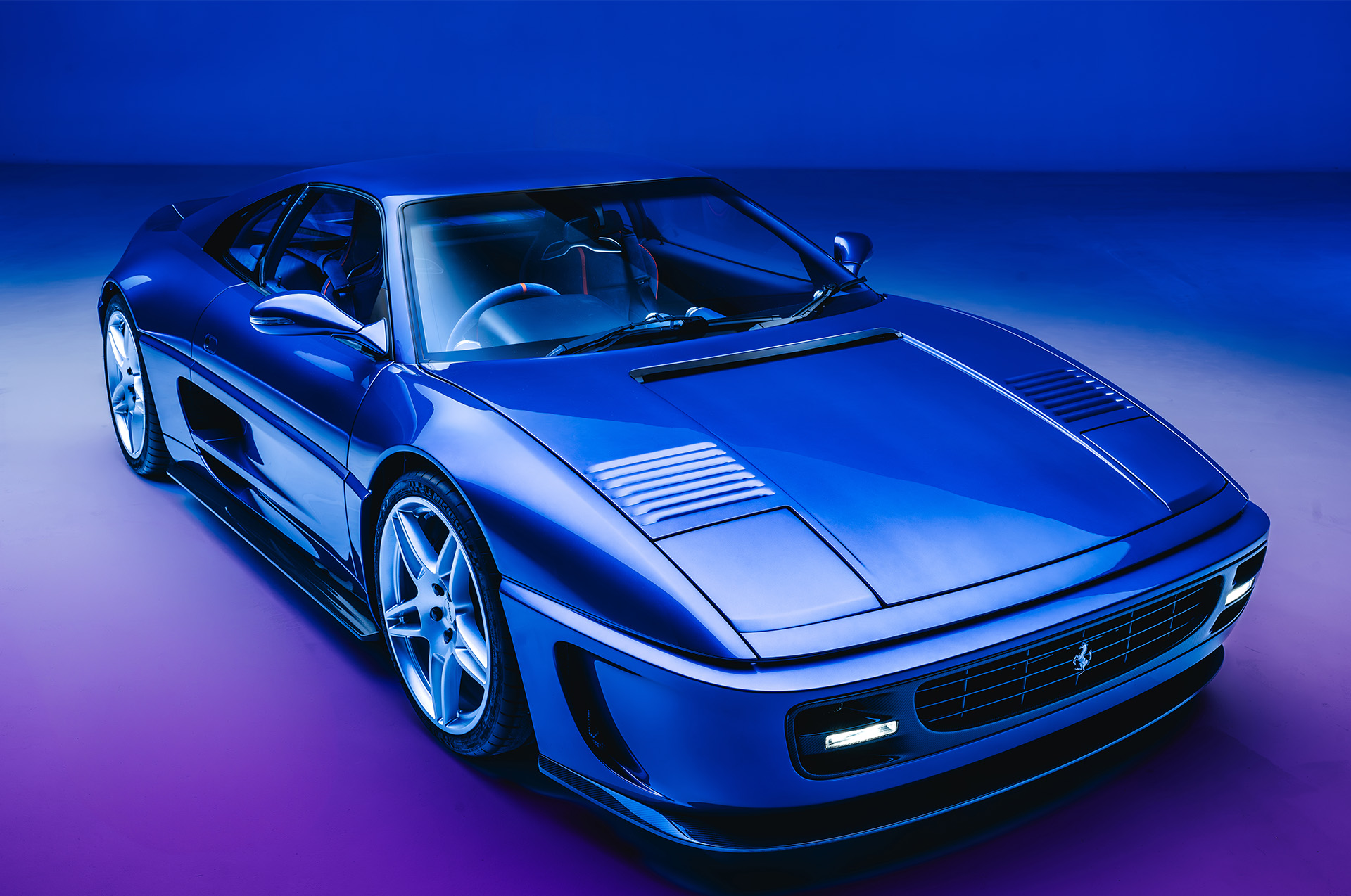
The interior is overseen by Wayne Burgess, the group’s design chief and former Jaguar designer. Ian Callum, who previously shaped Jaguar and Aston Martin, penned the bodywork. It’s entirely carbon fibre, save for the steel roof, 77 mm wider at the front and 66 mm at the rear, 25 mm lower, with torsional stiffness increased by nearly a quarter. From the donor car, only the chassis core, engine block, and refurbished original gearbox remain. Everything else-around 85 percent-is new. Guiding it all is a phrase the company repeats like a mantra, one that resonates with me more than any spec sheet.
Peak Analogue.The guiding principle behind the 355 by Evoluto
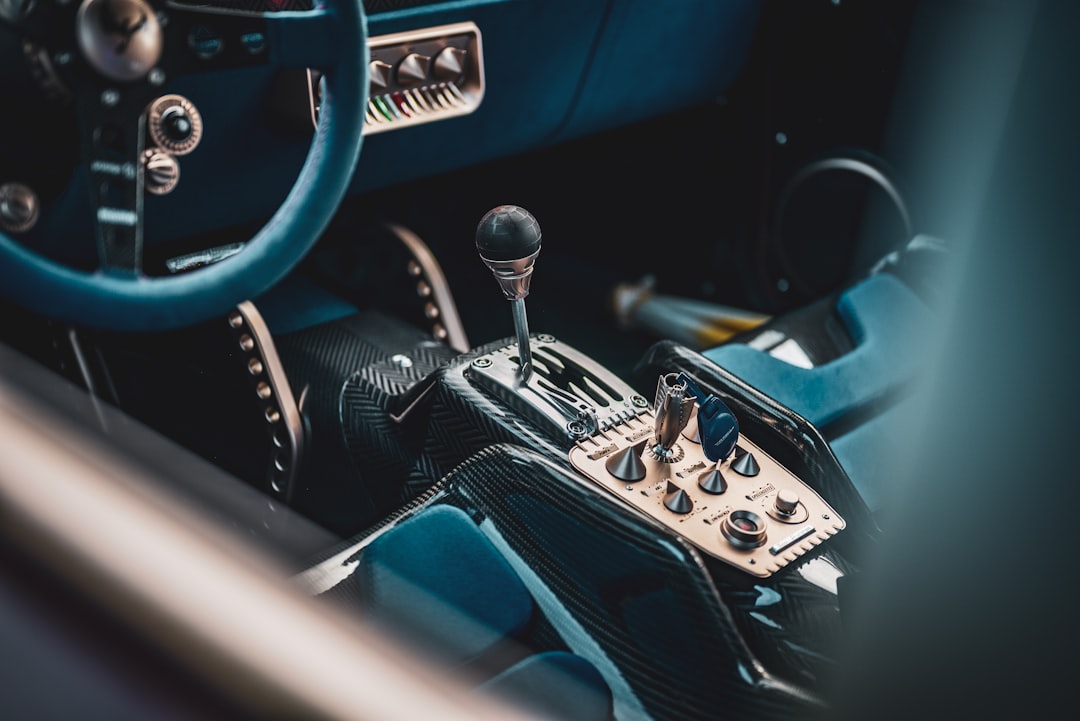
No touchscreens, no infotainment displays. Instead, carbon fibre, Alcantara, and milled aluminium where your hands meet the car. This is a philosophy, not just a feature list. And it extends to the parts no one sees: a completely new wiring harness, aircraft-style connectors, a detachable rear subframe. That lets the engine be removed in a fraction of the time it once took. Anyone who truly wants to *drive* an old car, not just own it, will appreciate those details.
The most important decision is also the quietest: Evoluto ditches the F1 automatic transmission from the donor car and reinstates the manual six-speed gearbox-refurbished, with new first and second gears and an open gate. Exactly what the F355 lost at the factory is now back. The V8 gets over two hundred new components and revs to 8,500 rpm in its base form, or even 9,000 rpm with the optional 3.7-liter package featuring titanium con rods. The chassis is new, with three-way dampers, quicker steering-just over two turns lock-to-lock-Brembo six-piston brakes, and Michelin Pilot Sport 4S tires.
What’s equally striking is what Evoluto deliberately doesn’t do. The company doesn’t quote an official 0-100 km/h time. Estimates hover around five seconds-a figure that wouldn’t turn heads in 2026. And that’s precisely the point. It’s not about the number; it’s about how that number is achieved. With 420 hp in a car weighing roughly 1,250 kilograms, the performance isn’t a spec-sheet flex-it’s a promise for the road: sustained full throttle without instantly hurtling into absurd speeds.
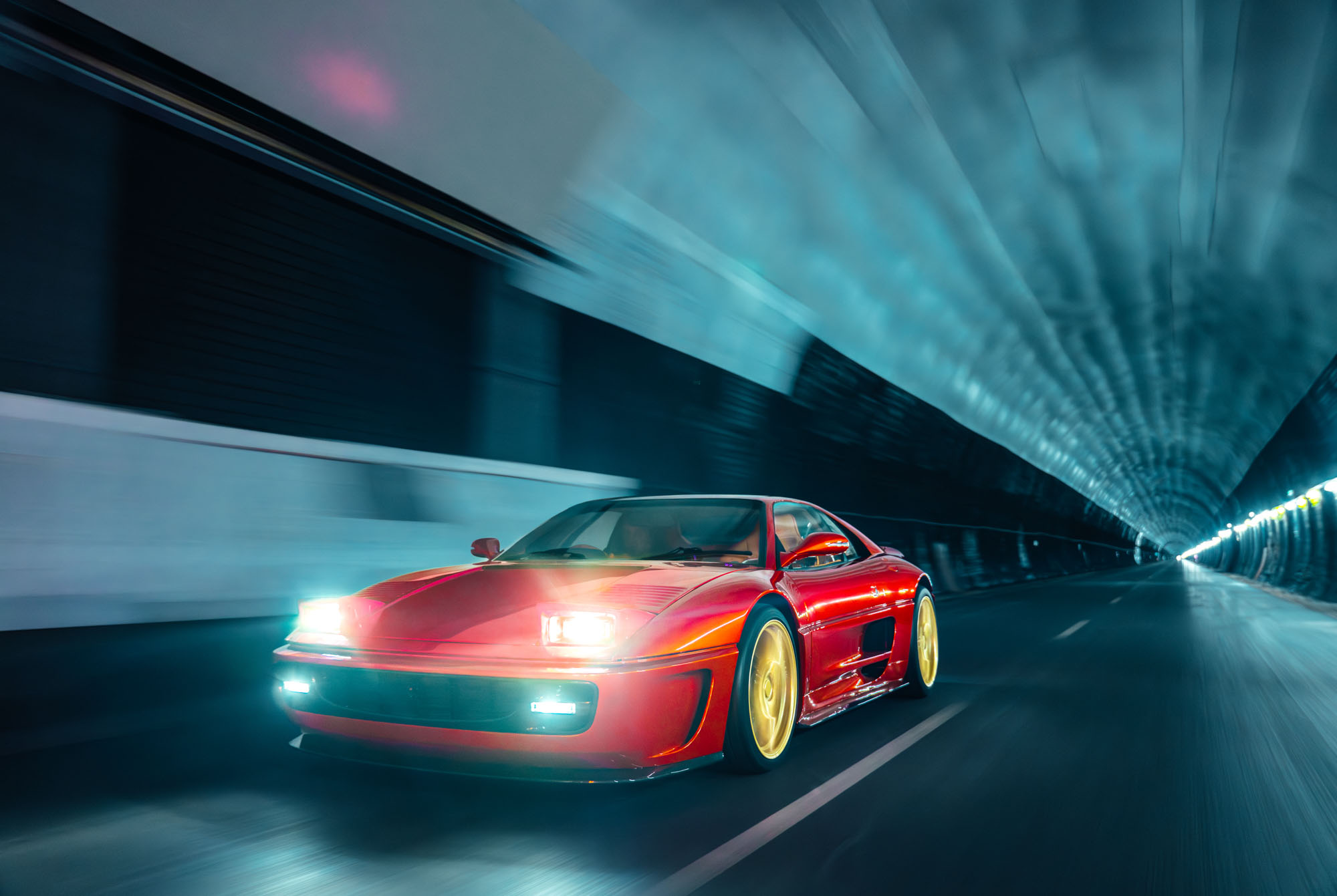
I haven’t driven the 355 by Evoluto. But those who have describe it in a way that aligns perfectly with everything I’ve read about the project. *Top Gear* calls the sound one of the rawest and best the tester has ever experienced-louder than some hypercars with four times the power. For Larry Chen, the engine screams beyond 8,000 rpm like almost nothing else. Shifting becomes easier at high revs, as if the gearbox enjoys being pushed.
What I love most about these reports is the resistance they describe. Shifting demands deliberate force-you muscle the lever into place, no casual flicking. When clutch, gear, and throttle blip align, the gate responds with a satisfying *clack*, which testers unanimously call the real experience. The steering wheel has a slim rim and plenty of depth, the steering itself remaining hydraulic and precise without feeling twitchy. And the chassis, stiff as it is, absorbs bumps smoothly-the car breathes with the road instead of fighting it. Below 4,000 rpm, there’s a brief pause, almost a slight sag, before the engine tips into the wildness the F355 was always known for.
One tester notes that the interior smells of premium leather, not yellowed ’90s plastic. It’s a small observation, but it says everything. Here, someone hasn’t just modernized the engineering-they’ve refined the impression the car makes before the engine even starts.
From a distance, the 355 by Evoluto looks like a smart bet. While the world debates electric powertrains and software, Evoluto is uncompromisingly analogue. Just 55 cars-then it’s over. No official acceleration times. That’s not modesty; it’s confidence. Anyone building something like this isn’t chasing leaderboards. They’re building it for a very specific person who knows exactly what they’ve been missing in an analogue Ferrari.
What convinces me is that the company started at the right end. Not with power, but with the open gate, the sound, the weight, the ease of service. The F355 was always a car that made a promise. Evoluto delivers on it-thirty years later, with the calm assurance of people who know what they’re doing. And in the end, there’s this one thought that the open gate triggers in me, long before I’ll ever sit in one of these 55 cars: that the solid *clack* of a metal lever reveals more about a car than any tenth of a second ever could.
A total of 55 cars are planned, available as left- or right-hand drive. The company reports that orders have already been placed, with a focus on the US market. However, Evoluto hasn’t provided a firm delivery date for the first customer car.
The build starts at £695,000, roughly €810,000. On top of that, you’ll need a donor F355-good examples typically range from €140,000 to €230,000-plus customisation. Realistically, the total bill will exceed €900,000. Evoluto doesn’t quote an official euro list price.
Around 85 percent of the car is new: carbon bodywork, a completely redesigned chassis, a V8 reworked with over 200 parts delivering around 420 hp (optionally 480 hp), and a gearbox converted back to an open-gate manual. The core chassis, engine block, and refurbished original transmission from the donor remain. The F1 automatic is deliberately excluded.
Reborn legends, restored masterpieces, and the people who bring them to life. Stay in //Drive.