The Unlikely Kinship of Albariño and Sauvignon Blanc
One hails from Sancerre, the other from Rías Baixas. Few have blended them yet. Still, you can taste why they might belong together.

 //TASTE
One hails from Sancerre, the other from Rías Baixas. Few have blended them yet. Still, you can taste why they might belong together.
Sauvignon Blanc from the Loire and Albariño from Galicia are often seen as two entirely different wines. Set them side by side, and you’ll notice: they share more than their labels reveal. Both are children of the same cool Atlantic.
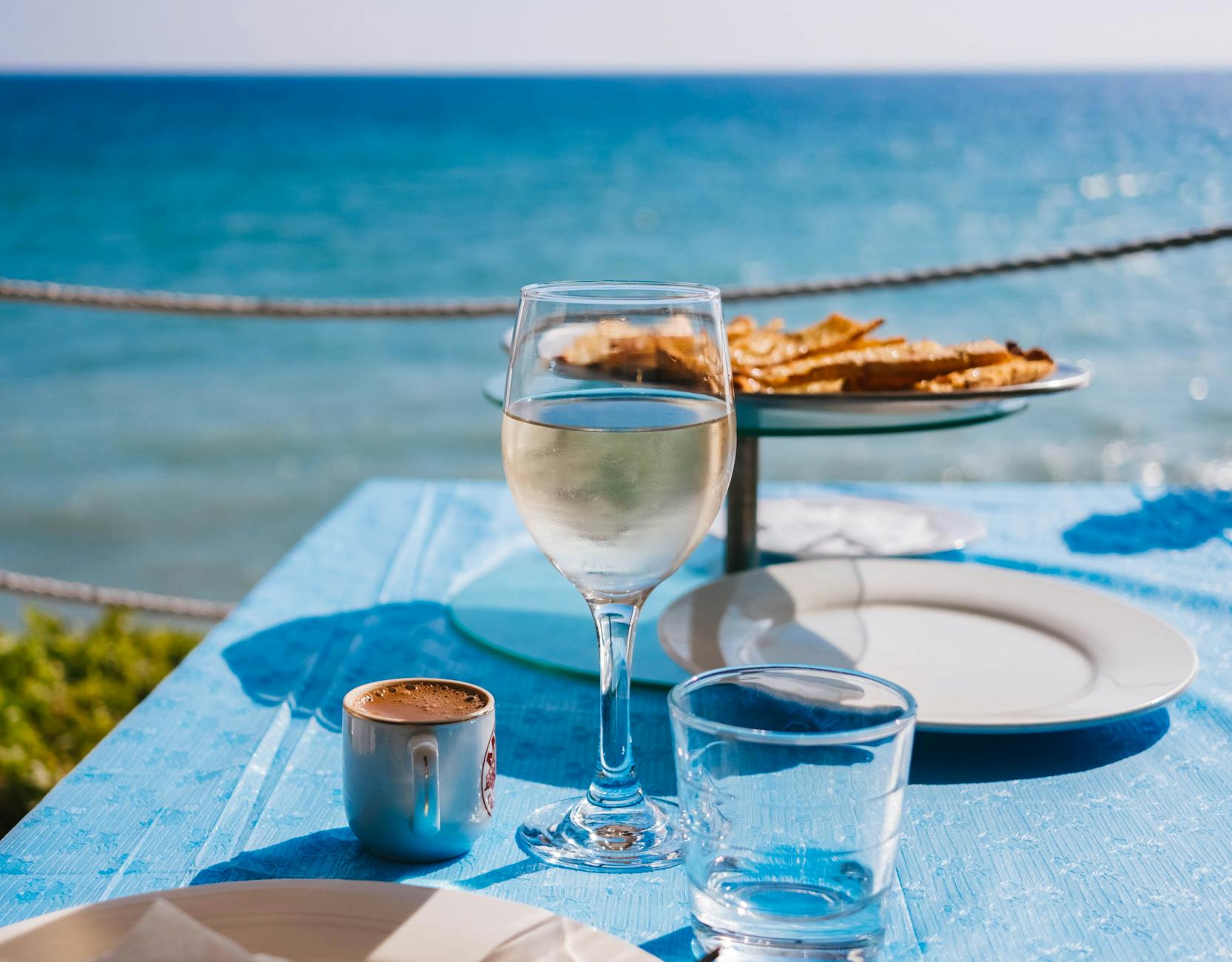
Pour yourself a glass of Sancerre and beside it an Albariño from Val do Salnés. Two different countries, two grape varieties that supposedly have nothing in common. Yet with the first sip, the same window opens: cool freshness, an acidity that wakes you up, a saline note on the finish, as if someone had folded the ocean into the glass.
This isn’t coincidence. Both wines grow by the Atlantic, both thrive on coolness. They aren’t siblings, more like distant relatives who’ve never met yet still resemble each other. It’s this kinship worth examining, because it tells us much about what makes fine white wine so compelling today. More on the topic: English sparkling wine as a third Atlantic wine.
Cool climate is a gift for white wine. Where grapes ripen slowly, acidity stays intact, along with tension. Sancerre on the upper Loire and Rías Baixas on the Galician coast lie far apart, yet share the same logic: proximity to water, cool nights, soils that don’t hold water.
The result is tasted as clarity. Sauvignon Blanc brings its signature spice, often something green, herbaceous, sometimes a hint of gooseberry and flint. Albariño answers with stone fruit, citrus, and an almost salty minerality. Different in detail, alike in character. Both are wines that crave seafood and elevate it in turn. More on the topic: Vermouth as counterpoint: when Italy responds.
Some wines taste of a fruit. The best taste of a place.
Anyone serious about Sauvignon Blanc eventually lands in Chavignol near Sancerre. There, the Bourgeois family tends Henri Bourgeois, a domaine in its 11th generation since 1696. Around 72 hectares stretch across Sancerre and Pouilly-Fumé; the estate completed its conversion to organic farming with the 2023 vintage.
What’s fascinating is that the same family pursued its Sauvignon Blanc to the other side of the world. Since 2000, it has run Clos Henri, its own organic estate in Marlborough, New Zealand. Same grape, a different southern Atlantic, different soil, different wine. Taste Sancerre and Marlborough side by side, and you learn more about terroir than any textbook could teach. That’s what makes Sauvignon Blanc so instructive: it renders the place almost unflinchingly.
Albariño has a similarly clear ambassador in Galicia. Bodegas Gerardo Méndez, better known as Do Ferreiro, was among the co-founders of the Denominación de Origen Rías Baixas in 1988. The name translates roughly as “from the blacksmith,” a nod to the family’s craft heritage. Today the estate is celebrated for a particularly pure, saline style of Albariño.
The jewel in the crown is a wine called Cepas Vellas, sourced from a tiny single vineyard whose vines were planted in 1785. They are the oldest documented Albariño vines in existence. Since 2015 the next generation, led by Manuel Méndez, has taken the reins in the cellar. Such figures are not mere trivia. Old vines yield less fruit, but the grapes are more concentrated, and a wine grown from vines planted in the 18th century carries a depth you cannot manufacture-only inherit.
For a long time Albariño was almost exclusively a Galician and Portuguese affair. That is changing. In New Zealand the variety has been cultivated since about 2011, with early work led by Coopers Creek in Gisborne. In 2024 a collaboration under the name Albariño Brothers drew fresh attention. In California, too-around Lodi-the variety is winning new fans.
The reason is plain to see. Albariño delivers exactly what many drinkers now crave: freshness, salinity, a wine that does not weigh you down. At a moment when heavy, oak-laden whites are losing their allure, a variety with Atlantic character is a logical winner. It travels well, in both the literal and the figurative sense.
Which begs the obvious question: if the two wines are so closely related, why do so few producers blend them? The honest answer is that Albariño is traditionally married to other Galician varieties-Loureiro, Treixadura, Godello or Caíño. A Sauvignon Blanc–Albariño blend is the rare exception, not an established product with a big name.
Still, one may dream. Picture the herbal pungency of Sauvignon Blanc draped over the saline stone-fruit of Albariño. The acidity of both varieties would add up, yielding a wine of almost brazen freshness, tailor-made for raw oysters and a blustery day by the water. That is speculation, not a tasting-note promise. Yet it shows how close these two worlds lie, even without anyone officially pairing them.
Perhaps the real luxury is not the hypothetical blend but the coexistence. Two glasses, two origins, one shared Atlantic. You need no limited-edition cuvée to grasp the appeal. All you need is a good Sancerre, a serious Albariño and an hour to spare.
Whoever drinks this way stops sorting wines by grape and starts reading them by place. Sauvignon Blanc and Albariño speak of the same sea, each in its own tongue. You do not have to mix them. It is enough to understand both.
Rarely. Albariño is classically blended with Galician varieties such as Loureiro, Treixadura, Godello or Caíño. A Sauvignon Blanc–Albariño blend is the exception and not an established product.
Both are Atlantic whites with bright acidity and a saline minerality, making them ideal partners for seafood and fish.
Among other places, New Zealand-where the variety has been cultivated since about 2011-and California, notably around Lodi. Albariño is increasingly leaving its ancestral home.
Henri Bourgeois is a family estate in Chavignol near Sancerre, making wine since 1696. Do Ferreiro in Rías Baixas is one of the region’s pioneers and owns the oldest documented Albariño vines, planted in 1785. Both are ambassadors of their origins.
Source of main image: Pexels / Igor Starkov
Image source: Pexels / Igor Starkov


