
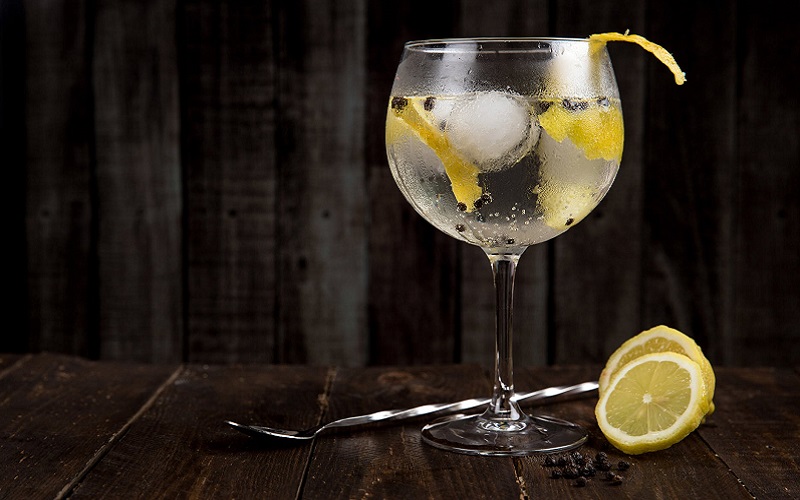
Gin at a glance: The ultimate gin guide!
Want to truly understand gin instead of just buying the bottle that looks pretty? This guide explains what makes gin special, how to get the perfect gin-and-tonic ratio, which tonic pairs with which botanical profile-and which gin myths you can safely forget.
Gin is the world’s most-used cocktail base, yet most people stand helplessly in front of the shelf. Which gin pairs with which tonic? How much gin actually goes in the glass? And is the “smarter brain” claim true? Here you’ll find answers that let you confidently run any bar or party.
- The classic gin-and-tonic needs 4 cl of gin and a 1:2 to 1:3 ratio, depending on your preferred strength.
- Dry tonics suit floral gins; spicy tonics match herb-forward styles-the tonic isn’t an afterthought, it’s half the experience.
- EU law requires gin to contain at least 37.5 % alcohol; below that, it legally can’t be called gin.
- Gin originated in the Netherlands, not the UK-the Brits merely made it famous.
- The myth of the “smarter gin drinker” is false; the study behind it says something quite different.
What gin actually is and where it comes from
Gin is a mostly colourless spirit whose defining aroma comes from juniper berries. The name traces back from the Dutch genever and the French genièvre to the Latin juniperus-simply juniper. Its roots lie in 17th-century Netherlands, where the juniper schnapps Genever was first sold as medicine. English soldiers brought it home, and through a few detours it became the gin we drink today.
The British didn’t invent gin, but they made it famous. Today it is the world’s most popular cocktail base, from the Martini bar to the kitchen-table gin & tonic. For a spirit to be called gin in the EU it must meet one clear rule: juniper as the dominant aroma and at least 37.5 % alcohol. That threshold isn’t an industry guideline-it’s enshrined in the EU spirits regulation.
The tonic isn’t an afterthought. It decides whether a good gin shines or sinks.
How to mix the perfect gin & tonic
The gin & tonic looks simple, yet it’s a small science. The basic recipe is straightforward:
- 4 cl gin
- tonic water, to taste in a 1:2 to 1:3 ratio
- lemon, lime or, if you like, fresh herbs and spices
- plenty of ice-large, slow-melting cubes are best
Two things matter most and are often overlooked: a low serving temperature and as little melt-water as possible. Chill not only the gin but also the tonic and the glass. A glass straight from the freezer and big ice cubes keep the drink clear longer and stop it tasting watery after three minutes. Stir briefly instead of shaking hard, or the fizz will vanish.
Which tonic pairs with which gin
Here the happy accident separates from the considered drink. Tonic is not tonic, and the wrong tonic can bury a fine gin completely. Four broad directions guide your choice:
- Dry, light tonics carry a delicate bitterness; their freshness comes from the bubbles. They harmonise with aromatic, floral gins that might otherwise get lost.
- Spicy tonics taste moderately bitter and citrus-light. They bolster spicy, herb-forward gins instead of clashing with them.
- Floral, fruity tonics with low bitterness suit floral gins and bring out their softer side.
- Classic tonics (Indian tonic water) are often sweet and assertive. They need a bold, robust gin that can stand up to them.
The rule of thumb: the more delicate your gin, the more restrained your tonic should be. A gentle lavender or cucumber gin won’t tolerate a loud, sweet tonic. If in doubt, start with a dry tonic-it rarely goes wrong. More inspiration for the warm months is waiting in our unusual summer cocktails.
Gin can do more than tonic
Anyone who knows gin only as a tonic sidekick is missing half the repertoire. Three cocktails that prove what’s possible:
- Gin Sour Red: a classic gin sour crowned with a float of red wine that sits on top and adds colour and depth.
- White Negroni: the lighter cousin of the Negroni, swapping Campari and red vermouth for Lillet Blanc and a gentian liqueur. Bitter yet delicate.
- Basil Smash: gin with fresh basil and lemon juice, vigorously shaken. Perhaps the best proof that gin and summer belong together.
Gin myths you can forget
There are a few half-truths about gin that just won’t go away. We’re here to debunk two of them.
Myth 1: Gin drinkers are smarter. This claim traces back to a study from the University of Innsbruck-but the study actually says something quite different. The researchers found a weak link between a preference for bitter flavors and certain personality traits, not intelligence or brain size. So your gin and tonic has nothing to do with cleverness; the popular takeaway is a clear misreading of the data.
Myth 2: Gin wards off mosquito bites. A nice idea, but unsupported. The notion that juniper oils and the quinine in tonic water keep mosquitoes at bay sounds charming. The amount in your drink, however, is far too small. If you want to stay bite-free, real insect repellent is far more reliable than a gin and tonic.
What is true: gin is the world’s most-used cocktail base, and the 37.5-percent rule is legally binding in the EU. How much of your everyday drink knowledge dissolves under scrutiny? Find out with our deep dive into the big coffee myths.
Good to Know
▸How much gin goes into a gin and tonic?
4 cl of gin is the classic measure. For the tonic, aim for a ratio between 1:2 and 1:3, depending on how strong you like it. Less tonic lets the gin shine; more tonic makes it lighter and crisper.
▸Which tonic pairs best with which gin?
Floral, delicate gins need dry, light tonics. Spicy gins stand up to spicy tonics, while bold gins pair well with sweet, classic tonics. Rule of thumb: the finer the gin, the more restrained the tonic.
▸How much alcohol must gin contain?
In the EU, at least 37.5 percent. Anything below that, and the spirit can’t legally be sold as gin under EU regulations. In 2025, a European court confirmed this and ruled that alcohol-free drinks can’t be labeled gin.
▸Does drinking gin make you smarter?
No. The myth stems from an Innsbruck study that found a weak link between a liking for bitterness and certain personality traits-not intelligence or brain size. The headline about smarter gin drinkers is a misinterpretation.


