The Silk Scarf as the Last True Gesture
Foulards, twillys and large carrés are more accessory than jewelry. They frame the face, warm shoulders, rescue outfits. About knots, prints and the art of cultivating a piece of silk for years instead of consuming it.
There are accessories you put on. And then there’s one you make. A silk scarf belongs to the second kind. No clasp, no fixed drape, just a square of silk and the question of what you do with it. That’s where its elegance lies: it demands a gesture, not a decision in the store. Whoever masters a scarf needs little else.
- The classic Hermès carré measures 90 by 90 centimetres and has been the reference format since 1937
- The narrow twilly is the shortened version, worn around the wrist, on a bag handle or as a hairband
- The hand-rolled hem of a carré measures exactly 1.5 millimetres, felt as a fine edge rather than a stitched border
A Square with a Long History
The silk scarf, as we know it, has a birth date. Hermès introduced the square carré in 1937; the first was called Jeu des omnibus et Dames blanches and paid homage to a popular parlor game and Paris’s first omnibus line. Since then, the carré has become one of the house’s most iconic accessories and is woven deep into French fashion culture.
The reference format measures 90 by 90 centimetres. Smaller options exist: the carré 70 at 70 centimetres per side and the slim twilly round out the line. The twilly, popularized in the early 2000s, is the fine, shortened version you loop around a wrist, a bag handle or your hair. One principle, three registers.
Why a Great Scarf Costs So Much
Anyone who thinks a good silk scarf is overpriced has rarely watched it being made. A single carré consumes roughly 450 kilometres of silk thread. The process involves about 140 steps. Complex motifs demand 500 to 800 hours of handwork; exceptionally intricate designs can require up to 2,000 hours of engraving and printing.
Colour is its own chapter. Each motif can need up to 40 colour stencils. The palette is chosen in Lyon’s colour lab from a palette of 75,000 shades. That may sound like trivia, but it’s why a fine scarf shimmers where a cheap one is merely loud. The depth of colour isn’t printed on, it’s built up in layers beneath.
The Hem You Feel
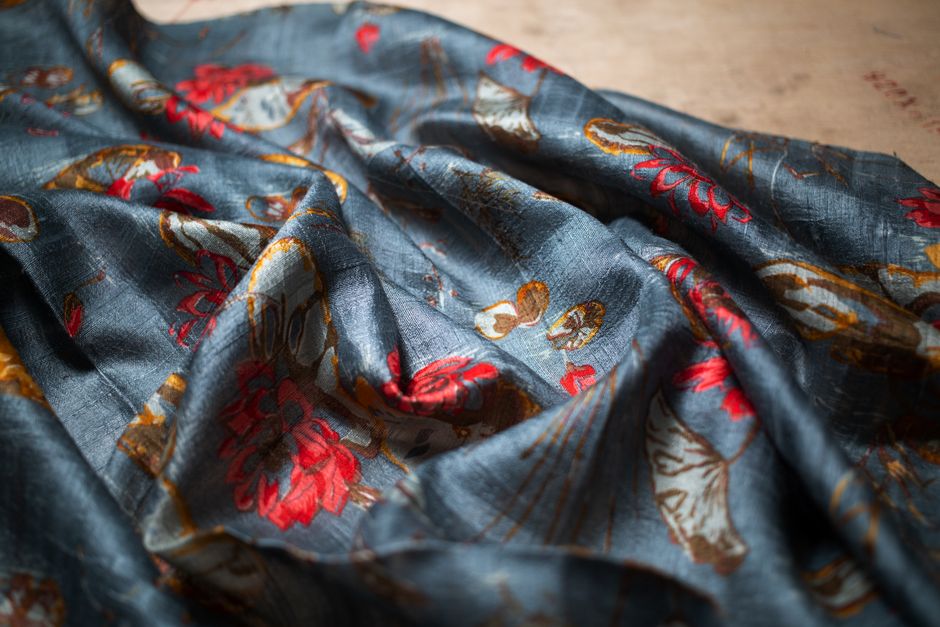
There’s one detail that connoisseurs spot instantly: the hem. The hand-rolled hem, ourlet roulotté in French, measures exactly 1.5 millimetres. You barely see it, but you feel it, a fine edge along the scarf’s border, not a stitched trim. A scarf with a rolled edge drapes differently; it carries weight at the edge and lightness across the field.
This hem exemplifies what luxury means here. Nothing shouts; nothing is written on the scarf. The value sits in an edge noticed only by those who know what to look for. That’s the aristocratic quiet of a true accessory: apparent to those who understand, invisible to everyone else.
The value of a scarf sits in a 1.5-millimetre edge noticed only by those who know what to look for.
The Gesture, Not the Label
A silk scarf reveals its true purpose only when worn. That’s when the real art begins. Hermès launched the J’aime mon carré initiative in 2010 with a knot guide that turned wearing into a daily ritual: as a hairband, a belt, or an accent on a bag. This wasn’t a marketing stunt, it was an acknowledgment of a simple truth. The scarf lives through the hand that ties it.
That’s what sets it apart from jewelry. A necklace sits exactly as it’s made to sit. A scarf is reinvented every day, loosely around the neck, tightly in the hair, draped over the shoulders when the wind picks up. It frames the face, warms when needed, rescues a plain outfit. A single great piece replaces a drawer full of accessories.
Buy, Wear, Keep
A fine silk scarf isn’t a seasonal item. It doesn’t age, it evolves. Colors hold when cared for properly, prints survive decades, patterns rarely go out of style because they were never fully in. A carré your mother wore works just as well on your daughter, often better, because it looks lived-in rather than brand-new.
That’s the real math. A scarf you buy once and keep for years is the smarter investment than a pile of flimsy pieces replaced every summer. Not out of frugality, but because a quality piece lasts. And because the ritual of tying it becomes more instinctive over time than any clasp.
Quick Clarifications
▸What’s the difference between a carré and a twilly?
The carré is the classic square silk scarf, in the standard 90 by 90 centimeter format. The twilly is the narrow, shortened version worn around the wrist, on a bag handle, or as a hairband.
▸How can I spot a high-quality silk scarf?
Look for the hand-rolled hem. It measures about 1.5 millimeters, feels like a fine edge rather than a stitched border, and gives the scarf weight at the edge. Add rich, shifting colors instead of flat, garish hues.
▸Why is a good scarf so expensive?
Producing one carré requires roughly 450 kilometers of silk thread and about 140 work steps; complex motifs demand several hundred to over a thousand hours of handwork. Up to 40 color stencils create the depth of the print.
Image credits: Hero image and second in-article image Pexels / Tamanna Rumee; first in-article image Pexels / maadhuri g.