Classic Portrait
The Porsche 993: The Last Air-Cooled Legend
The last air-cooled 911 stands right on the cusp of two eras. I finally understand why this is the particular model that completely turns people’s heads.

 Porsche 993
The last air-cooled 911 stands right on the cusp of two eras. I finally understand why this is the particular model that completely turns people’s heads.
There is a specific note by which you can recognize an old 911 with your eyes closed. No rich burble, no artificially enhanced booming, but a dry, metallic rattle that sounds almost nervous at idle and instantly hardens the moment you hit the throttle. This exact sound disappears with the 993. It is the last Porsche 911 to house an air-cooled six-cylinder in the rear, and perhaps that is what makes it the most honest legend this lineage has ever produced.
Before we talk about sound and corners, it is worth taking a step back to the very beginning. In September 1963, Porsche presented a car at the International Motor Show in Frankfurt that was still called the Type 901 at the time. The idea was clear: a faster, more mature successor to the 356, featuring an air-cooled six-cylinder instead of the old four-cylinder boxer. But Peugeot held the trademark rights to three-digit numbers with a zero in the middle. Porsche swapped the zero for a one, turning the 901 into the 911, and no one suspected that this makeshift solution would become one of the most famous names in automotive history.
From that moment on, the 911 has been an ongoing narrative. Each generation evolves the car without betraying its roots. The headlights remain round, the engine stays in the rear, and the silhouette remains instantly recognizable. The 993 is the penultimate chapter of this air-cooled lineage, and simultaneously its pinnacle. It is the 911 where everything the engineers learned over three decades came together one final time without water cooling.
Stand sideways in front of a 993, and you’ll understand why so many people melt for this car. The headlights sit flatter and more angled than predecessors, almost sculpted into the body, giving the front a calmer, more modern gaze. The fenders arch wider over the wheels, the rear end sits taut and self-assured without being flashy. It’s the rare design that feels both nostalgic and timeless, because its proportions simply work.
The beauty of it is that this elegance feels effortless. The 993 doesn’t shout its heritage-it carries it. No exaggerated wing, no gimmicks, just a line so natural it seems like there was never any other way to draw a fast coupe. Those who know cars recognize it from a hundred meters. Those who don’t still find it beautiful. Few designs pull that off.

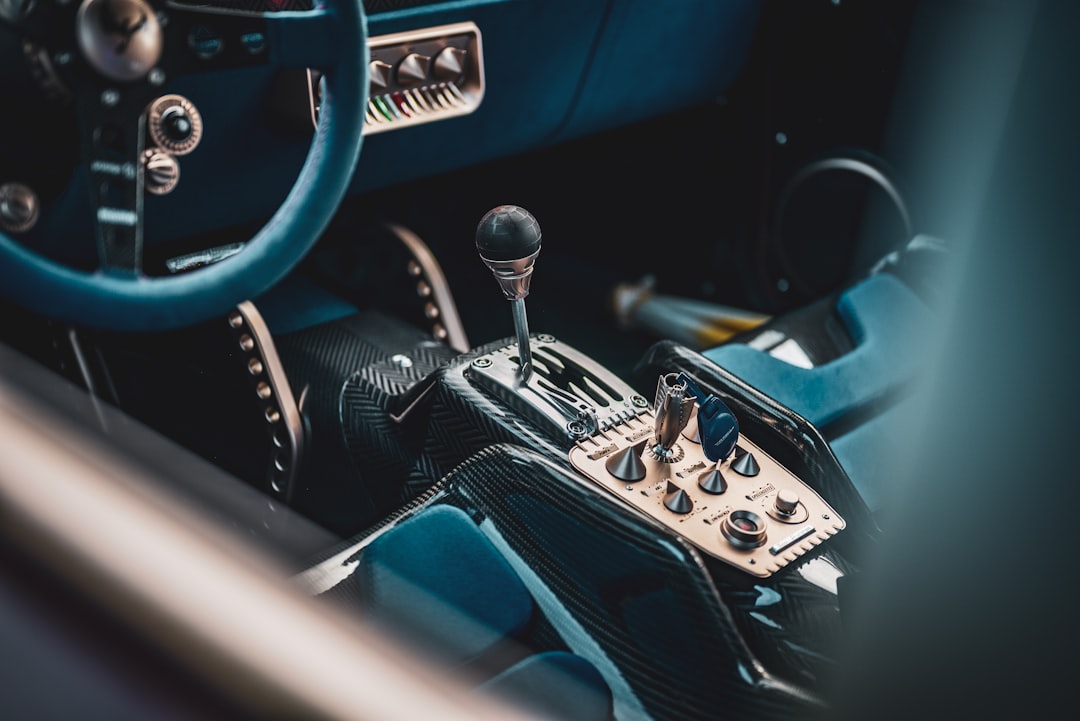
Inside, this impression continues. Five round dials, fanned out behind the wheel, the large tachometer naturally centered. No screen takes command, no menu stands between you and the car. You read, you engage, you feel. This analog cockpit is precisely why a 993 feels so different today from almost everything that followed. It’s not less technology-it’s technology that doesn’t shut you out.
This directness carries through every movement. The steering talks to you, relaying every lane change without overwhelming noise. The gear lever has short, crisp throws, and shifting gears is a small, satisfying mechanical act-not a casual click. You sit low, the wheel stands upright, the pedals are offset, as only a rear-engine layout demands. It’s an ergonomics you must adapt to, then never want to give up, because it turns driving into craftsmanship.
An air-cooled engine sounds different – and this isn’t romanticizing. Without the dampening water jacket around the cylinders, mechanical noise is more exposed, sharper, direct. You hear the valves, the blower, the inner workings. In the 993, this blends with a six-cylinder note that brightens and intensifies with revs, culminating in that signature, shrieking crescendo no modern turbo can replicate.
With the 993, this voice falls silent in the series. Its successor, the 996, switched to water cooling in 1997-and while that step made technical sense, it unmistakably altered the character. The water-cooled 911 became faster, cleaner, and better in every measurable way. But it sounds more mature, smoother, muted. Anyone who’s heard both side by side knows instantly what was lost with air cooling – and why some pay dearly to reclaim it.
The 993 isn’t coveted because it’s the fastest 911. It’s coveted because it’s the last one that sounds and feels like this.
So this car has never been about numbers alone. Yes, the 993 is fast, yes, it handles with precision, yes, it carries the infamous 911 trait of reminding you-when you push too hard-that the engine sits in the rear. But the real promise lies elsewhere: in the connection between human and machine, here still unmediated by digital layers. You steer, you shift, you modulate – and the car responds instantly.
For a long time, the air-cooled 911 was simply a used Porsche. Anyone wanting a 993 in the 2000s could find it at prices that today make you shake your head in disbelief. Then the mood shifted. The realization that the 993 marked the end of an entire era took hold, first among enthusiasts, then on the broader market. Suddenly, the last air-cooled model was no longer an old car, but a piece of engineering history with an upward expiration date.
Today, prices for well-maintained air-cooled 911s are at a high level, and the 993 is leading the pack. Many stories circulate about specific record figures, and not all of them hold up to scrutiny. What is certain is the trend: a cleanly documented 993 with an honest history has become more valuable over the years, not less. That makes it one of the few cars you can drive and still consider a sound investment, as long as you maintain it.

What’s fascinating is that this appreciation hasn’t ruined the car’s character-it has enhanced it. Unlike some collector pieces that languish in climate-controlled garages, the 993 still belongs on the road. It’s rugged enough for real journeys, practical enough for a long weekend, and special enough to turn every drive into a small event. That very blend explains why the market loves it. It rewards use, not storage.
Whoever buys today isn’t buying a guarantee, but a story. The difference between a good buy and an expensive mistake is almost never about the shine-it’s about the paperwork. A complete service book, traceable previous owners, documented engine and bodywork, plus a check of the areas where an air-cooled 911 tends to age. A 993 with honest patina and a clean file is worth more than a superficially perfect car with gaps in its past. That’s where the enthusiast parts ways with the speculator, and that’s where it becomes clear whether someone understands the car or just its price tag.
Behind this lies an idea that extends far beyond Porsche. The best piece is often the one you don’t replace because it lasts and gets better with age. A 993 that you drive, service, and maintain gives you more back than a flawless object that never moves. Buying, keeping, and caring for this car isn’t thrift-it’s the only treatment that befits its nature. Anyone who understands that sees the 993 not as a bet on rising prices, but as a long-term companion that happens to appreciate in value.
Hardly any other car has gathered such a vibrant restomod scene as the classic air-cooled 911. Specialists take old vehicles, preserve their soul, and sharpen everything else: suspension, brakes, interior, sometimes even the entire drivetrain. The idea is never to modernize the shape, but to combine the feeling of yesteryear with today’s precision. The result is an old car that feels newer without denying its origins.
The most famous name in this world is Singer Vehicle Design, founded in 2009 in California. Singer intricately reinterprets the older Porsche 964 with a depth of detail and craftsmanship so rigorous that factory cars pale in comparison. Although Singer starts technically with the 964, this phenomenon has fueled appreciation for the entire air-cooled era, including the 993. It has shown a broad public that an old 911 is not a compromise, but a foundation that can carry almost anything.
Those who wish to dive deeper into this history will find the best source where it began. The Porsche Museum in Stuttgart-Zuffenhausen, opened in 2009, traces the line from the Type 901 to the present day under one roof, making it palpable that the 993 is no random favorite, but the logical end of a chapter. You walk past decades of development there and suddenly understand why exactly this particular 911 marks the transition so clearly. It is the final period of a language that became something else afterward.
In the end, you are left with a car that is hard to explain rationally but instantly understood the moment you stand before it. The 993 is neither a museum piece nor purely an investment, but both and above all a promise. It stands for the moment when driving was still unfiltered, when an engine sounded like a machine and not like a composition. Perhaps that is precisely its greatest strength: it feels like the last of its kind because it is.
Air-cooled means the engine dissipates heat directly via flowing air and a fan, rather than through a coolant circuit like modern engines. This makes the sound more open and the mechanics feel more immediate. The 993 was built from 1994 to 1998 and is the last 911 with this technology. Its successor, the 996, has been water-cooled since 1997. This position as the endpoint of an era, combined with a design widely regarded as particularly beautiful, makes the 993 so desirable.
At its debut in 1963 at the IAA in Frankfurt, the car was called the Type 901. However, Peugeot held the trademark rights to three-digit numbers with a zero in the middle. Porsche replaced the central zero with a one, turning the 901 into the 911, the name that defines the brand to this day.
The most important difference lies in cooling. The 993 is the last air-cooled 911, while the 996 has been water-cooled since 1997. This changed the sound, character, and overall driving feel. Technically, the 996 improved in many areas, becoming better and faster, yet many enthusiasts miss the unfiltered directness and the sound of the air-cooled era represented by the 993.
Maintained air-cooled 911s trade at high levels, and the 993 ranks prominently in this development. One should treat specific record figures with caution, but the direction is clear: A cleanly documented vehicle with honest history has tended to appreciate in value over the years. The appeal lies in the fact that you can drive the 993 while still owning a stable piece of technical history, provided you maintain it properly.