The Menu That Lasts Longer Than the Evening
A grand menu doesn’t win on technique alone. It lingers because a dish brings back a place, a summer, or a person.

 //TASTE
A grand menu doesn’t win on technique alone. It lingers because a dish brings back a place, a summer, or a person.
You don’t just taste the best menus; you remember them. Not because of the tweezers, not because of the foam, but because a plate suddenly conjures up a place, a summer, or a person.
A menu rarely fails due to a single course. It fails due to a lack of coherence. Too much acid here, too much sweetness there, followed by a course that merely tries to prove someone has studied extensively. In the end, you’re full and remember nothing.
A good menu thinks differently. It starts clearly, leaves room, doesn’t constantly escalate, and knows when it needs to quiet down. The red thread lies between the plates. It decides whether food becomes an evening.
A dish that wants everything at once rarely stays in your mind.InspiredByLuxury
Naturally, great cuisine requires technique. But it’s not the point. If a dish impresses only because it was difficult to make, it usually lacks composure. The best plates look almost self-evident. You only realize how precisely everything is placed when you eat.
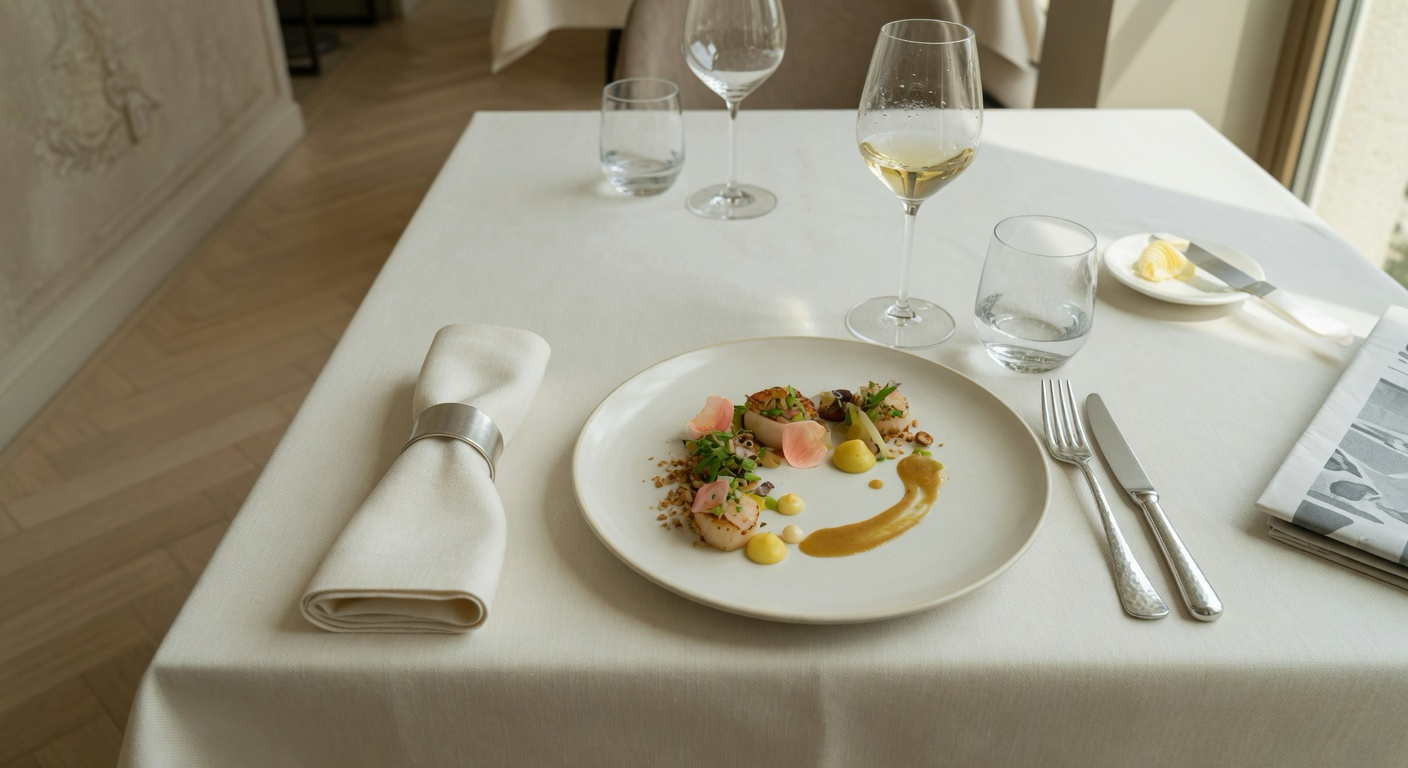
This could be a tomato that truly tastes like tomato. A fish that doesn’t disappear under garnish. A dessert that doesn’t get sweeter just because it’s the finale. Reduction isn’t a deficiency if it has character.
Many menus underestimate the silence between courses. Yet that’s where memories are formed. A sip of wine, a glance out the window, a conversation that doesn’t have to fight against loud music. Eating isn’t just about the product. It’s about the flow.
If you’re planning a menu yourself, don’t think in recipes first. Think in terms of temperature, light, weight, and conversation. Then a good meal becomes an evening people actually talk about.
If you like this perspective, read on at Linen from Helfenberg on the Table and Vermouth Aged in Used Barrels. There, the same idea becomes more concrete: less noise, more judgment.
Not many. Three to five well-placed courses can have more impact than eight plates without rhythm.
A clear product, a precise idea, and enough restraint. You should be able to taste what it’s all about.
Start with a light opener, keep the main course clear, and plan a dessert that closes the evening rather than weighing it down.
What remains is no rule. Just a fairly reliable feeling: If something gets better after the second look, it’s usually right.


