
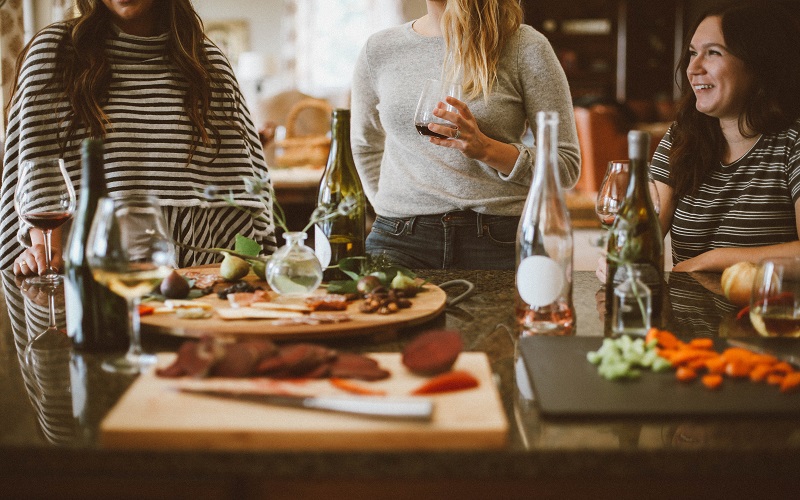
How to conjure up a summer dinner without cooking
Sweating over an elaborate dinner in the summer is no longer necessary with our tips. The strategy: Assemble, don’t cook!
In 2018, we reported on a summer dinner without cooking. What became of it? The idea remains excellent: When the evening is warm, no one needs to sweat over the stove. A beautiful platter with cheese, raw vegetables, bread, dips, nuts, olives, and chutneys can have more charm than a strained menu.
- The principle is to assemble rather than cook.
- Cheese forms the center, from Gouda and Mozzarella to feta, Brie, and Edam.
- Raw vegetables, hummus, guacamole, watermelon, and grapes bring freshness.
- Baguette, focaccia, ciabatta, crackers, or breadsticks give the table structure.
- Nuts, olives, eggs, pickles, jams, and chutneys make the platter more personal.
The stove can stay off on hot evenings
The original article boiled it down to a simple formula: assemble, don’t cook. This is more than just kitchen hackery. It’s an attitude for summer evenings when no one wants to bring any more heat into the apartment. When the air outside is stagnant, an elaborate dinner quickly feels like work. A well-constructed platter, by contrast, feels like an invitation.
The word “constructed” is key here. A no-cook summer dinner isn’t just throwing everything from the fridge onto the table. It needs a center, freshness, bread, some salt, some sweetness, and a few small surprises. That’s how you create a meal where everyone reaches in, combines flavors, and eats at their own pace.
This fits the summer vibe. You sit longer, talk more, maybe have a glass of red wine, take another piece of bread, try a different dip. The evening doesn’t need to be organized in courses. It’s allowed to unfold.
A good no-cook summer dinner doesn’t look lazy. It looks like you understood what the evening requires.
Cheese is the center, but not the whole story
In the original text, cheese was at the heart of the uncooked meal. That’s true. Cheese gives the platter weight. Gouda or fresh mozzarella are usually a good idea because they are friendly and uncomplicated. Stronger varieties like feta, Brie, and Edam bring more character. Aromatic herbs in cream cheese provide variety.
It’s important that not everything tastes the same. A mild cheese, a creamy one, a salty one, a slightly stronger one: this creates movement. Raw vegetables are needed alongside. Cucumbers, carrots, peppers, and other crunchy types can be dipped in hummus or guacamole. This is fresh, uncomplicated, and much nicer than perfunctorily placing vegetables on the side.
The old text added watermelon and grapes. Exactly this sweetness makes the difference. It takes the heaviness off the cheese and adds color to the table. You immediately notice whether someone was just trying to fill bellies while arranging or if they thought about balance. Summer food needs both: substance and coolness.
Bread turns individual parts into a dinner
Baguette, focaccia, and ciabatta must not be missing. If necessary, crackers or breadsticks work too, even if they don’t soak up aromatic olive oil as well. Bread is the calm part of the table. It connects cheese, dips, vegetables, and chutneys. Without bread, the platter quickly looks like a snack. With bread, it becomes a dinner.
Complementary ingredients from the fridge and pantry join in: nuts, olives, hard-boiled eggs, pickles, jams, and chutneys. It’s precisely here that the dinner becomes personal. Good jam next to Brie, olives with feta, pickles with Edam, a few nuts for crunch. It’s not about rules, but about contrasts.
Plating ultimately decides whether everything looks generous or random. A large platter helps. Cheese and dips get their space, bread is laid out in slices, vegetable sticks stand in small bundles, chutneys and oil come in small bowls at the edge. This way, everyone can reach in without the table looking like a leftover cleanup operation.
The glass of red wine from the old article can stay. It’s not mandatory, but it’s a nice image. “Dinner is ready,” the text wrote. That’s exactly how it should feel: not cooked, not negligent, but ready.
How to keep the platter generous rather than random
The difference between a beautiful summer platter and a collection of leftovers lies in rhythm. Repeat colors, but not too timidly. Don’t place cheese as a block in the middle, but distribute it so everyone can reach it easily. Put dips and chutneys in small bowls so nothing spills. Bread can afford to look abundant because it invites people to keep eating.
The order of assembly also helps. Start with the big things: cheese, bread, bowls. Then the fresh elements: raw vegetables, melon, grapes. After that, the small salty and sweet accents: olives, nuts, pickles, jam. This creates no rigid arrangement, but a table that looks natural yet still functions. That’s exactly what defines summer.
The drink can remain simple
A no-cook dinner pairs well with a drink that doesn’t overpower the table. The old article mentions red wine, and that suffices as an image. If you want something lighter, you can just as easily put water with ice, citrus, or herbs on the table. The only thing that matters is that nothing simultaneously demands attention.
The platter already brings salt, sweetness, creaminess, and freshness. The drink should accompany this mix. This keeps the evening calm. No one waits for the next course, no one stands at the stove, no one has to explain why nothing warm is coming. Everyone reaches in. That’s precisely the appeal.
Luxury lies in relaxation
A summer dinner without cooking is ultimately a host’s statement, too. You don’t have to disappear into the kitchen to save the meal. You sit at the table with everyone else, pass the bread, pour a glass, and let the platter do its work. That’s exactly what makes the evening feel generous.
One final touch
If anything is missing at the end, it’s usually acidity or freshness. A few grapes, cucumber sticks, or a spoonful of chutney are often enough. It doesn’t need to be more than that.
To wrap up
A few fresh herbs in the cream cheese make all the difference and instantly give the entire platter more direction.
Good to Know
▸What belongs in the center of a no-cook summer dinner?
Cheese. Combine mild varieties like Gouda or Mozzarella with stronger ones such as feta, Brie, or Edam.
▸Which fresh ingredients go well with it?
Cucumbers, carrots, bell peppers, watermelon, and grapes. Serve with hummus or guacamole for dipping.
▸How can the platter look like a real dinner?
Use good bread, olive oil, dips, chutneys, nuts, and small bowls. The arrangement on the platter turns individual items into a proper dinner.


