Guide · Northern Lights
Seeing the Northern Lights: How to find the right place
Seeing the northern lights: Why darkness and clear nights shape your choice of location, and how to choose your region, accommodation and travel dates.

 Slow Routes
Seeing the northern lights: Why darkness and clear nights shape your choice of location, and how to choose your region, accommodation and travel dates.
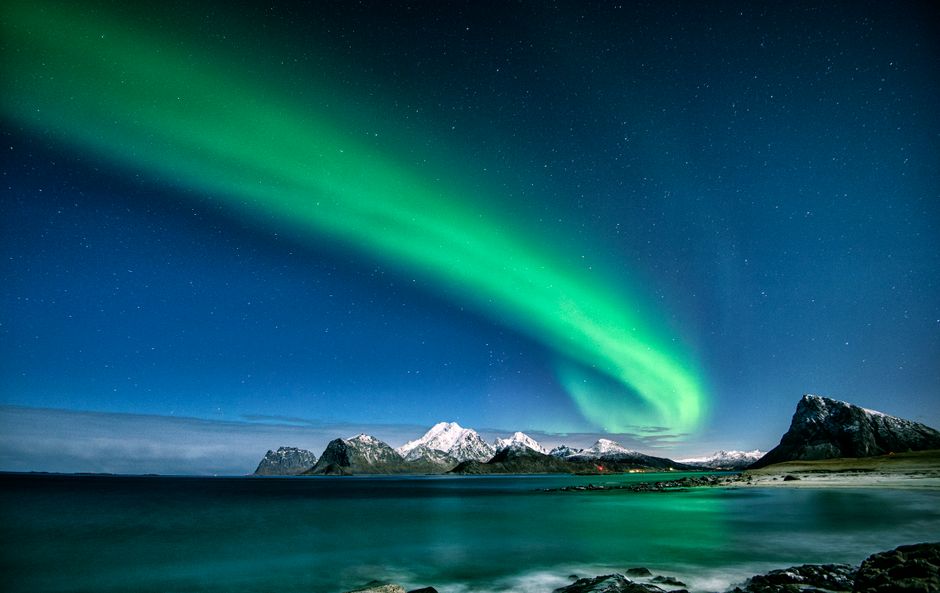
If you want to see the northern lights, there is one fundamental decision to make before your journey begins: where to go. Darkness is essential, because even when an aurora is present, it can only be seen in dark surroundings. You also need clear nights and enough time, as a sighting is never guaranteed. Your choice of region, accommodation and length of stay determines how many chances you give yourself to look up at the sky.
The US space weather centre NOAA SWPC sets out the basic rules plainly: it must be dark, and you need to be away from city lights. An aurora may be present, but it is only visible in darkness. Together, these conditions raise the first question to ask when planning any trip: how dark is the place really?
The rule sounds simple, but it rules out many places from the start. Town and village centres, lit streets and brightly glowing outskirts all bring the kind of light that a faint aurora cannot compete with. The brighter the surroundings, the stronger the aurora needs to be for its delicate bands to remain visible. Light pollution therefore becomes an early consideration when choosing where to stay.
A faint aurora can be overhead and still remain invisible if the surroundings are brightly lit. Your choice of location can determine whether the conditions become an experience.
Artificial light reaches beyond its source. Light from lamps that shine into the sky is scattered through the atmosphere, masking faint auroras. The weaker the aurora, the stronger the effect. Because scattered light brightens the sky, even an indirect glow can make delicate bands disappear.
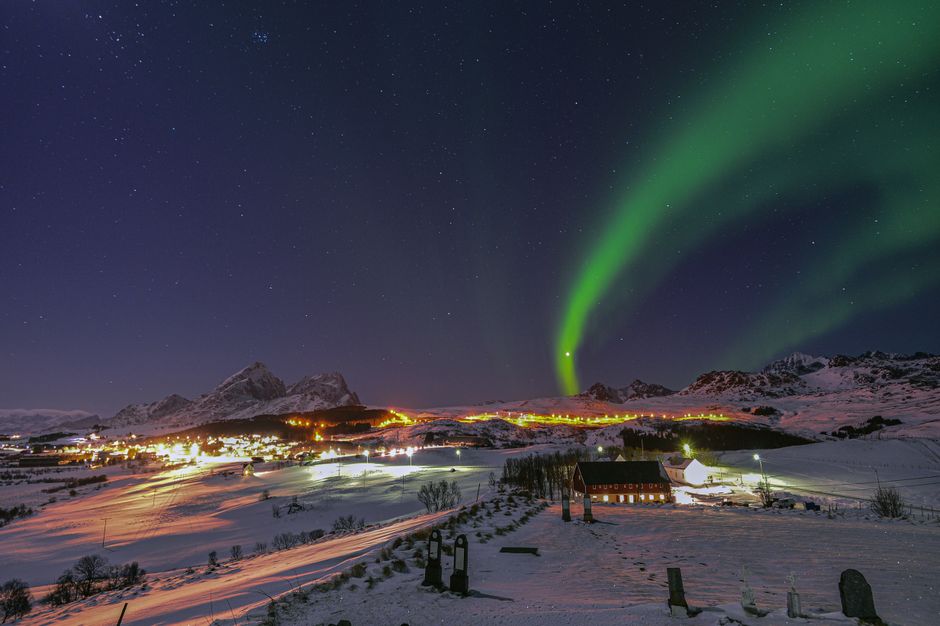
Any bright light nearby also causes your pupils to contract. When you step out of a lit room, your pupils are narrower and your eyes are less sensitive to the night sky.
When choosing a location, there is a practical point to check: the part of the sky behind your accommodation matters just as much as the property itself. A place that seems quiet at night may still be coloured by stray light from a neighbouring town or village.
There is a long window of opportunity. In northern Norway, auroras can be seen from late August to late March, according to Visit Norway . Statistically, activity is highest in spring and autumn, though there are also chances from November to February.
NOAA SWPC also places the best seasons around the spring and autumn equinoxes. The moon deserves attention too: according to the agency, a full moon reduces the apparent brightness of an aurora. Its actual strength is unaffected, but it looks fainter in the sky. Nights without disruptive moonlight, by contrast, preserve the full contrast.
The window is narrower when it comes to the time of night. According to NOAA SWPC, the best aurora usually occurs within one to two hours of midnight, specifically between 22:00 and 02:00 local time. Visit Norway often cites the window from 23:00 to 02:00 for Norway. The times are close together and give your evening a clear structure.
A look at auroral activity explains why latitude matters. At Kp 0, the lowest level, the equatorward edge of the auroral oval lies at about 66 degrees geomagnetic latitude, according to NOAA SWPC. With each Kp level, this edge moves about 2 degrees south. The further south your accommodation is, the more your chances of seeing the lights depend on high Kp values. The planning logic is clear: first the season determines when to travel, then the time of night sets your viewing window.
The planning logic is clear: first the season determines when to travel, then the time of night sets your viewing window.
Even in the right place, the weather has a say. Auroras are only visible under a clear, dark sky, so clouds change your chances from night to night. No region can guarantee a sighting; the sky has the final word.
Northern Norway offers long windows in winter: it is dark from the afternoon until late morning. These nights extend the time available for viewing. While the best time is concentrated around midnight, the long hours of darkness increase the number of possible attempts each night.
Abisko in northern Sweden is a special case. According to Swedish Lapland , there is often a blue hole here, a clear patch of sky while the rest is overcast. The region receives less precipitation than the rest of Sweden, and light pollution is close to zero.
The Aurora Sky Station sits on Mount Njullá at around 900 metres. The chairlift from the STF Abisko Turiststation takes about 20 minutes and operates between November and April. The station gives you an elevated viewing point during a stay in the village.
Since clouds cannot be cleared away in advance, local weather conditions are another factor in choosing where to go. That brings regions known for clear patches of sky to the fore.
A comparison across Europe shows how rare true darkness has become. Light pollution obscures the night sky across more than half of Europe. Northern Norway, by contrast, offers vast areas free from city lights. To escape them, look for outlying locations away from town and village centres.
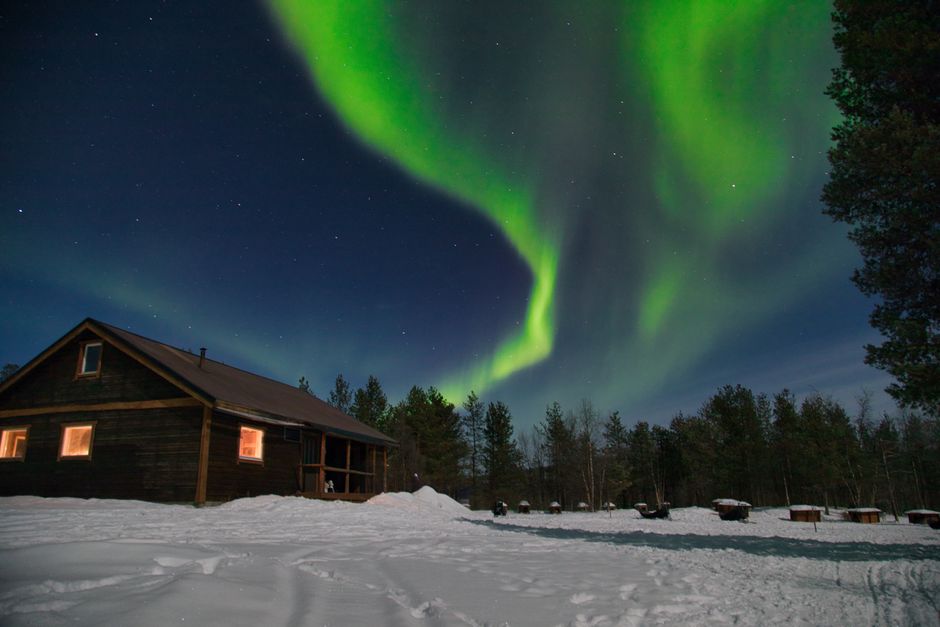
The crowds are unevenly spread: Tromsø is very busy in winter. Alta, Lyngen and Senja are considered alternatives. Your choice of region therefore shapes your experience on the ground too.
This is where your choice of northern lights accommodation comes in. A house away from town or village lights puts darkness closer at hand. It also makes it easy to retreat indoors if the sky is not cooperating.
You can check this before booking: a map shows how far a house is from town and village centres and lit streets. Consider the surroundings and you gain an advantage on every evening of your stay.
Realistic expectations are part of the planning. In darkness, your eyes rely on rod cells, which detect faint light but cannot distinguish colours. A camera uses a longer exposure and captures colours your eyes cannot detect. According to The Conversation, an astrophotographer describes seeing the colours only faintly with his own eyes.
A heavily processed image therefore does not reflect what you see with the naked eye. If you use photographs as your benchmark, you are measuring the evening against an image that was never seen that way. Understanding how an image is made helps you distinguish photographic effects from what you can actually see.
With no guarantee of a sighting, the calculation is straightforward: several nights give you more attempts. Since you cannot determine the weather or auroral activity for your travel dates, an extra night gives you another chance if earlier attempts come to nothing.
The effort is most rewarding if you take the need for darkness seriously and can devote several evenings to the sky. Spending a single night in a busy centre leaves the experience dependent on several factors at once: weather, activity, time of night and ambient light. Comparing the two approaches shows how closely location and length of stay work together.
A retreat away from town or village lights offers an honest arrangement: it improves the conditions every night, though a sighting remains uncertain. That is why darkness should be part of every decision about where to stay.
According to NOAA SWPC, the best aurora usually occurs within one to two hours of midnight, between 22:00 and 02:00 local time. Visit Norway often cites 23:00 to 02:00 for Norway.
Visit Norway cites the period from late August to late March. Statistically, activity is highest in spring and autumn, but a sighting is never guaranteed.
In darkness, your eyes rely on rod cells, which detect faint light but cannot distinguish colours. A camera uses a longer exposure and captures colours that the naked eye can barely detect.
Peaceful places, houses with history and journeys at the right pace. Stay in //Travel.