

Rosé with Substance: Revisiting the Côtes de Provence
Between Notre-Dame des Anges and the Maison des Vins in Les Arcs-sur-Argens, the reason emerges why Provence rosé is not a summer trend but a terroir question backed by vintage, zone, and craftsmanship.
A rosé that tastes only of vacation has lost its terroir. In Provence, the difference between an ordinary pale summer wine and one of the 190 medal winners from this year’s Concours des Vins de Provence becomes clear once you understand what to look for.
- The AOP Côtes de Provence covers 20,300 hectares across 84 communes, divided into eight production zones
- The 2026 Concours des Vins de Provence evaluated 668 samples and awarded 190 medals to a precise, balanced 2025 vintage
- Harvesting takes place at night between 2 and 7 a.m. to preserve freshness and aromatic finesse
Eight Zones, One Misconception
Treating Provence rosé as a single category overlooks the real work behind it. The AOP Côtes de Provence spans 20,300 hectares across 84 communes between the Var, Bouches-du-Rhône, and a single municipality in the Alpes-Maritimes. Recognized since 1977, the appellation is now split into eight production zones with five protected geographical indications. Notre-Dame des Anges, named after the terroir around Le Cannet-des-Maures, only joined in 2019, showing the appellation is still fine-tuning its own boundaries.
More than half the vineyard area, 51 percent, is now certified organic or HVE (High Environmental Value). This isn’t a marketing figure; it’s a structural shift: a region that once thrived on volume is pivoting toward origin-driven precision. Côtes de Provence Sainte-Victoire is now cited by critics as the terroir benchmark of Provence, a level of origin clarity that didn’t exist in this form just a few years ago.

The Night Decides the Freshness
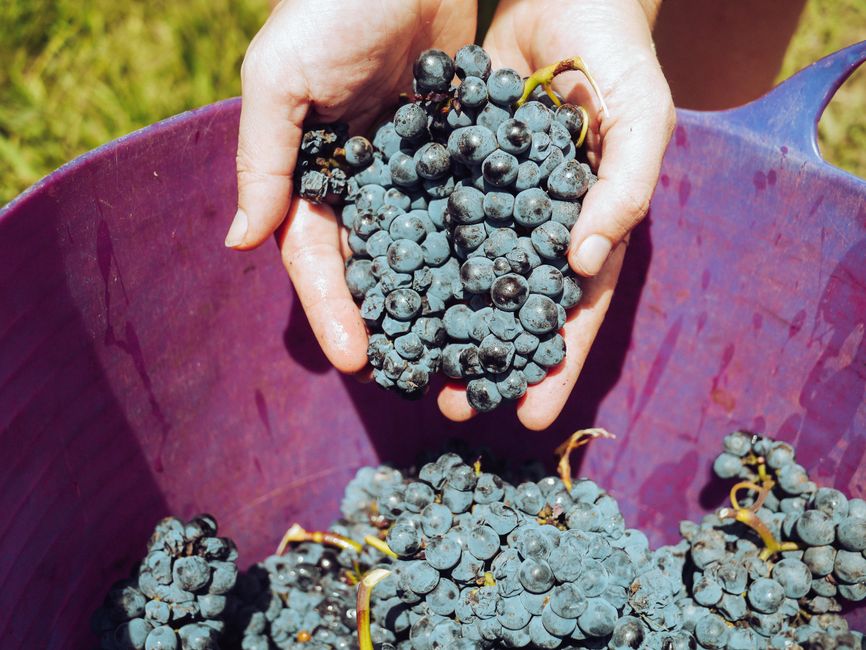
What ends up in the glass begins long before pressing. The 2025 harvest started on 12 August in the earliest sites of the Côtes de Provence and the Coteaux d’Aix-en-Provence. Grapes are picked between 2 and 7 a.m., when berry temperatures hover around 15 °C. This isn’t romantic detail; it’s industry standard. Only cool nighttime harvesting preserves the aromatic finesse that separates a rosé from a merely pale wine.
The 2026 Concours des Vins de Provence evaluated 668 samples at the Maison des Vins in Les Arcs-sur-Argens in late March and awarded 190 medals. CIVP president Éric Pastorino described the 2025 vintage as precise and balanced, with fresh rosés and lively whites. This runs counter to a contradiction the region has wrestled with for years: globally, rosé consumption has dipped slightly since its 2019 peak, yet France remains the world leader in production, consumption, and export value. Provence isn’t betting on a fading trend. It’s betting on craftsmanship that endures.
A rosé harvested at 2 a.m. won’t announce that fact on the label. It reveals itself in the glass, in the instant before the first hint of sweetness tips over.
Mourvèdre, Grenache, Cinsault, Tibouren
Anyone who thinks Provence rosé is just a matter of colour has skipped over the grape varieties. Mourvèdre, Grenache, Cinsault and Tibouren shape both the red and the rosé blends of the region. Tibouren, a variety with pronounced salinity and little colour, is something like Provence’s own signature, a counter-model to the soft, almost neutral rosés that pass for standard elsewhere.
The Maison des Vins Côtes de Provence on the RN 7 in Les Arcs-sur-Argens makes this difference tangible. More than 800 references are available there at producer prices, open seven days a week, with free weekly tastings of 16 wines. It’s the year-round counter-model to the festival route: no Instagram stop, but a quiet, curated space where you can work your way through eight zones at leisure instead of letting a brand lead the way.
When the region invites itself
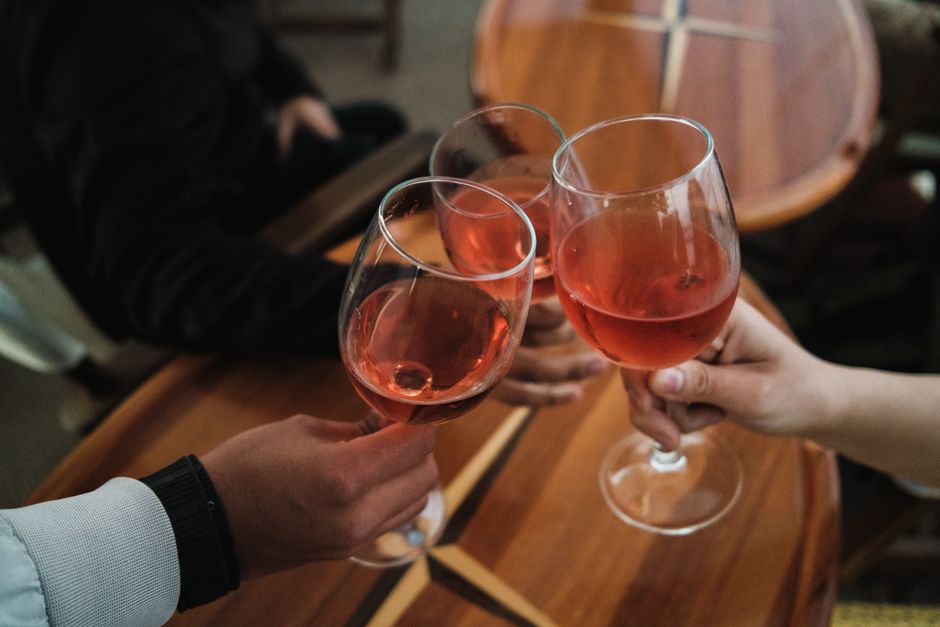
On 13 June Domaine Reillanne in the Terroir Notre-Dame des Anges opens for “Sur les Chemins des Anges,” a rally between vines and nature with tastings and live music. On 18 July “Vignerons sous les Étoiles” follows at Plage de l’Argentière in La Londe-les-Maures: winemakers of the AOP Côtes de Provence La Londe pour under pine trees right on the Mediterranean, all three colours of the appellation in the glass, while the sun sets over the water.
This is the part of Provence that never appears on a label. Whoever sits by the coast in high summer sipping rosé usually repeats an image an algorithm has handed them. Whoever knows instead that the grapes for that glass were harvested at four in the morning in the dark is drinking something else, not necessarily better in taste, but better understood.
What handwork still means
The region is visibly investing in precisely this act of explanation. Since 18 March “Destinations Vins de Provence” has been running as the CIVP’s digital platform across nine labelled Vignobles-et-Découvertes destinations. The Provence-Alpes-Côte d’Azur region logs 36.6 million tourist stays a year, 2.3 million of them with explicit wine interest. That’s infrastructure built to last, not for a single season.
The same applies to the cuisine. The Michelin Guide lists 346 restaurants in the region, including 80 with at least one star and 58 with expressly interesting wine lists. Starred houses along the coast show that Provence rosé long ago stopped being just a poolside aperitif and has become part of the menu.
The difference between trend and terroir
A summer in Provence can be spent with a bottle from the supermarket shelf. Or with a glass that has passed through a zone, a night-time harvest and a winemaker. Both are pink. Only one of them tells you something about the place it came from. That’s worth it, especially because you don’t taste it straight away, you only understand once you’ve experienced all eight zones and their differences.
Good to know
▸What distinguishes the eight zones of Côtes de Provence?
Soil composition, elevation, and proximity to the sea vary significantly between the zones. Notre-Dame des Anges, recognized since 2019, represents a forest-adjacent terroir in the interior, while coastal zones like La Londe are shaped by maritime climates. Five zones carry their own protected geographical designation.
▸Why are grapes harvested at night?
With grape temperatures around 15°C, typically between 2 and 7 a.m., freshness and aromatic precision are preserved. Daytime heat would prematurely alter the delicate aromas of rosé wines.
▸Where can you best taste the region’s diversity?
The Maison des Vins Côtes de Provence in Les Arcs-sur-Argens offers year-round tastings of over 800 producer-priced wines with free weekly sessions. Visitors exploring the region in summer can also attend events like “Sur les Chemins des Anges” or “Vignerons sous les Étoiles” held directly at the wineries.
Image sources: Title image Pexels / SlimMars 13; Contributor images Pexels / Bingqian Li, Pexels / Airam Dato-on and Pexels / Grape Things.


