Northern Lights: Nature’s Magical Play of Colors
The Northern Lights are arguably the most impressive natural phenomenon on our planet. Those who wish to witness them need luck and perfect conditions.
Anyone who experiences the Northern Lights understands why they have been considered a gateway to another world for millennia-not just for dreamers, but also for those who seek to measure the inexplicable.
- Where? Optimal: Tromsø (Norway), Abisko (Sweden), Iceland-or southern polar regions like Tasmania and New Zealand. Away from cities, under clear skies, and during high solar activity.
- When? Autumn to spring (September to March), at night between 10 PM and 2 AM. Current forecasts: Aurora Forecast or apps like My Aurora Forecast.
- How? Thermal clothing, camera with long exposure (ISO 1600+, 10-20 seconds), tripod. No moonlight, no light pollution.
Northern Lights are no accident – they follow the laws of physics
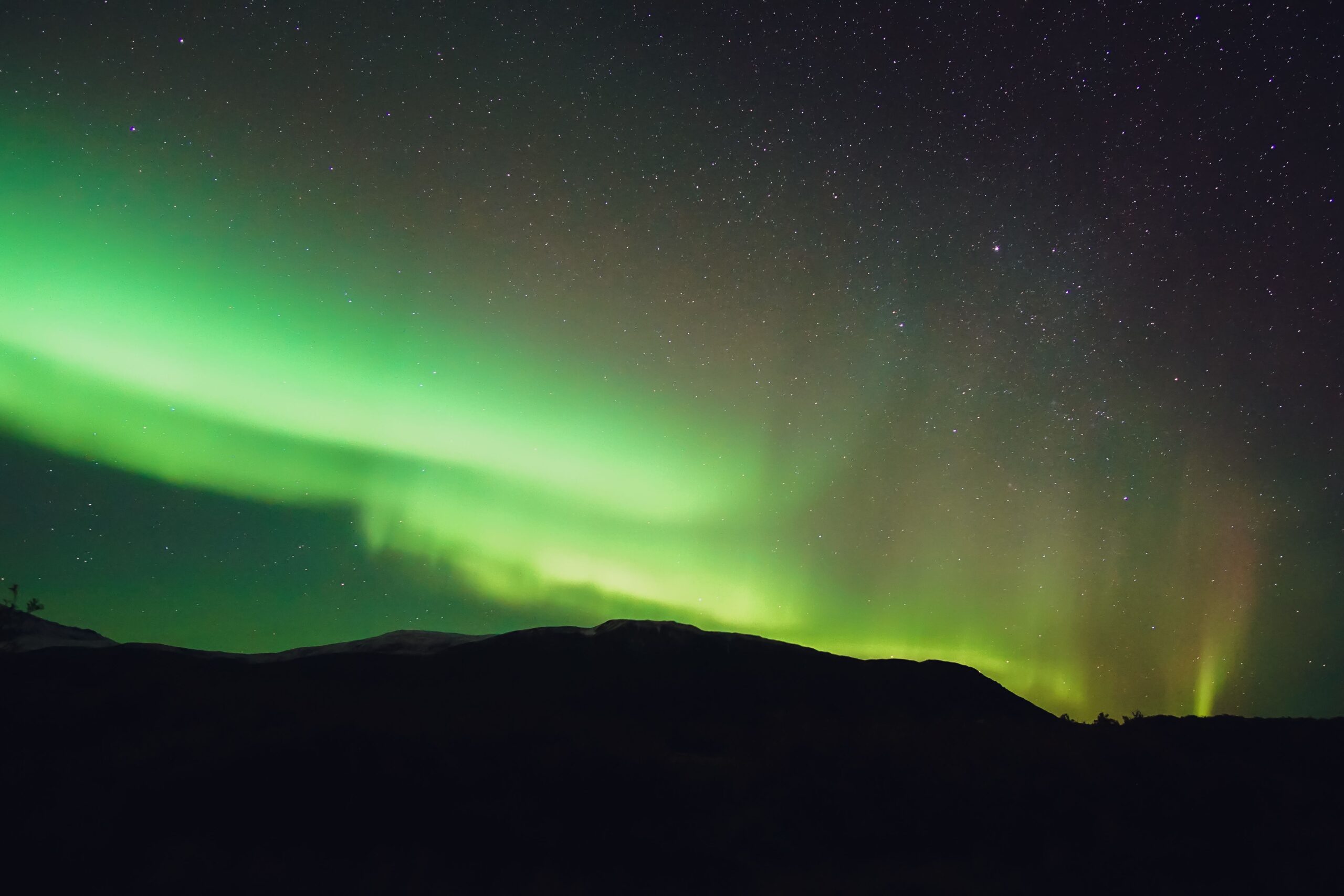
You stand beneath a clear sky, the cold biting at your skin, yet your gaze remains fixed on the green veils unfurling above you. No coincidence-these lights obey the relentless laws of physics. The sun constantly flings charged particles into space: the solar wind. When this stream hits Earth’s magnetic field, it is deflected and channeled along field lines toward the polar regions. There, the particles collide with oxygen and nitrogen atoms in the atmosphere, roughly 100 to 400 kilometers above you. The energy from these collisions excites the gases, and as they cool back down, they emit light-green when oxygen is involved, red or blue when nitrogen plays a part. Not magic, but a precise chemical reaction that has been unfolding for billions of years.
But the show has its rules: You need not only the right location-Iceland, Norway, Canada, or Antarctica-but also the perfect moment. Solar wind activity fluctuates within the sun’s 11-year cycle. Yet even then, the conditions remain strict: Only under cloudless skies, away from light pollution, and between 10 PM and 2 AM, when the night is deepest, does the spectacle unfold in all its glory. So pack thermal underwear, download an Aurora alert app, and bring patience. Because when the lights arrive, they are no gift from heaven, but the result of a perfectly tuned cosmic machine.
When the aurora breaks over the horizon, nature reveals its quietest masterpiece-a fleeting poem of green, violet, and blue that does not illuminate the darkness, but makes it unforgettable.
Their colors tell stories older than any script
You stand under a sky unfolding like a living painting-green shimmering like fresh moss, red glowing deep, violet flickering at the edge of visibility. These colors are not random brushstrokes, but messages from an era before written language. The green hues arise when oxygen at an altitude of 100 kilometers is struck by charged particles from the sun. Red, which shines less frequently but more intensely, originates from higher altitudes. And blue? It proves that nitrogen in the atmosphere is also involved-an element that has enabled life since time immemorial.
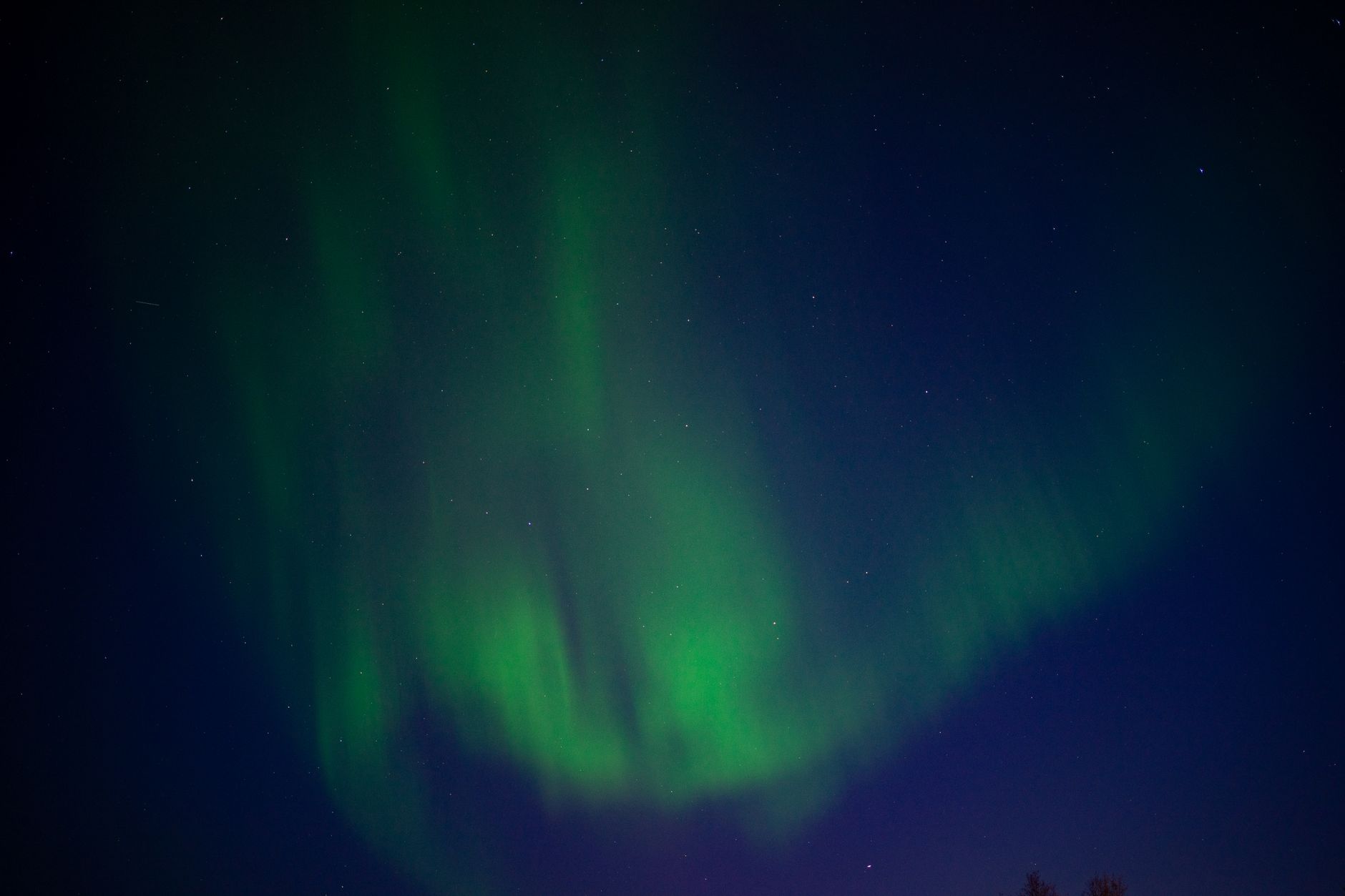
The colors also speak of something else: the connection between Earth and the cosmos. The Inuit called the northern lights Aqsarniit-the lights connected to the souls of ancestors. The Sami people of Scandinavia have developed their own language of reverence for the phenomenon. Even the Vikings interpreted the lights as the shields of Valkyries watching over the earth. These interpretations are older than any writing-and yet they are just as real as the physical processes generating the light. If you now stand beneath such a sky, you feel these layers: the science, the mythology, the silence of the polar night.
Those who wish to experience the Northern Lights need precision-not just patience
You stand there, in the icy stillness of a clear winter night, waiting. Not for a spectacle that unfolds at will, but for a natural event demanding precision-in timing, location, and weather. The Aurora Borealis is not an arbitrary glow, but a physical phenomenon that occurs only under specific conditions. You must know exactly where activity is strongest-often remote regions like the Lofoten Islands, Iceland, or the Swedish wilderness, where light pollution is nonexistent. And even then: A single curtain of clouds, and the chance is lost. The Aurora responds not to your impatience, but to the laws of physics.
It is less the waiting time that wears you down, than the realization that you are part of a larger system. The northern lights are the result of cosmic processes operating for billions of years. Today we know it is charged particles striking oxygen and nitrogen at 100 kilometers altitude. But this knowledge changes nothing about the fact that you must be in the right place at the right moment-with the camera on a tripod, your gaze northward, and the certainty that nature gives only what it chooses. It is about precision: the right night, the right angle, the right preparation.
Good to Know
▸Why do the Northern Lights glow green if they consist of charged particles from the Sun?
Because oxygen at an altitude of 100 kilometers collides with the Sun’s electric particles, releasing energy in the form of green light. This happens because the particles excite the oxygen atoms, which emit exactly this color as they return to their ground state. Red or blue hues only appear when the particles penetrate deeper into the atmosphere or when nitrogen molecules are involved. Best enjoyed with a thermos flask and a clear sky.
▸Can you only see the aurora in the Arctic – or are there lesser-known spots too?
You don’t necessarily have to travel to the polar regions: On the Lofoten Islands or in northern Norway, your chances of seeing the Aurora Borealis are high if the sky is clear. Canada (Yellowknife) and Iceland also offer excellent alternatives. If you prefer something more exotic, you can find the Aurora Australis in New Zealand or Tasmania – less crowded, but just as intense. The key is simply: patience and a clear night.
▸How long should you stay on site – and what role does the Moon play?
Plan for at least five to seven nights on site – the best chance is during the period between autumn and early spring, when nights are long. The Moon is your secret adversary: During a full moon, its light overwhelms the delicate colors, while a new moon or a thin crescent allows the aurora to shine in full intensity. Use apps like Aurora Forecast and choose clear nights with high geomagnetic activity.