//Style · High Jewellery
Mystery Set: The setting you cannot see
In 1933, Van Cleef & Arpels patents a technique that makes metal disappear. High Jewellery as a pure surface of stones.

 Watches & Jewellery
In 1933, Van Cleef & Arpels patents a technique that makes metal disappear. High Jewellery as a pure surface of stones.
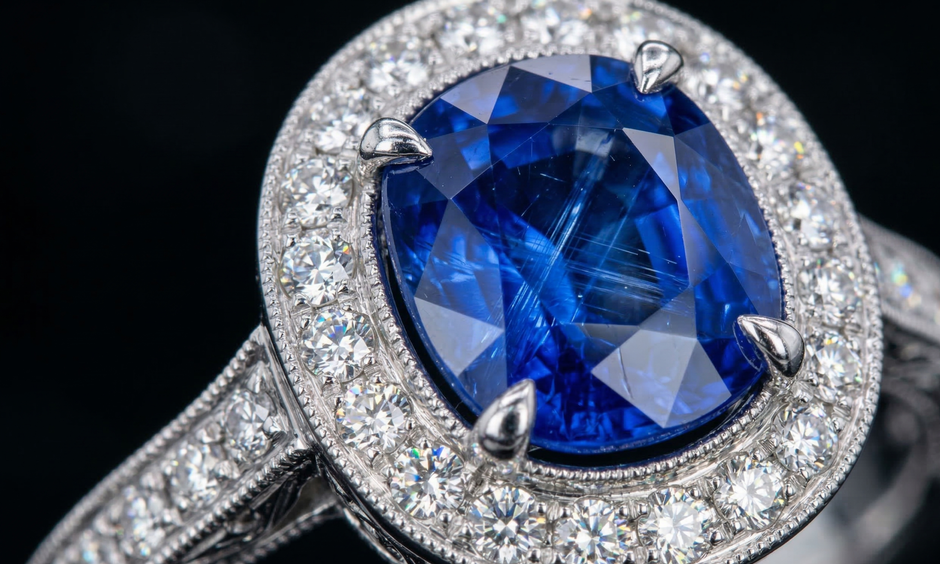
First you see only colour. A surface of stones. No flash of a prong. The eye looks for the setting and cannot find it. That is precisely the point.
Mystery Set, Serti Mystérieux, makes High Jewellery appear as pure matter. Not because the metal is absent. Because it disappears.
I like pieces that demand a closer look. Mystery Set is one of them.
In 1933, Van Cleef & Arpels filed a patent for setting precious stones. It was granted in 1934: the stone receives recesses into which raised parts of the setting fit. The mount remains hidden from view.

Research in the Langlois atelier provided the foundation. The Maison later extended the method to other forms and volumes.
The patent is an instruction for hiding metal without weakening the stone.
Instead of conventional prongs, tiny rails sit in prepared channels on the underside of the stones. From the front you see a continuous surface.

This requires stones that are precisely cut and grooved. Every error appears as a gap or tension.
What you buy is invisibility as craftsmanship, measured in more than carats.
Jewellery is once again seen as a strong driver in the industry. Mystery Set is a counterpoint to the noise.
An invisible setting demands closeness. You have to step nearer.
Verdict: Here, power means control over what you cannot see.
Wear such pieces as architecture in colour. Let light move across the surface.
Compare them with conventionally set pieces. Construction here. Illusion there. Only one whispers.
The strongest setting is the one you forget.
Closeness matters. From a distance, much looks alike. Up close, you see whether someone has worked on it or merely arranged it.
That is why a second look matters. At material. At line. At what gives a room structure and what merely fills it.
Standards are not about volume. They are precision in places you might overlook.
I stay with what still holds up in a second light: form, weight, honesty. Everything else is decoration.
If you are unsure, wait a day. Good pieces wait with you. Weak pieces press you. It is a useful test.
An invisible setting technique by Van Cleef & Arpels: metal largely hidden, a surface of stones.
Filed in 1933, granted in 1934. A signature of the Maison ever since.
Variants of invisible settings also existed elsewhere. Mystery Set is closely associated with the Maison.
More pieces with technique and restraint.