Guide · Denim
Luxury jeans: How to recognise a pair for life
How to recognise a durable pair of luxury jeans: rivets at the stress points, flat-felled seams and bar tacks, a repair service and certifications such as GOTS.

 Wardrobe
How to recognise a durable pair of luxury jeans: rivets at the stress points, flat-felled seams and bar tacks, a repair service and certifications such as GOTS.
How long a pair of jeans lasts in everyday wear comes down to the places under the greatest strain: the pocket corners, the waistband and the seams along the legs. These are the places where you will first notice seams splitting, buttons coming loose or pockets stretching out of shape. Such weaknesses develop gradually as sitting, walking and bending pull on the same spots again and again. Jeans are often worn for years, so any poorly constructed area will eventually make itself felt.
You can recognise solid construction by a few clear details: rivets and bar tacks at the pockets, carefully finished seams and reinforcements on the inside. Beyond what you can see at first glance, two factors matter: a manufacturer’s repair service and certifications that tell you something about production conditions. A repair service keeps damaged jeans in use, while a certification gives you further insight into the conditions in which they were made. Together, these details give you a reliable picture of the jeans. When making your choice, look first at the construction, then at the service and certifications.
Riveted jeans began with a very practical idea. According to Levi Strauss & Co. , US patent no. 139,121 for the first riveted clothing was granted in 1873. Copper rivets reinforce the stress points of work trousers, the places where the fabric is pulled hardest during wear. Pocket corners are particularly exposed to constant strain when you reach inside or sit down.
The invention came from Jacob Davis, a tailor from Reno in the US state of Nevada. He took his idea to Levi Strauss and found a partner for the patent and production. Davis later ran the business in San Francisco. Their collaboration produced a garment that changed work trousers for good. The story shows how closely craftsmanship and organisation worked together in this invention.
Levi Strauss & Co. still marks the anniversary of the patent each year as 501 Day. For your own choice, there is a simple detail to look for: pocket rivets mean that these classic weak spots have been reinforced. Whether a manufacturer makes the rivets visible or hides them makes little difference to their function. More important than any single piece of metal is the construction as a whole. The seams and reinforcements in particular reveal how carefully a pair of jeans has been made.
An example from London shows just how detailed this workmanship can be. According to Blackhorse Lane , the inseam of the E8 model is sewn as a flat-felled seam for strength and durability. The inseam runs along the inside of the legs, where it must withstand constant movement and friction. It is here that a pair of trousers may give way early at the crotch or continue to hold up for a long time.
Alongside the seams, reinforcements at specific points matter too. According to Blackhorse Lane, the maker reinforces stress points with bar tacks or rivets. Hidden rivets in the pocket corners and an additional lining piece made of 10-ounce cotton make the back pockets more resilient. The rivets are positioned so that they remain discreet from the outside. Your back pockets constantly carry your wallet or phone, so it is worth looking inside them.
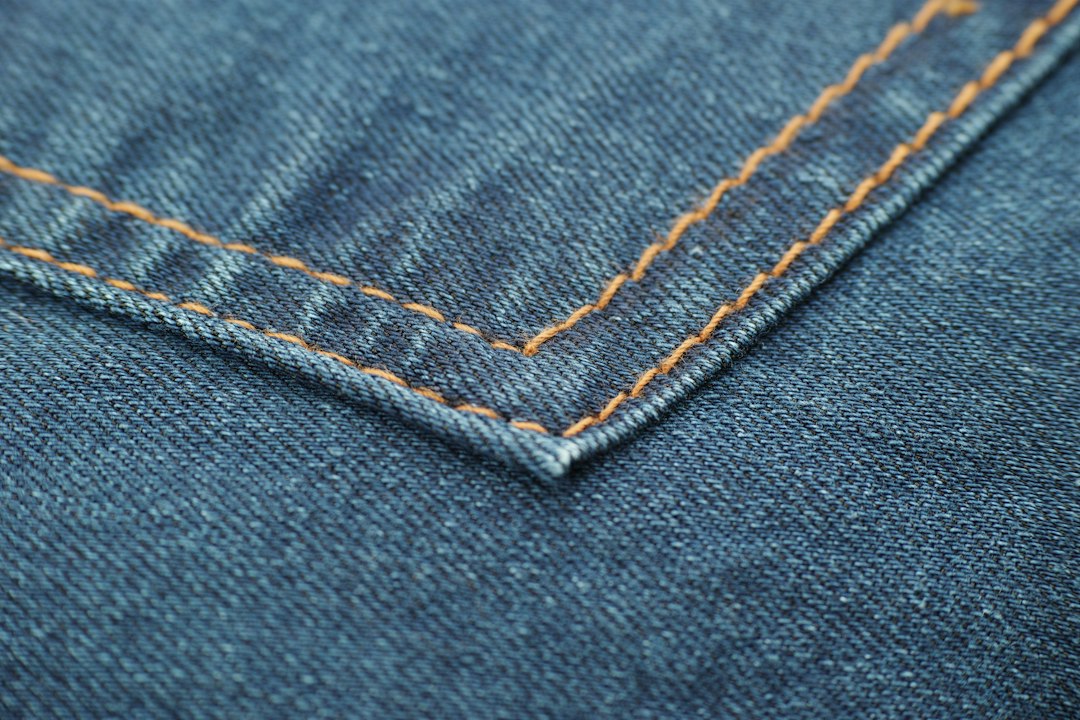
The waistband and side seam also receive special attention on this model. According to Blackhorse Lane, the belt loops are sewn into the waistband. The outer seam is bound into the pocket bag at the pressure point, and the button placket is made from a single piece. The waistband takes a great deal of strain during wear, and sewing the belt loops into it creates a secure connection. The next time you look inside a pair of jeans, start here and check that the loops, seams and placket are solidly made.
All these details address the same places: those where the jeans are under the greatest strain during wear. The more of these points a maker reinforces, the less opportunity there is for early damage in everyday use.
Hidden rivets in the pocket corners and an additional lining piece made of 10-ounce cotton make the back pockets more resilient.
Even a well-made pair of jeans is subject to everyday wear. One way to extend its life is through a manufacturer’s repair service. According to the European Commission , the Swedish brand Nudie Jeans, founded in 2001, offers free repairs for all its jeans. It has 33 of its own repair shops in 20 cities, supported by more than 15 partners. The idea is straightforward: jeans that are repaired stay in your wardrobe longer and need replacing less often.
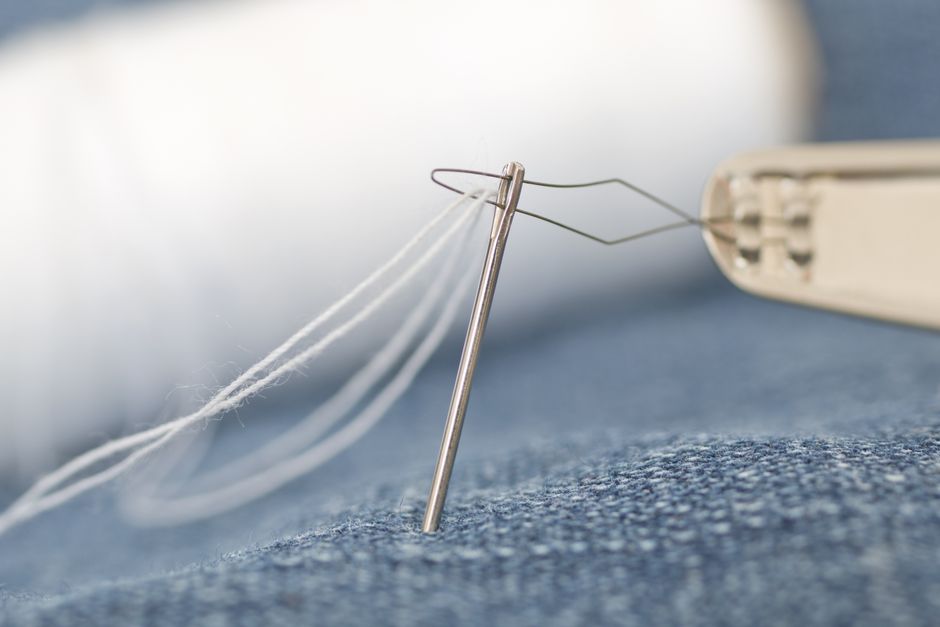
According to the European Commission, free repair kits are also available, with patches, a needle, thread and instructions. A kit lets you fix minor damage at home. It makes it easier to tackle small repairs yourself before a little hole becomes a bigger problem. That way, your jeans remain part of your wardrobe even after they have been damaged.
The figures show the scale of the service. According to the European Commission, Nudie Jeans has repaired around 500,000 pairs, including 68,342 pairs in 2024 alone. Behind those figures are many small repairs that keep jeans wearable. Each number represents a pair that remains in circulation. Repair is a firmly established part of what Nudie Jeans offers.
Returned jeans are cleaned and resold through a re-use line or turned into materials such as patches. New patches made from this material are then used in repairs. A service like this is a practical consideration for you, as it keeps jeans in use for longer. It is worth looking at the repair service before you buy.
A third indicator, alongside rivets, seams and service, is certification. The Verbraucherzentrale Hamburg identifies IVN Best and GOTS as certifications that assess social criteria alongside environmental standards. GOTS and IVN Best therefore represent standards that extend beyond the environment. Writing about labels in general, Verbraucherzentrale Hamburg says that they are rarely subject to external checks. A certification thus gives you information about production itself, beyond the quality of construction.
According to Verbraucherzentrale Hamburg, a long lifespan is better for people and the environment. Clothing labels provide no information about chemical finishes. For physical durability, what counts is the seams, reinforcements and a repair service. A certification therefore tells you something different from the seams.
Certifications and workmanship tell you different things about a pair of jeans. One concerns production, the other how the jeans are constructed for everyday wear. Looking at both gives you a fuller picture when deciding which pair will remain in use for a long time.
The best way to judge whether a pair of jeans will last is to look at a few details: rivets or bar tacks at the pockets, belt loops sewn into the waistband, carefully finished seams and a reinforced back pocket. It is also worth asking whether the manufacturer offers repairs and how easily you can access them. A certification such as IVN Best or GOTS adds environmental and social criteria to the picture. Compare two or three models and work through these points one by one. This way, you can make your decision based on the workmanship and know where a good pair of jeans proves its worth over the years.
The idea came from Jacob Davis, a tailor from Reno in Nevada. He found a partner in Levi Strauss for the patent and production and later ran the business in San Francisco. In 1873, US patent no. 139,121 was granted for the first riveted clothing.
According to Blackhorse Lane, the inseam of the E8 model is sewn as a flat-felled seam. This construction is designed specifically for strength and durability.
According to the European Commission, Nudie Jeans has 33 of its own repair shops in 20 cities and more than 15 partners. Free repair kits with patches, a needle, thread and instructions are also available. According to these figures, around 500,000 pairs have already been repaired, including 68,342 pairs in 2024 alone.
Fabrics with character, understated cuts and a feel that stays with you. Stay in //Style.