Lotta Ludwigson Keeps Suits in Circulation
Two Berlin founders are crafting businesswear that isn’t discarded but returned to the cycle. What that means for cut, fabric and the question of what comes next.
A suit hangs over the back of a chair in the evening. Still in shape, the jacket slightly lifted, the trousers barely creased. A closer look raises the question: what is this fabric actually made of-and what happens to it once it’s no longer worn? For Lotta Ludwigson, this isn’t an aesthetic footnote but the starting point for a Berlin brand that rethinks women’s business attire from beginning to end.
- Founded in 2022 in Berlin by Charlotte Piller and Nhu Ha Dao
- Core offering: bio-circular women’s suit designed to Cradle-to-Cradle standards
- Production across European family-run workshops and women-led manufactories
- Nearly two years of prototyping, including shoulder pads free of plastic
When Fabric Isn’t Destined for Waste
The promise of Lotta Ludwigson isn’t to make the suit a little greener while keeping everything else the same. The brand builds garments so that, at the end of their life cycle, they don’t hit a dead end. Instead of ending up in landfill, the material should become a resource again-biodegradable, recyclable, not lost. The Cradle-to-Cradle approach isn’t a sticker on the hanger; it’s a design principle that kicks in when materials are first selected.
That’s easier said than done. Conventional suits are composites: interlinings of polyester, shoulder pads of foam, linings of acetate-blend synthetics. All of it prevents a piece from ever being cleanly returned to the cycle. Lotta Ludwigson spent nearly two years solving exactly these component challenges-including shoulder pads without a trace of plastic, a single change that alone demanded substantial development work.
Workshops from Berlin to Como
The brand produces in Europe, across small and mid-sized workshops. Silk scarves are made on Lake Como, blouses are sewn in Berlin, and suits come from Poland. The choice of this production chain isn’t just geographical. Family-run workshops and women-led manufactories stand for a particular way of taking and executing orders-personal, with artisanal oversight, free of the anonymity of vast supply chains.
What that means for fit becomes clear in the construction. A suit from such production has a different relationship between cut and body than a ready-to-wear piece optimized for the broadest possible compatibility. The proportions are designed, not merely calculated. This isn’t sentimental talk about craft; it’s functional: if you want to wear clothes longer, you need pieces that fit right from the start and hold that fit across seasons.
Transparency as Part of the Product
The brand displays prices and explains them-material, origin, manufacturing steps. This is unusual in the premium segment, where opacity often contributes to the staging of exclusivity. Lotta Ludwigson takes the opposite approach: anyone who wants to know what a piece costs and why receives an answer. This makes the purchasing argument comprehensible without turning the item into an information sheet.
This openness is also a positioning statement. Women’s business attire often operates in the tension between representation and everyday practicality, between brand image and personal style. A brand that explains its design process makes it clear whom it serves: customers who want to make an informed decision, not an implicit one.
A piece that still holds up after a long workday is no coincidence. It is the result of nearly two years of prototype work and a supply chain you can name.
Desk, Dinner, Next Season
The ambition to create a suit that works from desk to dinner is not new. Lotta Ludwigson interprets it differently than usual: not as a versatility campaign, but as a question of proportion. A piece that functions at 9 a.m. and still looks right at 8 p.m. must have a specific cut-neither so close-fitting that freedom of movement is lost, nor so loose that it sags after a long day.
The longevity of a piece is not an abstract argument here, but a practical one. Anyone who buys a suit that doesn’t look worn after two years invests once instead of repeatedly. The circularity idea comes full circle right here: long-term use, no premature exit due to quality loss, and ultimately clean return instead of a box in the basement or a sack by the door.
How InspiredByLuxury Classifies It
Lotta Ludwigson was founded in Berlin in 2022-at a time when the question of when a garment ends its life in the premium segment was rarely asked. The label tackles it anyway and answers with concrete development work: nearly two years of prototype work alone for a suit whose components meet the circularity claim not just decoratively.
What Stays
What interests InspiredByLuxury isn’t the category, but the logic. A piece you buy because it fits right, is made right, and hasn’t outlived its usefulness after one season is a different purchasing argument than one you buy because a name is on the label. Lotta Ludwigson works on this difference – with an open view of costs, origin, and material truth.
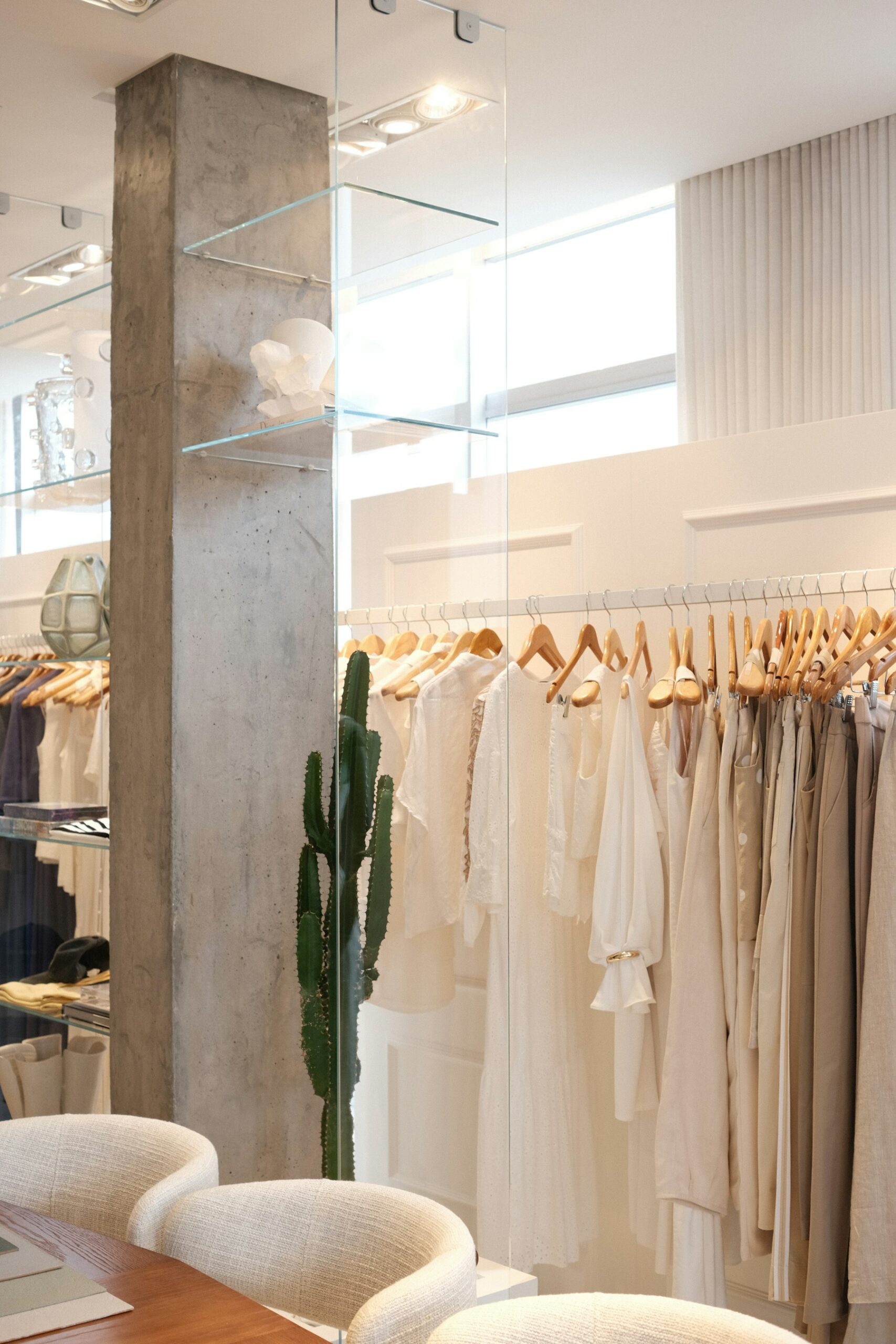
The Benchmark in Everyday Life
In the end, what counts isn’t whether a brand uses the right buzzwords. What matters is whether a garment still looks natural after countless touches, trips, meetings, and washes. That’s where assertion separates from substance.
Quick Explanation
▸What does Cradle-to-Cradle mean for a suit?
The term describes a design approach in which all materials of a product are selected so that after use they can either be biologically decomposed or returned to an industrial cycle. At Lotta Ludwigson, this means that fabrics and components – including shoulder pads – are developed with this specific property in mind.
▸Where is Lotta Ludwigson produced?
Production is entirely based in Europe: suits are made in Poland, blouses in Berlin, and silk scarves on Lake Como. The brand collaborates with family-run businesses and women-led manufactories.
▸Who is the brand designed for?
Lotta Ludwigson targets women who buy business attire not by season, but by durability. Each piece is designed to transition seamlessly from desk to dinner and remain wearable across multiple seasons.
Image credits: Cover photo Priscilla Du Preez / Unsplash; feature images Amanda Vick and Caroline Badran / Unsplash.
Sources and further reading: Lotta Ludwigson and FashionUnited.
Image source: Cover image Priscilla Du Preez / Unsplash; Featured imageer Amanda Vick and Caroline Badran / Unsplash.