Guide · Craft
Leather gloves: How to recognise genuine craftsmanship
How to recognise genuine craftsmanship in leather gloves: supple leather, a cut shaped by pulling and stretching, the stitching and a warm lining.

 Wardrobe
How to recognise genuine craftsmanship in leather gloves: supple leather, a cut shaped by pulling and stretching, the stitching and a warm lining.
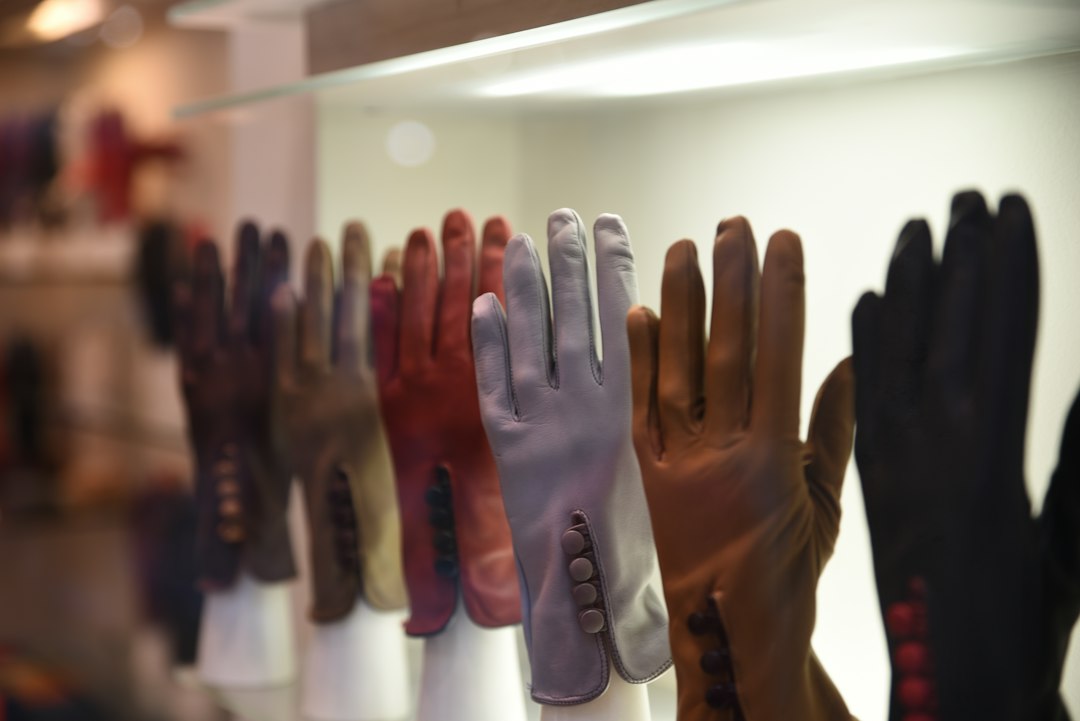
A good leather glove reveals its quality only on closer inspection. At first glance, most pairs look similar. The difference lies in details such as the choice of leather, the cut, the stitching and the lining. A glove fits close to your hand, so you feel every one of those decisions with each movement. Because gloves are worn next to the skin, poor workmanship becomes apparent more quickly than it does with other garments. These details also determine how long a glove lasts and how the material develops over time.
Handwork goes into a glove at several stages, from selecting the skin and cutting it to embroidering the decorations. A hand-sewn seam is not in itself proof of quality, as experienced glovemakers use machines too. Indeed, several types of stitching, including machine stitching, are part of the craft. What matters is how the material, fit and workmanship come together. You can assess this in four places: the leather, the cut, the stitching and the lining.
According to Würzburg master glovemaker Gerlinde Ballin-Huth, who was profiled by the Deutsche Handwerks Zeitung , glove leather must have some give: it must be supple. Leather for clothing or shoes has to meet different demands. A glove fits snugly around the fingers and thumb and is constantly bent and folded as you wear it. A supple material follows these movements, while one that is too stiff resists them. Several types of leather are used: goatskin is considered robust and hard-wearing. Lambskin is the most common, while Ballin-Huth also works with deerskin, roe deer leather and peccary, the leather of a wild pig from South or Central America.
A skin is not uniform throughout. According to Ballin-Huth, its character varies between the head, flanks, middle and legs. The fingers of a glove should never be cut from the head section. Ideally, two gloves are made from one skin, so both parts of the pair come from the same hide. When you know where your gloves come from, you can also understand why two pairs may feel different.
An older test by Öko-Test from 2011 looks at tanning. It reports that leather gloves are made almost exclusively from chrome-tanned leather. Under certain circumstances, chromium III can oxidise into chromium VI. Glovemaker Rico Wappler describes people with neurodermatitis whose skin reacts allergically to chrome-tanned leather. He makes vegetable-tanned gloves on request, an option for people with sensitive skin.
When choosing a pair, the type of leather gives you an initial indication of its intended use. Ballin-Huth selects leather according to how the glove will be used. According to the Deutsche Handwerks Zeitung, hard-wearing goatskin is suitable for motorcycle or work gloves, for example. The right leather ultimately depends on where and how you want to wear your gloves.
Before the leather is worked, it is dampened to make its direction of stretch easier to see. This reveals how the skin stretches before the first piece is cut. Ballin-Huth begins each pair by measuring the hands in French inches. In her workshop, every pair is made individually for the hand that will wear it. These measurements form the basis for every step that follows.
The Gloving Glossary by Yeovil History explains the technical terms used in cutting. Table cutting is cutting by hand to ensure a precise fit for a particular hand size. The trank is the piece comprising the palm, back of the hand and fingers, forming the main body of the glove. Fourchettes are the inner side pieces of the fingers. Quirks are the triangular inserts at the base of the fingers and thumb. In the English Bolton cut, the thumb gusset is cut in one piece with the back of the hand and the palm.
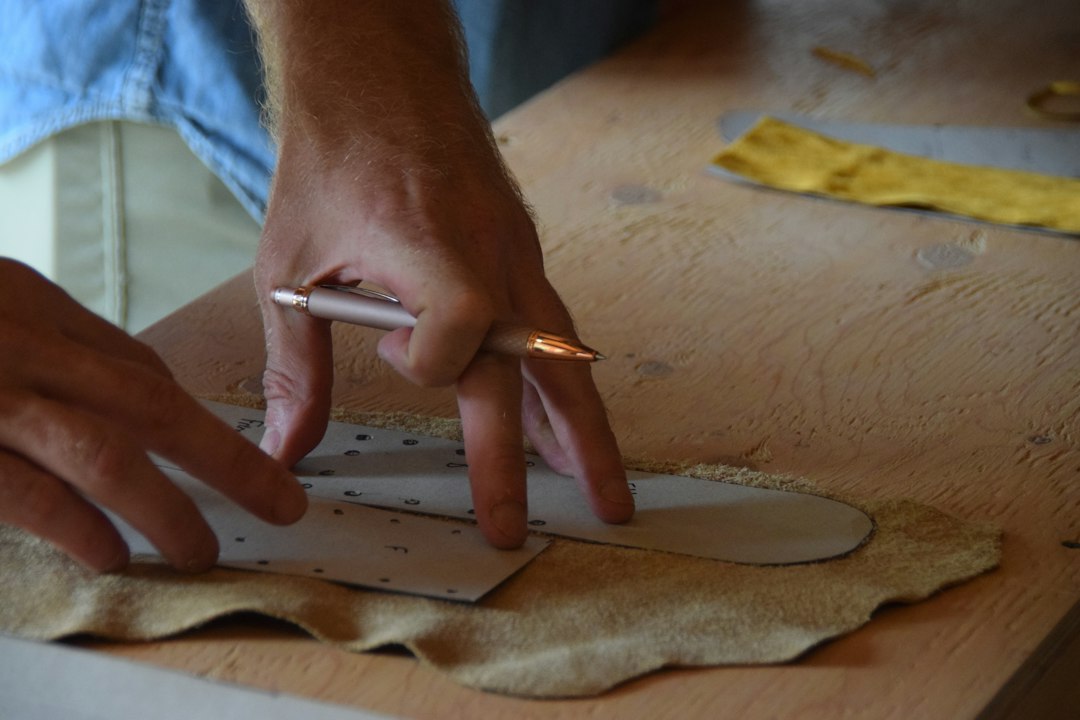
Movement plays a part in the cutting itself, too. According to Fort Belvedere, as reported by Gentleman’s Gazette, the leather must be pulled and stretched constantly during cutting to ensure the glove is cut correctly. The maker describes a cutting process guided by the shape of the hand. The quirks then give the finished glove additional freedom of movement. These steps prepare the material for its final shape.
An old division of labour also lies behind the finished product. According to the Deutsche Handwerks Zeitung, glovemakers normally confine themselves to cutting, while others sew the pieces together. Wikipedia describes two related master trades: one stretches the leather, the other sews. Stretching prepares the skin for its eventual shape, and sewing brings the pieces together. A pair can therefore pass through more than one person’s hands along the way.
In her workshop, every pair is made individually for the hand that will wear it.
According to Fort Belvedere, you can distinguish machine stitching from hand stitching by its appearance. For the maker, hand-sewn means that every stitch is made by hand, often with contrasting thread to highlight the stitching. The maker regards gloves machine-sewn inside out as typical of less expensive production. A look at the stitching can therefore help you make an initial assessment of a pair.
Hand stitching alone, however, says little about quality. Even a master glovemaker like Ballin-Huth uses three sewing machines for different types of stitching. The individual pieces of her gloves are also machine-cut from the leather. She embroiders the decorations by hand at the end. She names sewing as the most difficult part of her work.
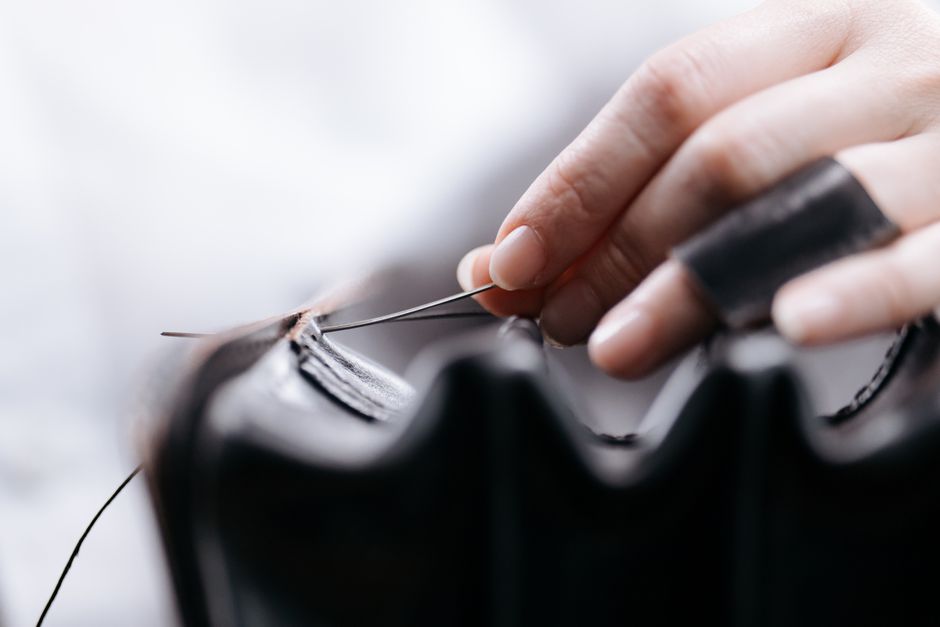
A look at the classic seam types shows the variety of sewing techniques used in the trade. Inseam means the glove is sewn inside out, leaving the seam on the inside. With outseam, the seams sit on the outside and shape the glove’s visible appearance. In piqué, one leather edge is laid over the other and sewn.
The prixseam is a variation of the external seam, made on a special machine with horizontal stitches. Silking refers to the decorative stitching on the back of the hand. The prixseam in particular shows that machine-sewn techniques are also part of the glovemaker’s craft. The stitching reveals the technique, but assessing quality means looking at the whole glove.
According to Fort Belvedere, a warm glove needs an interlining between the leather and the hand. The maker uses cashmere, which is soft and warm. The inside helps determine whether you enjoy wearing a glove for hours. The lining is sewn in using a dedicated machine. Finally, the finished glove is ironed to remove creases.
Ironing also has a tradition in the trade. Historically, gloves were placed over hot forms to give them an attractive appearance. Such knowledge has become rare. Glovemaking has not been a recognised apprenticeship trade since 2011. According to the Zentralverband des Deutschen Handwerks, cited by Wikipedia, only four glovemakers were trained in the 15 years before that. Made-to-measure work following these traditional steps is therefore rare.
The lining and finish are therefore often the first signs of how much care has gone into a pair. Together with the rarity of the trade, they help explain why good gloves have their devotees.
When choosing a pair, look at the leather, the cut, the stitching and the lining. Supple leather and a fit based on measurements, together with neat stitching, tell you more than the label ‘hand-sewn’ alone. For winter gloves, look at the lining: cashmere is one of the options the maker specifically mentions. If you have sensitive skin, ask about vegetable-tanned leather. Some glovemakers make gloves from it on request. With so few people trained in the trade, a carefully made pair remains a rare piece of craftsmanship.
According to Gerlinde Ballin-Huth, goatskin is considered robust and hard-wearing. Lambskin is the most common, while the Würzburg master glovemaker also works with deerskin, roe deer leather and peccary, the leather of a wild pig from South or Central America.
Hand stitching alone says little. Even master glovemaker Gerlinde Ballin-Huth uses three sewing machines for different types of stitching, and the pieces of her gloves are machine-cut.
The trade has not been a recognised apprenticeship since 2011. According to the Zentralverband des Deutschen Handwerks, only four glovemakers were trained in the 15 years before that.
Fabrics with character, understated cuts and a feel that stays with you. Stay in //Style.