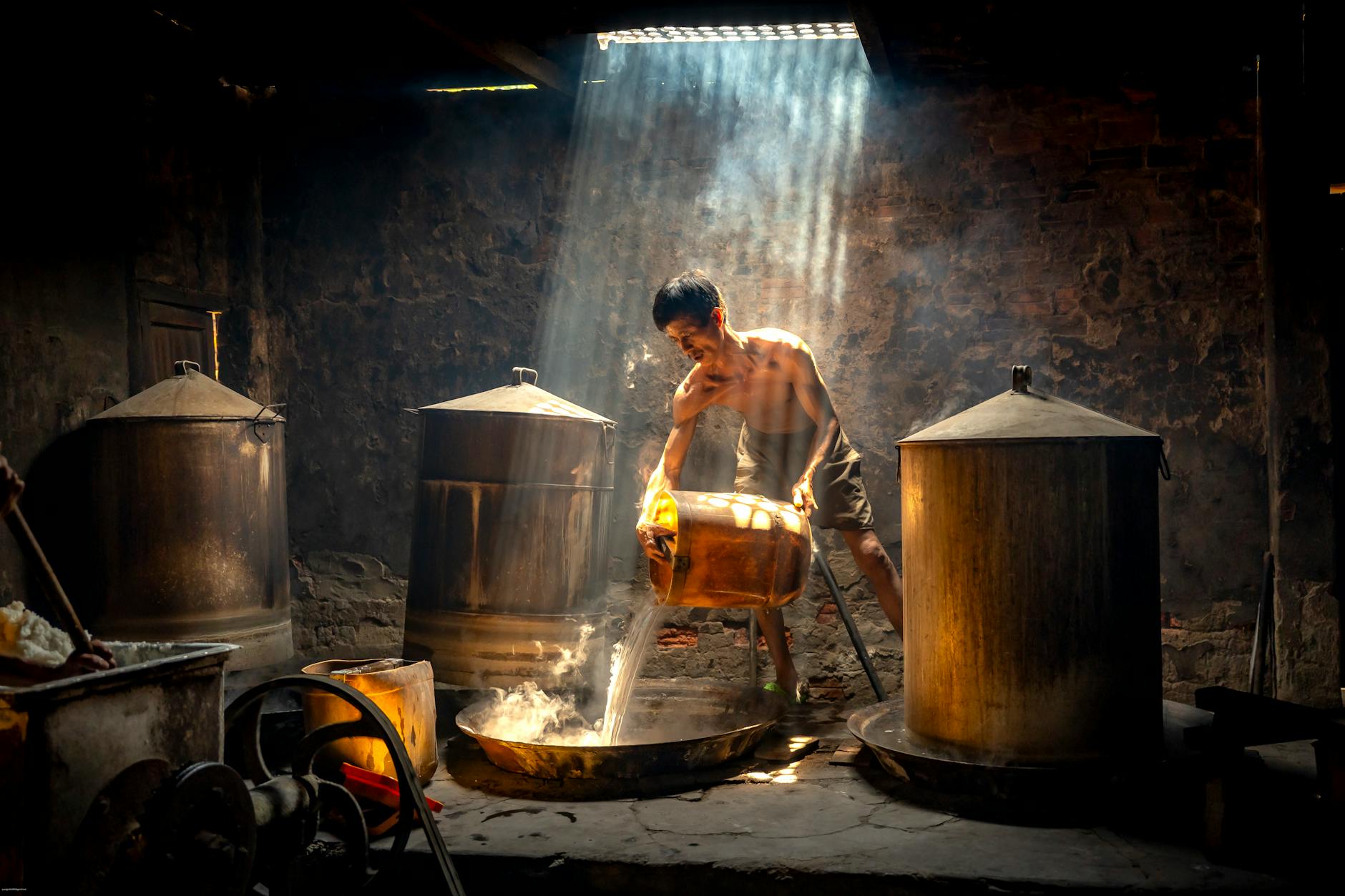
In the Tannery: Where Shoes Learn Patience
An afternoon on the edge of a workshop where lasts are still hammered into shape. Above the scent of vegetable-tanned leather, the long waits between steps, and the question of why a shoe improves when you don’t rush it.
There’s a moment when a workshop reveals itself. Not when the machines are running, but when they fall silent. Then you hear the essentials: short, metallic hammer blows on a last, the pull of leather over wood, interspersed with long pauses when nothing seems to happen. Those pauses are exactly why a handmade shoe ages differently from one stamped out on a factory line.
- Vegetable-tanned leather gives the workshop its warm, woody scent and ages with patina instead of wear-and-tear
- Top-tier shoe crafting often involves more than 100 individual steps, from cutting and lasting to final inspection
- The wooden last is the custom form over which the shoe is pulled; rows of stored lasts are a hallmark of the workshop
The Scent Arrives First
Before you see anything, you smell it. In a workshop that works with vegetable-tanned leather, a warm, faintly woody fragrance hangs in the air, drifting from open leather rolls and freshly worked hides. It isn’t perfume and it isn’t factory fumes; it’s something organic, redolent of bark and beeswax. Vegetable tanning means the hide is treated with plant-based tannins instead of faster chemical processes. It takes longer, smells different, and ages differently.
From a distance, that can sound like a footnote, a detail for obsessives. Yet it’s the beginning of everything. Leather that grows slowly absorbs colour more deeply, responds to hand-polish, and over years develops a surface you can’t buy; you have to earn it by wearing it.
A Hundred Steps Nobody Counts
A fine men’s shoe isn’t forged in one go. In top-tier production, more than 100 discrete steps are cited, from cutting the upper leather through lasting and the Goodyear welt to the final check. Most of these steps never meet the buyer’s eye; they’re embedded in the construction, invisible between sole and foot.
The Goodyear welt is one such invisible hero. In this frame-stitch, an insole is sewn to the upper layer, making the shoe sturdy and, more importantly, repairable. A shoe built this way can be resoled again and again. That’s the practical heart of what workshops mean by longevity, not a promise, but a seam you can unpick and renew.
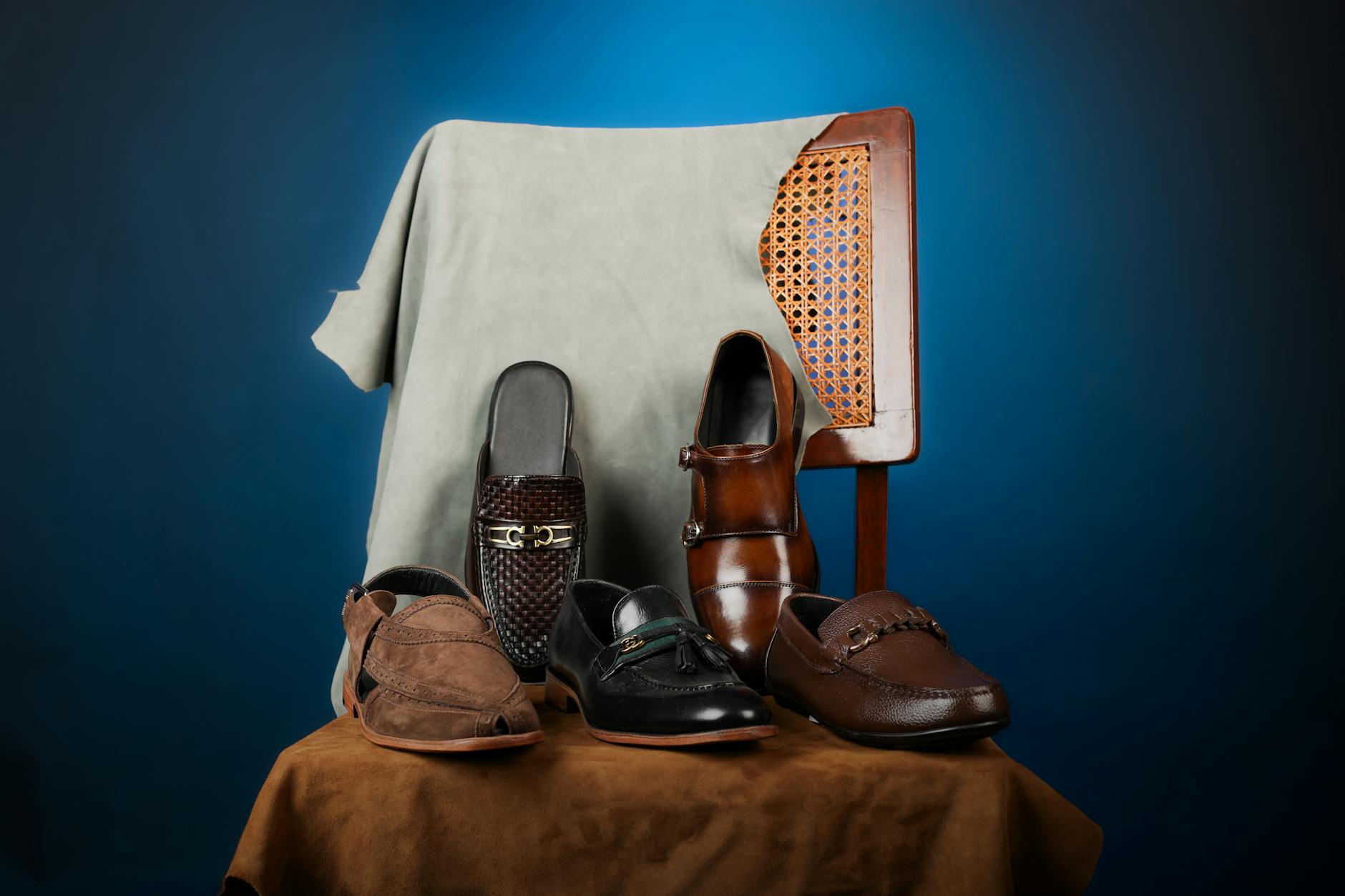
The Last Is the Memory
At the centre of every serious shoemaking workshop stand the lasts. The last is the wooden form over which the shoe is pulled and shaped. In established workshops, rows of stored lasts fill entire shelves, each one a specific fit, often for a single customer. Once you’ve been measured, you leave behind a shape that remains.
It’s a quiet kind of commitment. A shelf of lasts isn’t inventory; it’s an archive. It tells you who has had shoes made here and implies the workshop expects to do it again. In an era when mass production optimises for the broadest possible fit, this idea feels almost quaint: that a shoe isn’t made for an average foot, but for yours.
A shelf of wooden lasts isn’t storage. It’s an archive of the feet that have already been measured here.
Patina isn’t a coat of paint
People often misuse the word “patina.” In bespoke shoemaking it doesn’t mean a single dye job or a glossy lacquer; it refers to a multi-step, hand-applied sequence of dye, polish, and careful drying pauses. Layer upon layer, each left to settle so the leather can breathe and the colour can deepen. The finish has depth and subtle variation; it doesn’t flash mirror-bright like a sprayed shell, but instead shimmers and shifts. Two shoes from the same bench will never be identical.
That very irregularity is the point. It is earned through time and human touch, not churned out by a machine that promises cookie-cutter perfection. A patina master wields brushes, cloths, and gentle heat, and above all, patience. Premium craft lives on these waiting periods: leather must dry, dye must bite, polish needs stillness before it holds.
Why Italy keeps coming up
When the conversation turns to fine footwear, eyes inevitably drift toward Italy. The industry is regionally concentrated, especially in the provinces of Macerata and Fermo in the Marche region, where a dense cluster of premium manufacturers and suppliers has grown over generations. Santoni, one of the marque names, was founded in Corridonia in 1975 and still crafts every pair on-site.
Numbers and place names don’t capture the atmosphere, but they do explain why these workshops exist: a critical mass of know-how, suppliers, and skilled hands. While France’s Corthay demonstrates a refined patina culture, the Marche supplies the industrial backbone. Both traditions share a conviction: quality arises from deliberate slowness, not from assembly-line cadence.
What you gain when you reject speed
The real lesson of such a workshop isn’t technical; it’s a new relationship with time. A shoe that is made slowly asks for patience from its maker, and rewards patience from its wearer. It isn’t discarded after one season; it is maintained, resoled, and worn on. That is sustainability etched not on a label, but into the construction itself.
Once you’ve felt the weight of waiting that goes into a fine pair of shoes, you see speed differently, not as an enemy, but as something that becomes expensive when applied in the wrong place. The best pair is often the one you never replace because it lasts, and because it looks better with every passing year.
Quick answers
▸What does “vegetable-tanned leather” mean?
Vegetable-tanned leather is treated with plant-based tannins instead of faster chemical processes. Common in high-end shoemaking, it carries a warm, woody aroma and matures into a richer patina over time.
▸Why is Goodyear welt construction considered durable?
In Goodyear welt construction, a midsole is stitched to the upper. This frame seam not only makes the shoe tough, it also keeps it repairable: the outsole can be replaced multiple times.
▸What is a “last”?
A last is the custom wooden form over which the shoe is pulled and shaped. In bespoke workshops you’ll often see rows of stored lasts, each one calibrated to a specific fit.
Image credits: header and article images Pexels.