Harris Tweed: The Fabric That Defines Timeless Style
20 June 2026
There are fabrics you buy, and there are fabrics you eventually refuse to part with. Harris Tweed falls into the latter category. It isn’t made for a single season, but for the years it takes for a jacket to slowly become your jacket.
- The Protection: A dedicated 1993 act dictates what qualifies as Harris Tweed: cloth handwoven in the Outer Hebrides from pure virgin wool. Nothing else.
- The Mark: Since 1910, the Orb-a globus cruciger-has served as the protected trademark for genuine tweed. No label is applied to a fabric more deliberately.
- The Secret: The color isn’t applied to the finished yarn; the loose wool is dyed before it is spun. Hence the depth that no printed fabric can achieve.
- The Standard: A weaver produces roughly 80 to 100 meters of cloth per week, and the fabric often weighs around 500 grams per square meter. You feel that before you even see it.
Your first encounter with good tweed rarely happens through the eyes. It happens through the hands. You take a jacket off the hanger, and before you’ve even properly registered the color, your fingers are already picking up on something else: the weight, a slight roughness, a solidity that speaks not of fashion, but of material. A thin fashion fabric slips through your fingers like an excuse. Tweed stays put. It has substance, and it makes no secret of it.
This is where Harris Tweed sets itself apart from almost everything else sold as wool fabric. It isn’t a marketing buzzword for a look, but a legally defined entity. According to Wikipedia, the Harris Tweed Act of 1993 describes the fabric as cloth handwoven in the Outer Hebrides from pure virgin wool. Not near the islands, not in the same style, not from a blended fiber that looks similar. Right there, exactly like that, from exactly this raw material.
A Fabric with Its Own Legal Status
It’s a strange concept: a textile with its own act of parliament. Most fabrics exist in the gray area between brand names, fashion terms, and manufacturer promises. Not Harris Tweed. Here, a parliament decided that a name can only be used if clearly defined conditions are met. This doesn’t just protect a single company, but an entire region and its craftsmanship.
Long before this legislation, there was already a visible symbol. According to Wikipedia, the protected trademark was recognized back in 1910 and has since featured the Orb, a globus cruciger, as its hallmark. When you see this small emblem on a label, it’s no mere decorative logo. It is a certificate of authenticity with over a hundred years of history. In an industry where almost every word has been overused, this is an almost old-fashioned form of honesty.
What convinces me most about this framework is precisely what it prevents. You cannot make Harris Tweed faster, cheaper, or more arbitrary without it ceasing to be Harris Tweed. The name cannot be separated from its origin. That is exactly why the fabric has seemed so reliable for decades: it simply isn’t allowed to be any other way.
Once you understand that nothing in this definition can be compromised, you read the price tag differently. A jacket made of genuine tweed doesn’t carry a premium for a label, but for a production method that defies acceleration. That sounds like a sacrifice, but it’s the exact opposite. You get something that doesn’t need the next trend to survive.
Why the Color Is Woven In From the Start
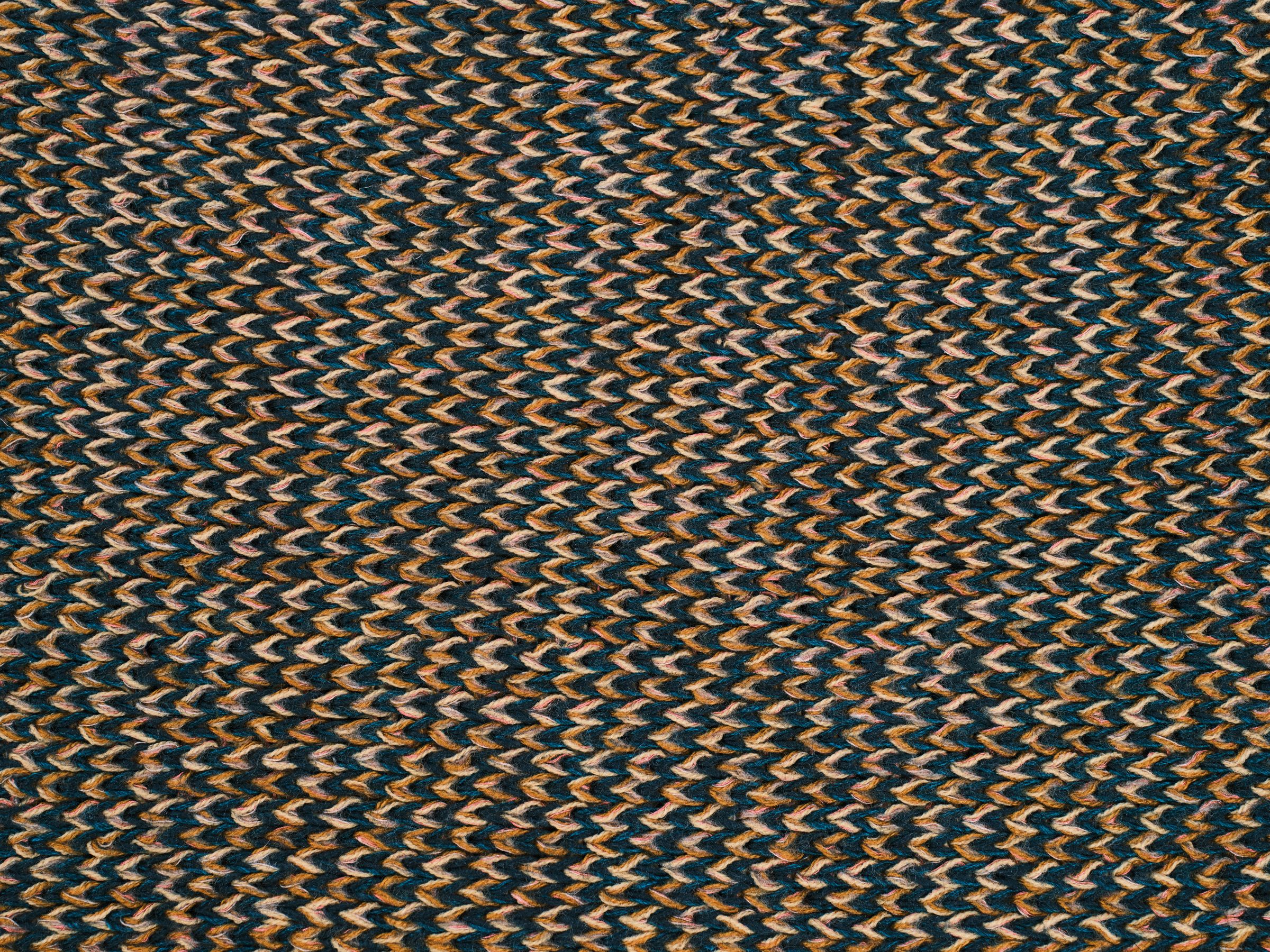
The most elegant technical trick in Tweed happens long before a single thread is spun. Most fabrics are dyed after the yarn is finished or the cloth is woven. With Harris Tweed, as Wikipedia notes, it’s the opposite: the wool fleece-loose wool-is dyed before it’s spun. Only then does the thread form, with colors already interwoven.
This might sound like a detail for experts, but you can see the result with the naked eye. A surface-dyed fabric has one color. A fabric spun from dyed fleece has many, blending within each thread. Hold a quality Tweed at an angle to the light, and what seemed brown dissolves into rust, moss, cool gray, and a hint of blue. This depth can’t be printed or faked-it’s woven into the material itself.

This very quality makes Tweed so forgiving in daily wear. A solid-colored fabric shows every shadow, crease, and speck of light dust. A heathered Tweed absorbs it all. After a long day, it looks better than a smooth suit because its irregularity was part of the design from the start. What looks like wear on other fabrics reads as character here.
There’s another, quieter advantage. Because the color isn’t applied but spun in, it ages differently. It doesn’t fade unevenly but develops a uniform patina many only find truly beautiful after years. A new Tweed is good. A worn Tweed is often better.
A new Tweed looks good. A worn Tweed looks like you, and that’s the whole difference.
This logic aligns with a wardrobe philosophy that doesn’t chase the next trend. Sustainability here isn’t a tacked-on message but a byproduct of sound choices. A fabric that ages gracefully rather than wearing out quickly needs replacing less often. The best piece is often the one you never swap out.
Handcraft as the Standard, Not a Pose
The term ‘handwoven’ is often used decoratively in fashion. For Harris Tweed, it’s a quantifiable measure. As industry sources note, a weaver produces roughly 80 to 100 meters of fabric per week. This isn’t an industrial figure-it’s the pace of a person at a loom, which can’t be arbitrarily sped up without sacrificing quality.
Do the math, and the fabric takes on a different meaning. Each meter represents measured time; each blazer, a small section of that week’s output. This explains why genuine Tweed commands its price – and why that price is its value. You’re not paying for a brand but for a method that resists pure efficiency.

You feel this craftsmanship in the weight. Typical fabric weights, per Wikipedia, hover around 500 grams per square meter-significantly heavier than the thin summer wools often marketed as ‘comfortable’ today. This weight isn’t a drawback; it’s the point. Heavier fabric drapes more smoothly, resists wrinkles, holds its shape, and blocks wind that would cut through thinner blazers.
Hence, as Wikipedia states, the classic single-breasted blazer in this fabric is a proven outer layer for harsh weather. Tweed wasn’t made for heated offices but for islands where the weather rarely asks permission. This very origin makes it so practical for everyday wear. It’s clothing designed for the outdoors that never feels out of place indoors.
If you put these three things together, you don’t need technical jargon to separate real tweed from an imitation. The material reveals itself. It is one of the few garments where quality isn’t claimed but felt, often the very moment you pick it off the hanger.
What tweed brings to a timeless wardrobe
Timeless is an overused word, but with tweed it fits – and in a very concrete sense. A tweed blazer looks the same today as it did thirty years ago, and it won’t look ridiculous in thirty years. It follows no seasonal color and no passing cut trend. It is closer to a good tool than to a fashion item.
That makes it a quiet anchor for a wardrobe that doesn’t require annual replacements. You pair it with jeans when you want a casual look, and with flannel trousers when things get more serious. It works in the pub and at a concert, in the countryside and in the city. It never screams for attention and still gets it, because a material with history is perceived differently than any random fabric.
And it ages with you. A blazer you wear often adapts to your movements. The elbows soften, the collar learns your posture, the fabric becomes more familiar without wearing out. At some point, it’s no longer a garment you own, but one that belongs to you. That’s exactly what a fast fabric cannot do, and that’s exactly why tweed is worth it.
Quick Answers
▸How to identify genuine Harris Tweed on a garment?
Most reliably by the orb-the protected trademark emblem shaped like a globus cruciger that has marked genuine tweed since 1910 and is usually found on a sewn-in label. Two material characteristics follow: a noticeable weight in the hand, often around 500 grams per square meter, and a color that breaks into multiple tones under oblique light because the wool was dyed before spinning. If the orb is missing and the fabric feels light and solid-colored, it is at best tweed-like, but not Harris Tweed.
▸What distinguishes Harris Tweed from other tweed?
The name is legally protected. The Harris Tweed Act of 1993 stipulates that the fabric must be hand-woven from pure virgin wool on the Outer Hebrides. Other tweed fabrics may look similar, but they cannot call themselves that unless they meet this origin and production method.
▸Why is the color of tweed so deep?
Because it is not the finished yarn that is dyed, but the loose wool before spinning. As a result, multiple color tones are interwoven in the finished thread, creating the typical heathery depth. This effect cannot be achieved with subsequent dyeing or printing.
▸Isn’t heavy tweed impractical for everyday wear?
Quite the opposite. The weight, often around 500 grams per square meter, ensures the fabric hangs well, barely wrinkles, and protects against wind. The classic single-breasted tweed blazer is proven outerwear for rough weather, yet works just as well in the city.