Buying into Glashütte has become expensive. Understanding Glashütte costs nothing and pays off more. The town owes its reputation not to marketing, but to a school, a loan, and the stubbornness to invent a standard no one needed before.
There are names that weigh more on a dial than any logo beside them. Glashütte is such a name. When you read it, you think of precision, thin plates, workshops where silence reigns. What few realize: this reputation has a very concrete beginning, and it has nothing to do with glamour. It starts in a depleted valley, with a credit and a man who took a bet.
Key Takeaways
Glashütte sits at about 340 meters above sea level in the Müglitz Valley, in the district of Sächsische Schweiz-Osterzgebirge, away from major transport routes.
Ferdinand Adolph Lange founded a watch manufacturing company here on December 7, 1845, funded by a Saxon loan of 7,820 thalers.
On May 1, 1878, the German Watchmakers’ School opened, initiated by Karl Moritz Großmann. It turned a location into a school of thought.
From 1878 to 1951, its students produced 4,410 new works: movement models, measuring tools, pocket watches.
The former school building now houses the German Clock Museum Glashütte. If you want to understand the place, start there.
You don’t end up in Glashütte by accident. The town isn’t on the autobahn, nor by a lake where tourism arrives automatically. It lies in the Müglitz Valley, squeezed between forested slopes, at an altitude of around 340 meters, in the district of Sächsische Schweiz-Osterzgebirge. Those who travel here do so intentionally. That matters, because this location explains part of the history. Glashütte was never a place where people got rich due to a favorable position. It became a place where people learned to work precisely, because otherwise nothing worked.
A valley after mining, a loan, and a date
Before the watches came, there was mining, and when the mining left, the valley was left empty-handed. Silver, ore – what had fed generations – was mined out or no longer profitable. Anyone who has ever been to a region that has lost its economic foundations knows that particular silence: too many capable hands, too little work, a knowledge of tools and materials that nobody needs anymore. It is into precisely this situation that the date that changes everything falls.
On December 7, 1845, Ferdinand Adolph Lange founded a watch manufactory in Glashütte. That sounds like entrepreneurial spirit, and it was, but above all it was a risk. Lange needed money, and he got it in the form of a Saxon loan of 7,820 talers. This number is more than a footnote. It shows that this was not a rich man financing a hobby, but that a state and a founder were jointly placing a structural-policy wager. The idea was as simple as it was bold: from the unemployed hands of a mining valley, watchmakers were to be made.
That was no foregone conclusion. Watchmaking is not a craft you learn over a weekend. It demands patience, a steady eye, a hand that does not tremble, and an understanding of tiny tolerances. Lange had to train his people, procure tools, introduce processes, and he had to do all this in a town that previously knew nothing of such work. That over the decades this grew into an entire town synonymous with precision is therefore not something to be taken for granted. It is the result of a decision that could have failed.
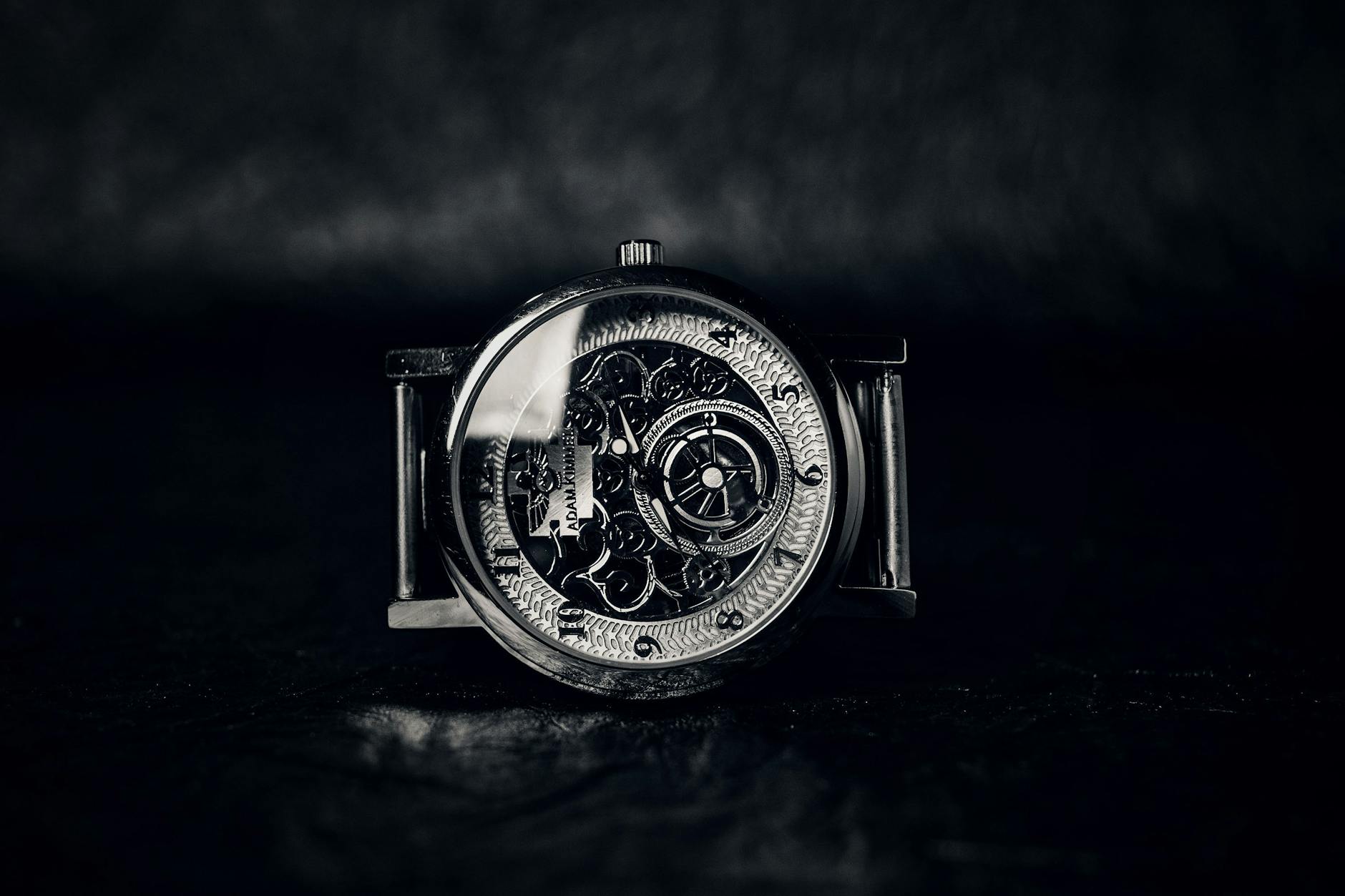
The real language of Glashütte lies not on the dial but beneath it: bare mainplate, blued screws, a jewel bearing in the light. Image source: Pexels / Gunnar Hoffmann.
What makes this beginning so credible is the sequence. First came hardship, then the idea, then the painstaking work, and only much later the reputation. Glashütte didn’t dream up its name; it earned it bench by bench. Anyone who holds a timepiece from this town in their hand today also holds that legacy: the conviction that quality is not claimed, but made.
The school that turned a location into a discipline
A manufactory can shape a town. A school shapes its future. The second, perhaps more important turning point in Glashütte’s history is therefore not a product, but an institution. On May 1, 1878, the German Watchmaking School Glashütte was opened, on the initiative of Karl Moritz Großmann. With it, the town gained something that set it apart from a mere production site: a place where knowledge was not only applied, but passed on and refined.
Founding a school means investing in the generation after one’s own. It means not leaving skills in the minds of individual masters, but systematizing, teaching, and examining them. That is exactly what happened. The Watchmaking School turned out not just craftsmen, but a school of thought. Pupils learned not only how to build a watch, but to understand why it works the way it does and not otherwise. This difference between copying and understanding is the entire distinction between a supplier location and a cradle.
A manufactory builds watches. A school builds the hands that will still be building watches fifty years from now.
Just how productive this school was can be quantified with remarkable precision. From 1878 to 1951, its students produced 4,410 new works. These were not only pocket watches, but also movement models and measuring tools – precisely the instruments that make precision measurable and therefore improvable in the first place. This number tells its own little story. It shows a school that not only trained, but produced, experimented, and created its own tools. Here they didn’t copy; they calculated.
A movement model is more than just a practice piece. It is a functioning, often enlarged watch movement that demonstrates how the escapement, balance, and gear train really interact. Anyone who builds something like that has not memorized the principle – they have grasped it. This very way of teaching, from understanding rather than from copying, sustained the town across generations. A student who has once got a movement model to run knows for the rest of their life why a watch stops when a single bearing is poorly seated.
It is worth pausing for a moment to consider these measuring tools, as they form the invisible core of the entire operation. A watch is only as good as the standard used to test it. To master tolerances in the hundredths range, one needs instruments that make such tolerances visible. The fact that the school manufactured these tools itself signifies that Glashütte did not merely produce watches; it created the means to continuously improve watchmaking. This marks the difference between a place that delivers a product and a place that cultivates a method.
The Tenth Measure: Why Precision Requires a Tool
No detail makes the mindset of Glashütte more tangible than an invention by Ferdinand Adolph Lange himself. Among other things, Lange developed the “Tenth Measure,” a precision measuring device for watchmaking. At first glance, this seems like a technical footnote. On second thought, it is the key to everything that defines the region.
Inventing a measure that previously did not exist means solving a problem that others had not even recognized as a problem. Introducing a tenth measure essentially says: Current accuracy is insufficient. I want to measure more finely, so I will build the tool for it. This willingness to invent one’s own instrument rather than settle with what is available constitutes the true DNA of Glashütte watchmaking. It explains how a structurally weak valley could become synonymous with precision.
This mindset is still evident today when examining a fine movement. The clean angling of an edge, the uniform polish of a screw, the exact fit of a jewel bearing-these are not mere decoration. They are visible proof that someone worked with the right measures. Glashütte never claimed to be more beautiful than others. It insisted on being more accurate, and beauty emerged as a byproduct of that accuracy.
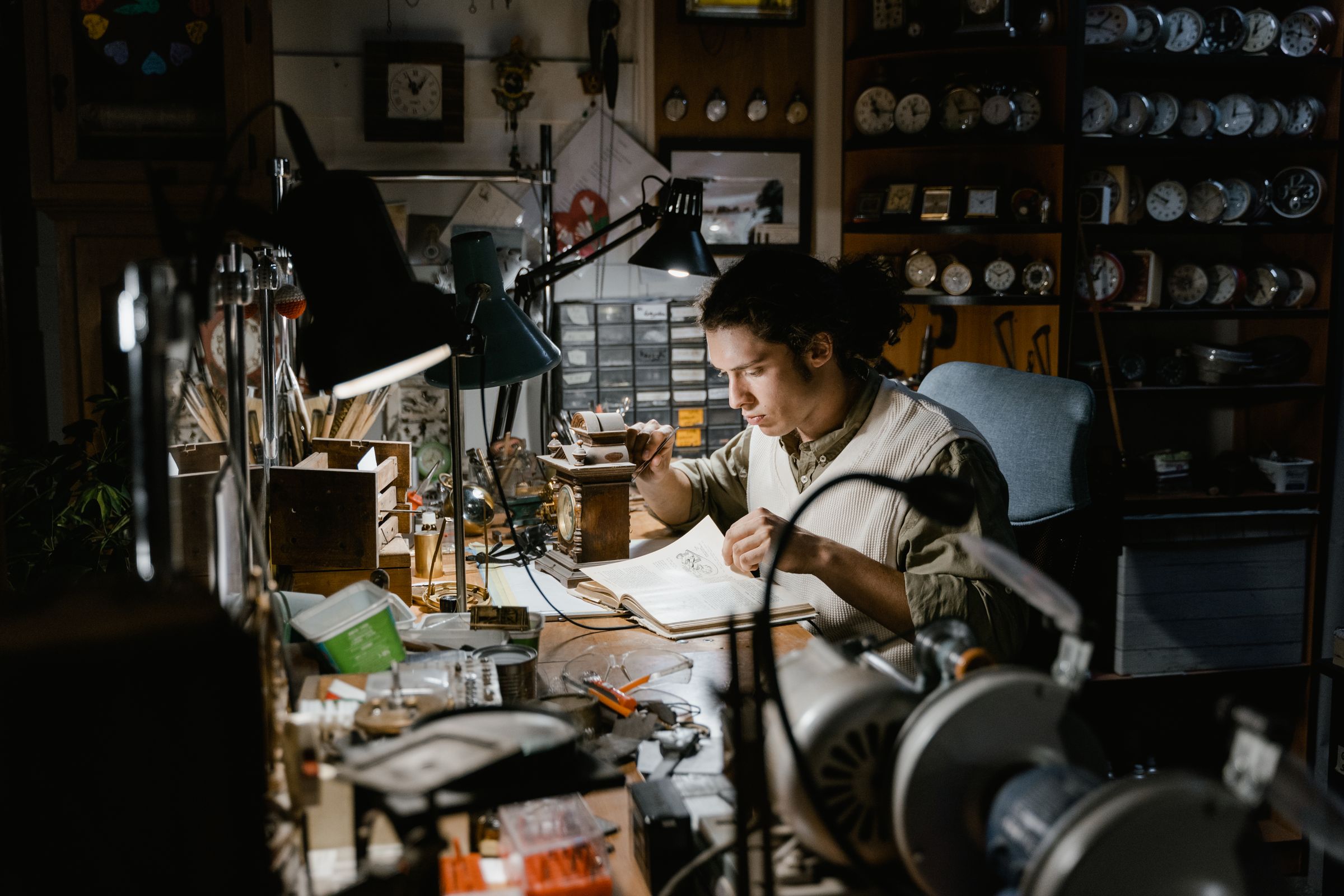
The image of watchmaking has changed less since the 19th century than one might think: a table, good light, tools within reach, and plenty of patience. Image source: Pexels / Tima Miroshnichenko.
What convinces me most about this origin story is its honesty. There is no legend of nobility and pomp, no fabricated founding myth. There is a valley in difficulty, a loan of 7,820 thalers, a manufactory, a school, and a self-invented measure. These building blocks are unremarkable, and precisely for that reason, they are so powerful. They show that top-tier craftsmanship does not fall from the sky but arises from decision, training, and perseverance.
What Remains of Craftsmanship When History Ends
History is only valuable if it reaches into the present, and that is exactly what Glashütte does. The former school building now houses the German Clock Museum Glashütte. This is more than a pretty coincidence. It means that the place where discipline was taught is now the place where it is narrated. The school has become memory, which fits a craft whose very purpose is preservation: preserving time, knowledge, and accuracy.
It is no coincidence that watchmaking is so closely linked to the idea of passing things on. A mechanical watch is built to last. It is repaired, not replaced; it passes through hands and generations, accumulating history rather than losing it. Anyone crafting a movement in Glashütte works on a timescale that exceeds their own lifespan. This perseverance is embedded in the location itself, in the sequence of manufactory, school, and museum. First comes foundation, then teaching, then remembrance.
Perhaps this is the true lesson of this valley, and it applies far beyond watches. Glashütte did not grow because it was loud, but because it was precise. It did not bet on quick effects, but on tools, training, and standards. Anyone walking through their day today with a Glashütte timepiece on their wrist carries more than just a watch. They carry the receipt for a very old, very unmodern idea: that it is worthwhile to do something right, even if no one is watching.
Quickly Explained
▸Is a visit to the German Watch Museum in Glashütte worth it even without a collector’s interest?
Yes, especially then. Housed in the former building of the German Watchmaking School, the museum tells less of a brand story and more of a craft narrative: how a mining valley transformed into a hub of precision, how time is measured in the first place, and why it’s so difficult. Anyone interested in craftsmanship, mechanics, or simply a well-told local history will find plenty to appreciate, even without a single collector’s watch in their cabinet.
▸Why did Glashütte specifically become the center of German watchmaking?
The shift came down to a mix of necessity and decisive action. After the decline of mining, the Müglitz Valley needed a new economic foundation. In 1845, Ferdinand Adolph Lange founded a watch manufactory there, funded by a Saxon loan of 7.820 thalers. Unemployed but skilled hands became watchmakers. The watchmaking school, established in 1878, cemented this into a full-fledged discipline.
▸What’s the story behind the tenth-measure?
The tenth-measure is a precision measuring tool developed by Ferdinand Adolph Lange for watch manufacturing. Its purpose is to enable finer measurements than were previously standard. It perfectly embodies the Glashütte mindset: invent your own, more precise tools rather than settling for what’s already available.
▸How much did the watchmaking school actually produce?
Between 1878 and 1951, the German Watchmaking School in Glashütte produced 4.410 new pieces. These included not only pocket watches, but also movement models and measuring tools-the very instruments used to create and verify precision. The school thus served as both a training center and a workshop.
Image source: Cover image: Pexels / Jimmy Liao. Additional images: Pexels / Gunnar Hoffmann, Pexels / Tima Miroshnichenko.
In the end, it’s not the expensive watch that stays in your mind, but the valley itself. A place that ran out of silver and decided to mine precision instead. It’s a form of natural wealth that never runs dry, as long as someone is willing to teach it. That’s exactly what the name on the dial stands for, long before any logo ever appeared beside it.

 //STYLE