Eight Hours and 291 Bridges Across the Alps
The Glacier Express and Bernina Express travel deliberately slowly-because that’s the whole point. Once you’ve sat by the panoramic window, you’ll never think about the fastest route again.

 //TRAVEL
The Glacier Express and Bernina Express travel deliberately slowly-because that’s the whole point. Once you’ve sat by the panoramic window, you’ll never think about the fastest route again.
Some routes are meant to be rushed through, while others are worth savoring. The Alpine railway falls into the second category. Eight hours for 291 kilometers may sound like a test of patience, but it’s actually the best thing that can happen to you on this journey.
The Glacier Express has been running since 25 June 1930, and it has never been in a hurry. From Zermatt to St. Moritz-291 kilometers, roughly eight hours, crossing 291 bridges and passing through 91 tunnels, climbing up to the Oberalp Pass at 2,033 meters. When you read these numbers, you might first calculate the average speed and think of a slow train. But once you ride it, you realize the pace is a deliberate choice.
The Rhaetian Railway operates its panoramic trains on narrow-gauge tracks at intentionally low speeds, ensuring the landscape doesn’t blur past but unfolds before you. This isn’t a compromise-it’s the product. Speed would be pointless here because the destination isn’t the goal.
That’s the key difference from flying. A flight shrinks the distance until it vanishes. The Alpine railway stretches it until it becomes worthwhile. You give up half a day and get it back as an experience – not as lost time between two places.
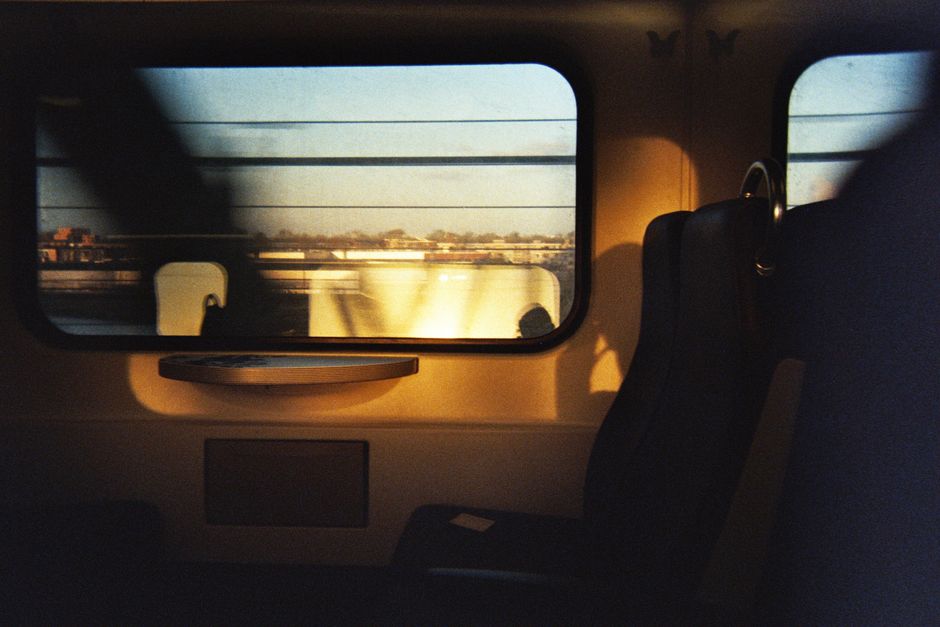
The panoramic carriages feature windows that extend to the ceiling. What sounds like a minor technical detail changes everything, because the mountains aren’t cut off at the top. You’re not just on a train with a view-you’re inside the view itself.
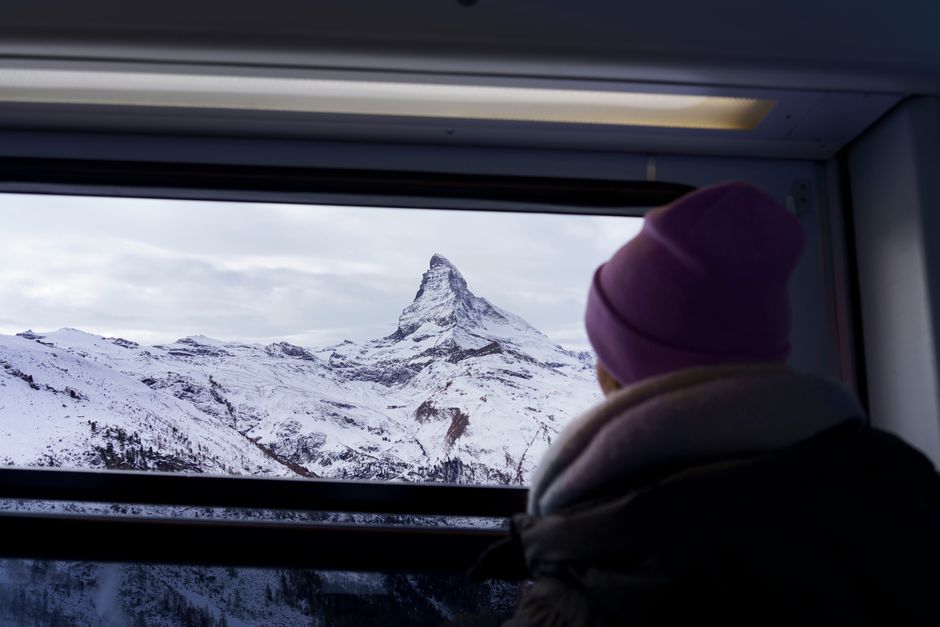
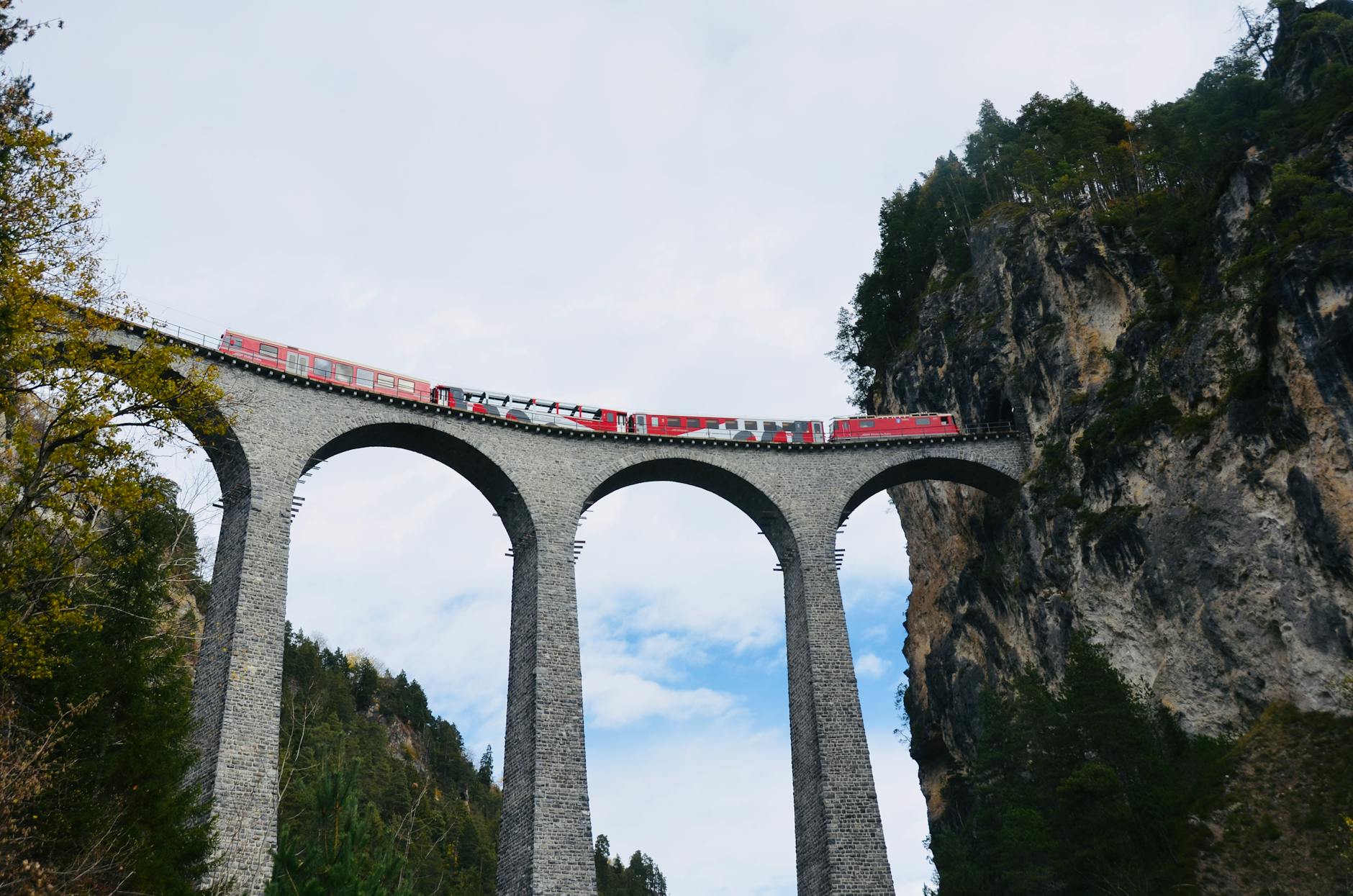
On the Bernina line, the world outside the window transforms completely. Glaciers at over 2,000 meters give way to palm trees in Tirano on the Italian side. In between, the engineering itself is worth seeing: the 65-meter-high Landwasser Viaduct, which curves the train along the cliffside, and the Brusio Circular Viaduct, where the railway spirals downward in an open loop.
These sights can’t be looked up in a guidebook. They emerge as you pass by, in the right light, at the perfect moment. That’s why you don’t spend the journey on your phone-you’re too busy watching, and at some point, you realize you haven’t spoken in an hour.
A train that dawdles gives you back the one thing that makes travel worthwhile: time to truly look.
Since July 2008, the Albula and Bernina lines of the Rhaetian Railway have been listed as UNESCO World Heritage sites. This is rare for a railway line and speaks volumes about how it was built: not against the mountains, but with them, in loops, viaducts, and tunnels that still feel effortlessly timeless nearly a century later.
The success proves that slow travel has its rewards. In 2024 alone, 288,218 passengers rode the Glacier Express-not because they had to get to St. Moritz, but because they wanted to experience this route. The train isn’t just a means to an end; it *is* the destination.
The Bernina Express covers its journey from Chur or St. Moritz to Tirano in 4 hours and 21 minutes, crossing 196 bridges and passing through 55 tunnels. Here, too, the route is designed so that the ride itself becomes the main attraction – not the final stop in Tirano.
You can make this journey simple or indulgent. Second class on the full Glacier Express route costs around 170 euros plus the mandatory seat reservation, and the view through those large windows is the same for everyone.
The Excellence Class plays in a different league-just the reservation costs several times more. Guaranteed window seat, gourmet meals, and attentive service throughout the journey. Whether it’s worth it depends on what you’re looking for. The view outside is identical in every class; the comfort around you is not.
My advice is straightforward: Choose the class you’re happy to treat yourself to, but take the full route. The shorter segments many book to save time skip exactly the stretches you’re really traveling for.
The clearest sign comes when you step off the train. You’ve been sitting for eight hours, yet instead of feeling exhausted, you’re strangely refreshed. No security checks, no transfer stress-just a long, unhurried gaze at the mountains that lingers long after.
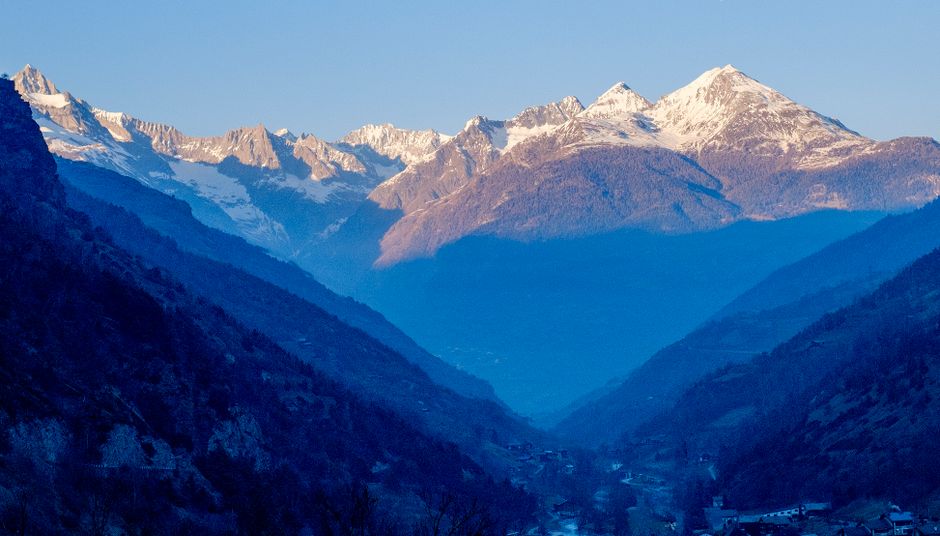
The second sign becomes clear weeks later. A flight rarely leaves a lasting impression. But this ride? You’ll remember the moment the train rolls onto the Landwasser Viaduct, when you catch your breath – not because anything dramatic happens, but simply because of the view.
And finally, you’ll notice it in how you plan your next trip. No longer starting with the fastest route, but the most beautiful. Once you’ve traveled like this, you stop looking for shortcuts and start savoring the journey itself.
The full route from Zermatt to St. Moritz covers 291 kilometers and takes about eight hours, crossing 291 bridges and passing through 91 tunnels, all the way up to the Oberalp Pass at 2,033 meters.
Both are part of the Rhaetian Railway. The Glacier Express connects Zermatt and St. Moritz across the Swiss Alps, while the Bernina Express runs from Chur or St. Moritz along the UNESCO World Heritage route to Tirano in Italy-from glaciers to palm trees.
It offers a guaranteed window seat, gourmet meals, and personal service, but at a significantly higher price. The view itself is the same in every class. If you value comfort, you’ll get it-but if your priority is the scenery, second class delivers just as much.
In the end, no souvenir remains to photograph. Only the quiet certainty that those eight hours weren’t the price of the journey, but its true reward.