Donostia: A City That Never Needs to Shout
19 Michelin stars within a 25-kilometre radius, a shell-shaped bay that has been a seaside resort since 1845, and an old town where pintxos matter more than table reservations. San Sebastián wins you over without raising its voice.
The Basques call their city Donostia, officially used alongside San Sebastián. Both names lead to the same place: a bay that looks like a seashell from above, framed by two wooded hills. What makes this city special is its rare ability to stay quiet. It’s the density of quality in a very small space, culinary and architectural alike.
- 19 Michelin stars within a 25-kilometre radius, including three restaurants with three stars each
- La Concha, the central urban beach bay, was made fashionable in 1845 by Queen Isabel II
- The Parte Vieja, the old town, packs the highest concentration of pintxo bars in the city
More stars than a city of this size deserves
Within a 25-kilometre radius of city hall, the official gastronomy guide lists 19 Michelin stars. Three restaurants hold the top rating of three stars: Akelarre, Arzak and Martín Berasategui (the latter just outside the city). In addition, San Sebastián boasts 14 restaurants with a total of 23 Repsol suns, another official quality benchmark alongside Michelin. The Basque Culinary Center, opened in 2011 in the Miramón Technology Park, offers university degrees in Culinary Arts and sees itself as one of Europe’s leading culinary schools.
A bay that happens to be a beach
La Concha is more than an urban beach. The bay owes its name to its shell-like shape, most visible from above, with fine golden sand stretching more than 1,300 metres. Queen Isabel II made the spot fashionable in 1845 after her doctors recommended sea bathing for skin ailments. From a medical prescription, it became within decades the elegant reputation the city still enjoys today. The Miramar palace complex at the end of the beach served from 1893 as the summer residence of Queen María Cristina and later of King Alfonso XIII. Today, strolling the promenade means walking past those very palace gardens without a fence or barrier blocking the view. The city hasn’t turned its royal past into a museum; it has woven it into the everyday fabric of the seafront.
Pintxos instead of table reservations
The Parte Vieja, the old town, packs the highest concentration of pintxo bars in the city. Local tradition favours bar-hopping over long seated dinners: one or two pintxos per stop, then on to the next counter. Once you grasp this rhythm, it’s easy to see why San Sebastián rarely feels pressured by reservation demands.
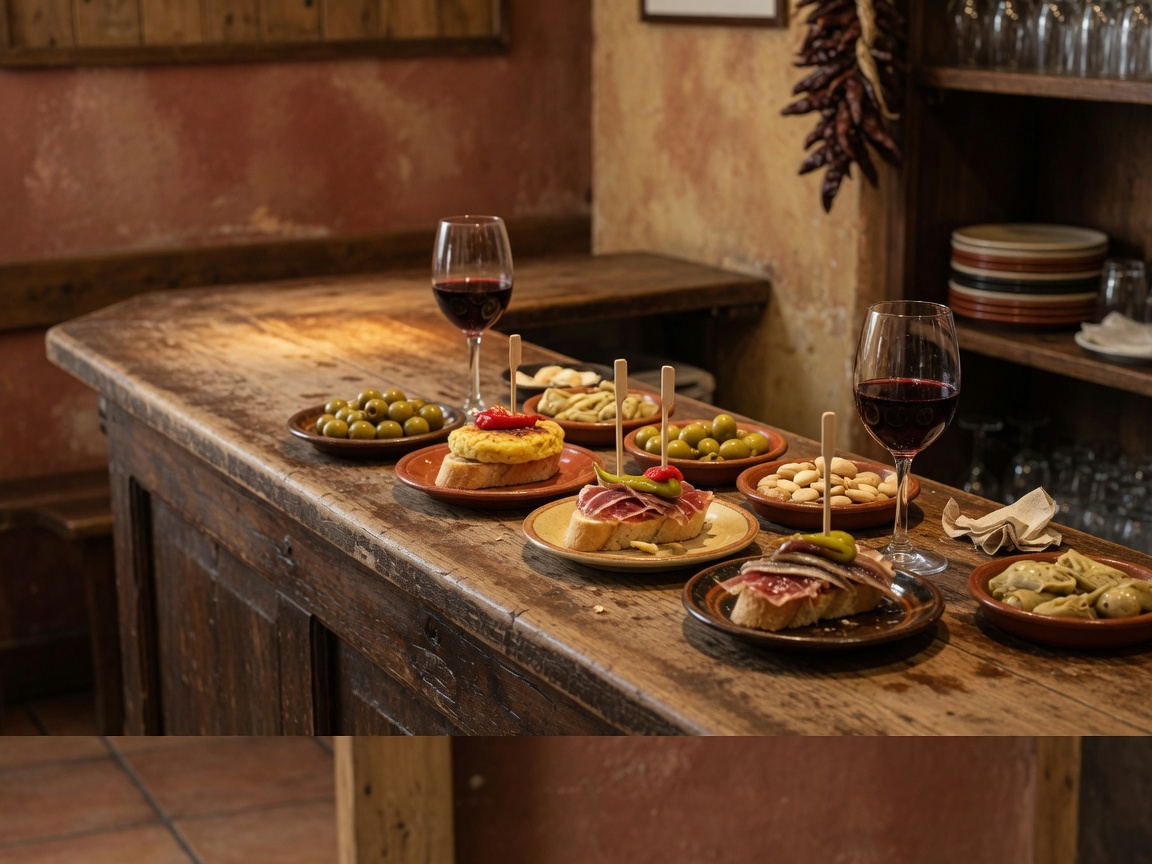
The real culinary experience happens standing up, between multiple bars, not at a single table. It’s this effortless ease that sets the city apart from other culinary capitals, where a Michelin-starred restaurant dictates the evening. Here, the journey from bar to bar structures the night. Each counter has its own speciality, often just one dish perfected over decades.
Art that belongs to the wind
At the western end of Monte Igeldo stand the three Corten-steel sculptures of Peine del Viento, the Wind Comb, by Eduardo Chillida, each weighing more than nine tonnes. The definitive donation to the city was finalised in 1977. Set in a pink-granite amphitheatre landscape, wind and spray dance between the prongs; on stormy days the surf occasionally erupts like a geyser through the openings in the floor.
The real culinary experience happens standing up, between several bars, not at a single table.
The Wind Comb itself has stood here for almost half a century, surviving countless storms. That very resilience is part of the concept: Chillida did not want a fragile artwork but one that can withstand the ocean.
Anyone who walks from the Old Town up to Monte Igeldo experiences a clear shift: from the tight Pintxo alleys to the vast openness of the open Atlantic coast, all within a few kilometres.

On calmer days it is the contrast that lingers: massive steel against open sea, neither element prevailing.
A promenade steeped in history
The wrought-iron Barandilla, the railing of La Concha Promenade, was designed by city architect Juan Rafael Alday, built in 1910 and inaugurated by King Alfonso XIII in 1916. The adjacent Paseo Nuevo, the waterfront promenade between port and Monte Urgull, also opened in 1916 but only received its current name in 1979. On stormy days the waves of the Bay of Biscay thunder against its walls, a natural spectacle watched by locals and visitors alike.
Why a weekend is enough, and not enough
San Sebastián can be explored on foot; that is part of its charm. A seven-and-a-half-kilometre promenade links the three city beaches from Zurriola to the Wind Comb. Two days let you see the bay, the Old Town and some of the seaside art. Stay longer to eat properly and you quickly realise that 19 Michelin stars are not a weekend itinerary but an invitation to return. The city itself never feels like it is begging for attention; it simply exists, with its bay, its bars and its quiet confidence that great food needs no advertising.
Good to know
▸What sets San Sebastián’s food scene apart from other cities?
Within a 25-kilometre radius lie 19 Michelin stars, including three three-star houses, plus 14 restaurants with 23 Repsol suns, and the Basque Culinary Center as its own culinary-training institution.
▸How does the Pintxo culture work in the Old Town?
In Parte Vieja you hop from bar to bar, eating one or two Pintxos at each stop before moving on. This bar-hopping tradition replaces the classic long dinner at a single table.
▸What is the Peine del Viento?
The Wind Comb is a trio of Corten-steel sculptures by Eduardo Chillida at the western tip of Monte Igeldo, officially donated to the city in 1977.
Image source: cover and article images AI-generated.