
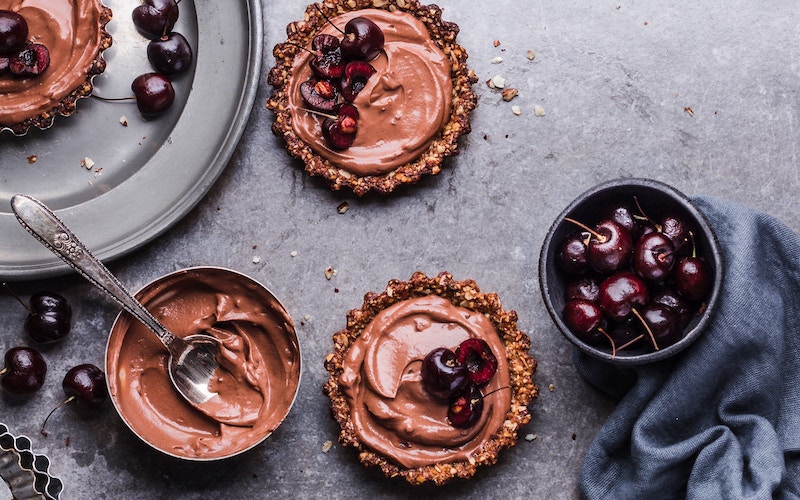
Sin Finally Has an End – This Fruit Tastes Like Chocolate
Calorie counters and chocolate fans no longer need to hold back; they can indulge in as much of the “chocolate fruit” as they desire.
In 2019, we wrote about the black sapote, a fruit from Mexico and Guatemala whose flesh is said to resemble chocolate pudding. The original text promised a lot. Today, we read it more carefully: what’s exciting isn’t sin without consequences, but the idea of a fruit that evokes dessert associations.
- The black sapote was described as a fruit with a pudding-like consistency.
- Its flesh was said to taste sweet and nutty and look chocolaty.
- Mentioned uses included spreads, smoothies, or eating it directly with a spoon.
- According to the article, the fruit originally comes from Mexico and Guatemala.
- The old text noted that seeds could be ordered online and grown at home.
Sort out the euphoria first
The original piece began with bikini bodies, chocolate cravings, and the hope of snacking without guilt. That was very 2019. The more interesting story lies beneath: the black sapote has a flesh that resembles chocolate pudding in both texture and appearance. That alone is enough of a hook. There is no need to turn it into a miracle fruit.
It was described as sweetly nutty, creamy, and versatile. Whether as a chocolatey spread on bread, a note in a smoothie, or simply eaten by the spoonful: its charm lies in its dessert-like quality. A fruit that looks not just fresh or tart, but creamy and dark, plays in a different category.
The best dessert idea is often the one that doesn’t promise too much.
The wording matters. Tasting like chocolate does not mean it replaces a bar. It means it opens an association. Approaching it with this expectation makes you more curious and less prone to disappointment.
Origin, appearance, and patience
The article named Mexico and Guatemala as its origin. According to the text, the black sapote had not yet arrived on local shelves. This made it exotic in the original piece, but also impractical. No problem, it said then: seeds can be ordered online and the plant grown at home yourself.
Its appearance was also described. On the outside, the fruit’s green color resembles an unripe large tomato. Cut open, it reveals its dark flesh, which looks chocolatey. This tension is beautiful: unassuming on the outside, a dessert promise on the inside. Exactly such contrasts make food topics narratable.
However, those who want to grow the sapote themselves need patience and honest expectations. The old text was optimistic. As an archive refresh, the observation suffices: the idea of cultivating such a fruit at home is charming. But it is no quick substitute for a trip to the produce aisle.
How to use it
The suggested uses were simple: on bread, in a smoothie, or straight from the spoon. This simplicity suits the fruit perfectly. When a food item has a special consistency, do not immediately hide it under too many ingredients. Try it pure first, then combine.
As a spread, the black sapote probably needs little fanfare. Good bread, perhaps some acidity or a small pinch of salt-that should suffice. In a smoothie, it can add creaminess. Eaten by the spoon, it becomes a dessert idea if the ripeness is right and the flesh is truly soft.
The old text referred to many recipe ideas online and invited experimentation. That remains the best advice. One should just phrase the promise a bit quieter: not calorie-free chocolate, but a fruit with a dark, creamy, sweetly nutty direction. That is still special enough.
Why the archive piece works
Food archive texts often age poorly if they are only hype. This piece holds up better because the fruit actually delivers a strong image. Green shell, dark interior, pudding association, origin from Mexico and Guatemala. These are clear details. They do not need an over-the-top tone.
The black sapote is interesting for you if you like desserts but enjoy thinking about ingredients. Not every dessert must consist of cocoa, butter, and sugar. Sometimes a fruit pointing in a similar direction is enough. That does not automatically make it healthier or better. It makes it intriguing.
The original contribution was based on an article from Elle.de. As an IBL refresh, it takes the same idea and draws it out of exaggeration. The black sapote can remain a beautiful curiosity. Its charm lies precisely in that.
A fruit does not have to save a promise
The old text wanted to solve chocolate cravings and guilt simultaneously. That is understandable, but not necessary. The black sapote is interesting even without this pressure. A fruit that looks creamy, tastes sweetly nutty, and appears dark like pudding has enough of its own story.
In the food sector especially, special ingredients quickly become overloaded. They are supposed to be healthy, look beautiful, replace a vice, and function effortlessly. A sober view is better: What can the ingredient really do? With the black sapote, it is the texture, the proximity to dessert, and the surprise upon cutting it open. That is enough.
If you try or grow it, do not approach it with the expectation of chocolate. Approach it with curiosity. Perhaps it becomes a spread, perhaps a smoothie base, perhaps a spoon dessert. The archive piece remains strong if it leaves this space and does not promise more than a fruit must deliver.
The IBL Perspective
As an archive refresh, this text doesn’t need to pretend the old news is new. Its strength lies in reading the original observation more clearly. What was just a hook, what remains as a stance, and what can you still take from it today? It’s precisely this separation that turns legacy content into a piece that fits back onto the page.
For you, that means: Take the concrete details seriously, but not every bit of past hype. Good archive pieces work when they preserve a moment while becoming calmer. They don’t show you what you must buy, eat, wear, or book right now. They show what to pay attention to when style, everyday life, and enjoyment are thoughtfully combined.
Read this way, the black sapote isn’t a gimmick, but an invitation to bring more curiosity to your fruit bowl. Not everything has to be familiar, nor immediately available. Sometimes it’s enough to imagine that dessert can also come from a fruit.
Good to Know
▸What is the black sapote?
A fruit whose flesh was described in the article as pudding-like, sweetly nutty, and chocolatey.
▸Where does it come from according to the original text?
Mexico and Guatemala.
▸How can you use it?
As a spread, in smoothies, or eaten straight with a spoon.
▸Does it replace chocolate?
Not really. It resembles chocolate in texture and vibe, but it’s its own distinct fruit.


