German concours culture has lost its castle and found something it didn’t need for a long time: proximity instead of backdrop. How the scene is reorganizing itself after Schloss Dyck at Rittergut Birkhof.
German concours culture has lost its castle and in doing so found something it hadn’t needed for a long time: closeness rather than scenery. What began at Schloss Dyck like a picnic between chrome and gravel paths is being reorganized in 2026 at Rittergut Birkhof-not as a nostalgic copy, but as an honest response from a scene that, following Dyck’s departure, finally knows what it stands for.
Quick Facts
Classic Days: 2006 to 2019 at Schloss Dyck, then moved to Messe Düsseldorf (2022) after failed negotiations
New beginning: Grand Meeting 2025 held for the first time at Rittergut Birkhof in Korschenbroich (August 1–3)
2026: Continuation as “Classic Days Grand Meeting” from July 31 to August 2, again at Rittergut Birkhof
On site: approx. 2.8 km circuit “Racing Legends” for vehicles up to model year 1961
2010: according to organizer figures, 39,800 spectators-a benchmark against which every successor can be measured
You know the feeling when an event isn’t just a date on the calendar, but a place you map out internally before you even arrive. For thirteen years, this was the case with the Classic Days. From the first event in 2006 to the last at Schloss Dyck in 2019, the Rhein-Kreis Neuss district belonged to the German collector scene like a fixed step in the concours circuit: first the drive there, then the park, then the quiet crunch of gravel under leather soles, then chrome that doesn’t dazzle in the afternoon sun but works.
Schloss Dyck wasn’t a neutral background. It was part of the narrative. A castle park gives classic cars something that exhibition halls structurally cannot provide: a history older than any vehicle on the lawn. Water features, avenues, symmetrical paths-all these framed automobiles not as investment objects, but as moving artworks within an already existing total work of art. Anyone who came to the Classic Days during this period sought less a trade fair with a champagne upgrade than a scene that takes itself seriously without dressing up.
The Gravel Path as a Social Shelf
What set the Dyck era apart from many other German classic car meets was the density of significance per square meter. Not because more money was on display – that’s rarely easy to read from the outside – but because the place imposed a certain behavior. On a castle park estate you don’t park a car crookedly because the lawn forbids it. You speak more quietly because the acoustics between building wings work differently than in a hall with a concrete floor. You linger longer because the circuit doesn’t push you toward the exit.
And right in the middle: the roughly 2,8-kilometer-long “Racing Legends” loop for vehicles built up to 1961. That might sound like a nostalgic sideshow, but it’s actually the motorized heartbeat of an event that could otherwise easily slide into a purely observational culture. Once you have seen this course – not as a participant, but as a spectator at the edge of the path – you understand why Dyck was more than a concours with a castle backdrop. It was a living catalog. Cars that normally sit behind ropes move here on gravel, summoning sounds from an era when engines didn’t yet whisper but declared why they were there.
The scene around you organizes itself as a matter of course. Collectors, dealers, enthusiasts, the merely curious: all meet on the same path, but with different perspectives. One reads body lines like provenance. Another listens to the gearbox. A third person cares exclusively about whether the driver’s seat fabric is original or convincingly fake. It was precisely this mix that made the Classic Days at Dyck the German benchmark for open-air concours culture.
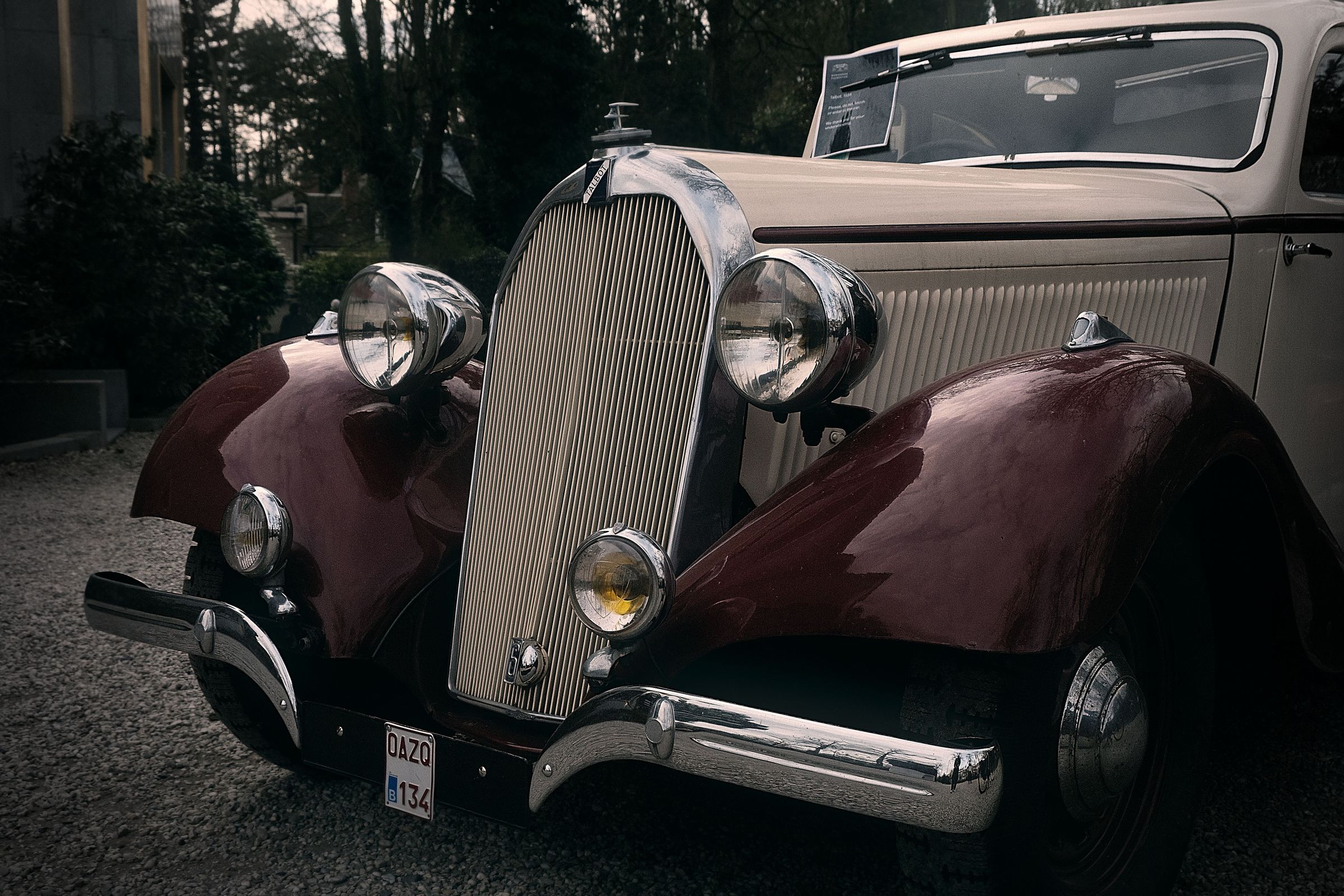
Chrome that doesn’t blind in the afternoon sun but works: on gravel, the detail becomes the actual stage. Image source: Pexels / Mauricio Krupka Buendia.
The Number That Puts Everything into Perspective
You can write about atmosphere until the gravel path becomes a metaphor. But at some point you need a hard anchor. In 2010, according to the organizer, 39.800 visitors attended the Classic Days. That’s not a marketing figure you have to accept blindly as a reader, but it’s the only concrete benchmark we have from the handed-down facts – and it’s enormous. Nearly forty thousand people on a castle estate mean not just revenue and parking chaos. They mean legitimacy. An event that draws so many defines not only itself, but also the expectations of everyone who later goes elsewhere.
Imagine you’ve been going for years to a place that feels like an annual reunion. Then you hear that the negotiations have failed. No dramatic bang, rather the quiet end of a trust relationship between organizer and location. In 2022, the event moved to Messe Düsseldorf. For the scene, that wasn’t just a change of address. It was a change of grammar. Park became hall. Path became aisle. Picnic aesthetics became trade-fair logistics.
Düsseldorf can do a lot. It can present classics professionally, it can offer protection, it can manage visitor flows. What it cannot do is pretend to be a castle park. And that’s exactly where the real story of the German collector scene after Dyck begins: not a crash, but a realignment.
The trade show as an interlude, not the end
If you read the Classic Days merely as a series of events, it looks like a relocation. If you know the scene, it’s about identity. Concours culture thrives on the illusion that time slows down. A trade show accelerates everything. You move faster, speak louder, and compare more readily because the next booth is waiting right next door. That isn’t inherently bad. It’s just a different discipline.
In the years following the departure from Schloss Dyck, perceptions split. For some, Düsseldorf represented a necessary coming of age: weather-independent, infrastructurally secure, and close to a city that already attracts an international audience. For others, it remained a compromise visited with respect but without warmth. Both viewpoints are understandable. The crucial point is this: neither could simply replace the Dyck formula, because the location was irreplaceable.
And while the Classic Days continued at the trade fair, something else grew in the background. A longing for the format that had defined the scene: not less quality, but more context. Not fewer automobiles, but more space between them. Not less audience, but more reason to stop and look.
A concours without a park is like a dinner without a table: everything is there, but nothing holds it together.
Grand Meeting: Returning to the landscape, without returning to the past
In 2025, the event responded with a new chapter. From August 1 to 3, the Grand Meeting took place for the first time at Rittergut Birkhof in Korschenbroich. Even the name signals the intent: not just business as usual, but a gathering with ambition. Not a revival of Dyck, but a continuation of an idea under new conditions.
Rittergut Birkhof brings landscape back into play. Not the baroque staging of a castle park, but a rural stage that frames automobiles differently than trade show concrete. You feel it in the anticipation before you even arrive: less imperial, more grounded. Less “look at my heritage,” more “look how we handle it.” For the German collector scene, this is a relevant shift. After years of location uncertainty, the audience once again has a place where outdoor concours culture is possible – with paths, lawns, and the sound of footsteps on materials that don’t come from industrial halls.
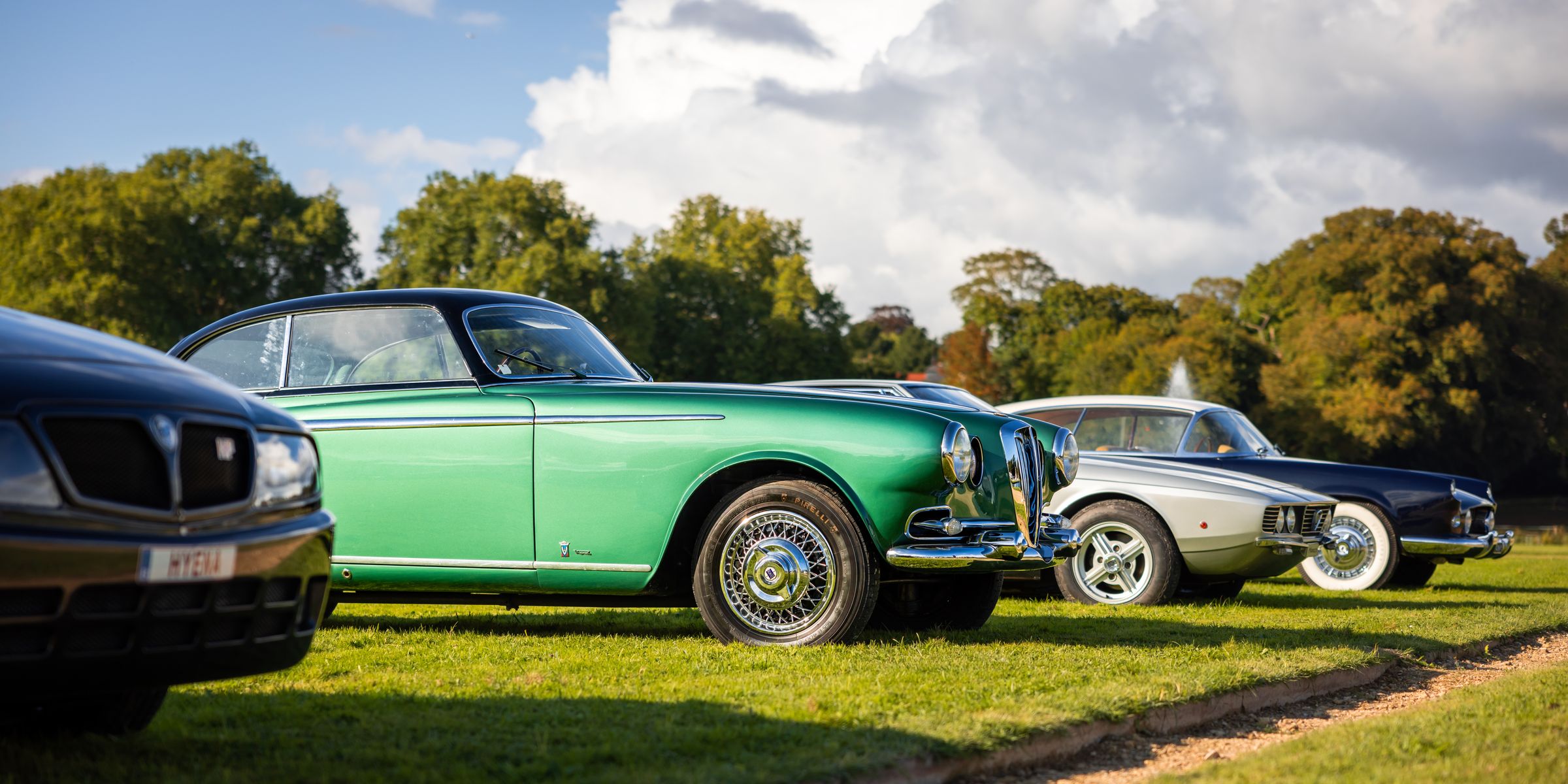
At Rittergut Birkhof, the logic of the shared day returns: landscape, paths, time to linger. Image source: Pexels / Quentin Martinez.
The Grand Meeting is thus also a political signal to the scene itself: you don’t have to choose between trade show professionalism and castle romance. There is a third option-a manor house setting that allows room for curation without falling into historicism. Whether this works in the long run depends less on the first weekend than on the consistency of the following years.
How Picnic Aesthetics Are Reshaping the Scene
The notion of a picnic set among chrome and gravel paths isn’t a kitschy cliché. It describes a social arrangement. At a park Concours, you don’t just stroll past cars; you share the day with them. You dine nearby, linger, and return. This fosters a distinctly different quality of attention. At a convention center, you consume an exhibition. In the park, you inhabit a weekend.
These distinctions function like an invisible compass for the collector community. Owners who treat their vehicles not as abstract assets but as public statements seek venues that validate their identity. Organizers who prioritize curation over sheer volume need grounds that deliberately slow the pace. Spectators looking for more than just Instagram fodder-seeking genuine atmosphere instead-follow the format, not merely the brand.
Following the move from Schloss Dyck, this equilibrium was disrupted. Düsseldorf kept the brand alive, but the social geometry shifted. Rittergut Birkhof marks a new sorting: landscape returns, pathways return, and with them, the chance for a classic car to be not just admired, but truly integrated. For German Concours culture, this is more than local flavor. It is a backbone.
At the same time, it would be naive to assume Birkhof can simply pick up where Dyck left off. The memory of the original venue runs deep. The 2,8-kilometer “Racing Legends” circuit on the former grounds was woven into the event’s DNA. A new location must establish its own logic: Where do the pathways flow? Where will the crowds gather? Where will that rare moment emerge when a vehicle feels not just beautiful, but authentically at home?
What 2026 Will Reveal About the Succession’s Maturity
The 2026 edition has been announced as the “Classic Days Grand Meeting,” running from July 31 to August 2 at Rittergut Birkhof. The timing sits just before August, and the duration aligns with the established weekend rhythm. Anyone who takes this scene seriously shouldn’t treat it as a given. Following a venue change, the second edition is often tougher than the debut. The first sparks curiosity; the second demands delivery.
The question isn’t whether Birkhof is picturesque enough. It’s whether the format now commands its own authority. Will the right cars show up? Will the balance between Concours rigor and relaxed visitor flow hold? Will that familiar feeling return-the sense that you’re not just ticking off a schedule, but truly experiencing the day? And can the organizers honor the Dyck legacy without becoming trapped by it?
For you as a visitor-or simply as an observer of the scene-this means 2026 is the litmus test. Not because new metrics are on the line, but because it will reveal whether the Grand Meeting becomes a true destination or merely a stopover. Since losing Schloss Dyck, Germany’s collector community has long searched for a venue where Concours culture can finally breathe again. Birkhof stands as the most promising candidate since 2019.
The Concours as a German Discipline
International comparisons are tempting but often misleading. German Concours culture is quieter, less theatrical, yet far more attuned to details that don’t show up in a first glance. It thrives on respect for craftsmanship, provenance, and the understanding that every vehicle carries a biography you don’t simply buff away. Schloss Dyck showcased this discipline for years. The move to the Düsseldorf trade fair didn’t erase it, but it displaced it. The Grand Meeting at Rittergut Birkhof now has the chance to return it to a setting that truly resonates with the German scene.
This doesn’t mean the transition will be seamless. Venue changes inevitably create friction. Veteran attendees will miss pathways they knew by heart. Newcomers will arrive without reference points and judge more critically, lacking nostalgia as a buffer. Dealers and collectors will recalibrate whether the trip and display are still worth the effort. This is entirely normal. The real test is whether the event thrives under this friction or merely struggles to justify its existence.
Talking about the Classic Days today really means discussing three distinct eras: Dyck as the founding myth, Düsseldorf as a survival phase, and Birkhof as a potential coming-of-age. This three-part framework helps clarify the landscape. It’s no longer just about showcasing beautiful cars in a beautiful setting. It’s about answering a fundamental question: what kind of public stage do German collectors want for their vehicles? Trade-fair efficiency, or a park-like narrative?
The View from the Sidelines
You don’t need to have been there in person to understand what’s at stake here. The facts are clear enough. Fourteen years of Dyck. A legendary circuit for vehicles up to 1961. A visitor record set in 2010 that still stands today. A break following failed negotiations. A fair chapter starting in 2022. A new beginning in 2025 at Schloss Birkhof. A continuation in 2026 with the same name and location.
No sentimentality can be built from this, but a thesis is clear: German Concours culture doesn’t need another glamorous stage change. It needs consistency in a format that allows time. Picnicking between chrome and gravel paths was never just mood. It was the social architecture of a scene that takes its automobiles seriously, without freezing them in place.
The Details
▸Where did the Classic Days originally take place?
From 2006 to 2019, the Classic Days took place at Schloss Dyck in Rhein-Kreis Neuss.
▸What is the “Racing Legends” circuit?
On site, there is a circular track called “Racing Legends,” approximately 2.8 kilometers long, for vehicles up to the model year 1961.
▸Why did the event move to Düsseldorf?
Following failed negotiations, the event moved to Düsseldorf Fair in 2022.
▸Where will the Classic Days take place in 2026?
In 2026, the continuation as “Classic Days Grand Meeting” is announced from July 31 to August 2 at Schloss Birkhof in Korschenbroich.
If the Grand Meeting continues this structure at Schloss Birkhof, not only does an event regain what it had on Schloss Dyck. The entire German collector scene gets back a place where Concours is not just judged, but lived. And that was the real gap in the calendar after 2019: not a lack of horsepower, but a lack of space.
Image source: Pexels / Stephan Leuzinger; Pexels / Quentin Martinez.

 //DRIVE