Workshop Visit · Collector Culture
Classic Car Restoration: Authenticity Over Appearance
Between workshop dust and concours brilliance lies the choice: whether an old car remains authentic or merely looks new.

 Collector Garage
Between workshop dust and concours brilliance lies the choice: whether an old car remains authentic or merely looks new.
The smell gives away the honest workshop first. Old leather, warm metal, a hint of solvent, somewhere coffee. Before you even see a car, you know someone here is preserving something, not just polishing.
I arrive deliberately early. A workshop in the morning is more honest than in the afternoon, when the day has made it loud. On the lift hangs a car from the sixties, doors removed, dashboard open like a ribcage. On the workbench parts lie sorted, labelled, numbered. No one shouts here. Restoration at its best is a quiet pursuit, almost like museum conservation, except this exhibit is meant to drive again.
What happens here has little to do with the image many have of classic cars. No high-gloss finish, no staged showroom shot, no perfect reflection on fresh lacquer. Instead, handwork, patience and a question that hangs over everything: what must remain so this car stays itself? That’s where the difference between restoration and disguise begins.
The decisive moment arrives early, long before the first sanding. It’s the choice of how much of the original will be saved. A panel that still holds is not replaced but derusted, treated, protected. A seam that holds is not ripped open just because a new one would be straighter. Every intervention is a small weighing of convenience versus fidelity. The convenient solution often looks better. The faithful solution is usually the right one.
The restorer I speak with offers a line I jot down: a car he finishes should not look like yesterday nor like today, but as if it always was. That sounds simple. In practice it’s the hardest discipline of all. Because making something new is almost anyone’s game with enough budget. Letting it stay old without looking neglected-that only a few can pull off.
Substance here means more than material. It means the marks a vehicle has collected over decades. The slight wear on the gear knob where a hand has gripped it thousands of times. The spot on the door pillar where an elbow has rested for fifty years. These traces aren’t flaws. They’re the difference between an object and a story.

Patina is the most misunderstood word in the scene. Some people think it’s dirt that needs to be cleaned away. Others see it as a trend that can be artificially created. Both miss the point entirely. Real patina only emerges with time-through sun, friction, temperature and use. It can be sped up, faked or replicated. But once you’ve seen genuine aged leather next to artificially aged leather, the difference is unmistakable. One has grown; the other has been applied.
Leather shows this most clearly. An original bench seat that has darkened over decades carries a pattern of fine cracks that no tool can reproduce. A restorer who chooses to save that leather instead of replacing it makes a deliberate decision against the quick fix. They clean it, nourish it, stabilise it. They let it age. And that, precisely, is the higher art-because it demands restraint where renewal would be easier.
What makes it beautiful is this: patina makes every car unique. Two vehicles of the same model and year can age in entirely different ways, depending on where and how they were used. A car from the dry south bears different marks than one from the damp north. Preserving those marks doesn’t just preserve a car-it preserves its very own life story.
Anyone can make something new. Only a few can leave it old without letting it decay.
There’s a point where collectors and dealers part ways. The dealer often thinks of first impressions, the photo, the quick sale. The true collector thinks of the second and third look. They know the people who will truly judge their car aren’t hunting for a gleaming surface, but for honesty. They open the bonnet, they check under the carpets, they verify whether the screws are original. Before this audience, it’s not the shine that wins-it’s the substance.
Historical correctness isn’t a buzzword; it’s an endless checklist. The right screw in the right place. The correct colour – not the trendy, polished version. The authentic material, even if a modern substitute would last longer. The stitching in the original style, the labels in the original typeface. Every detail that’s right is invisible to the layperson and unmissable to the expert.
To give this care a shared standard, there are international rules. The FIVA, the umbrella organisation for historic vehicles, defines a historic vehicle as at least thirty years old, historically correctly preserved and not used for daily transport. The association states this definition was adopted at the FIVA General Assembly on 25 October 2008. It sounds sober, but it shifts the focus exactly where it belongs: away from mere age, toward correct preservation.
In Germany, the ADAC carries this line forward. Since the FIVA resolution of 12 April 2008, the ADAC Oldtimer section represents the national status for historic vehicles. For the collector, this means preservation is no longer a matter of personal taste-it follows a verifiable framework. Those who take it seriously don’t restore on a whim, but according to evidence. And it’s precisely that evidence that makes the difference later, when a vehicle is valued, insured or sold.
Anyone restoring vintage cars works with materials that have become rare today. Ash wood in classic bodywork isn’t just a nostalgic flourish-it’s a structural element. Lead-free solders, modern paints, synthetic fabrics may last longer, but they behave differently, age differently, and feel different. A skilled restorer doesn’t learn these distinctions from a catalog; they learn them from their hands. They know how the right material should feel before it ever goes into the car.
This material knowledge is the invisible backbone of the craft. It determines whether a repair holds up in ten years or just looked good for a while. A seam stitched with the wrong thread will tear sooner. A paint job applied incorrectly won’t tolerate a second coat. Wood that hasn’t dried properly will keep moving even after it’s been painted. Restoration doesn’t forgive shortcuts-it only punishes them with delay.
Sustainability here takes on a concrete meaning, entirely free of moralizing. The most sustainable car is often the one that’s already been built and is kept running through care. Repair instead of replace, preserve instead of discard, pass on instead of throw away. A vehicle maintained across generations embodies material integrity – not as a pose, but as the result of good decisions made long ago and carried forward today.
The fact that this craft has grown into a serious market is reflected in older industry data. A FIVA study from 2005 and 2006 estimated annual turnover for historic vehicles in Europe at around sixteen billion euros. The figure may be dated, but it still conveys scale: behind workshops, parts dealers, restorers, and events stands an entire economy driven by people who take preservation seriously.
What drives value here is rarely pure showroom shine. It’s verifiable history. A car with complete documentation, original structure, and traceable care commands higher respect than a technically flawless rebuild with no past. Provenance-the documented lineage-is the currency of the scene. Those who have it need less explanation. Those who squander it can’t buy it back.
This culture has its own stages, and they reveal much about its self-image. The association behind Classic Days, one of Germany’s best-known classic car gatherings, was founded in 2006 to honor Wolfgang Graf Berghe von Trips, who died in a Monza crash in 1961. A collector culture that builds its events around remembrance rather than marketing says a lot about what really matters: not status at ten paces, but respect for what once was.
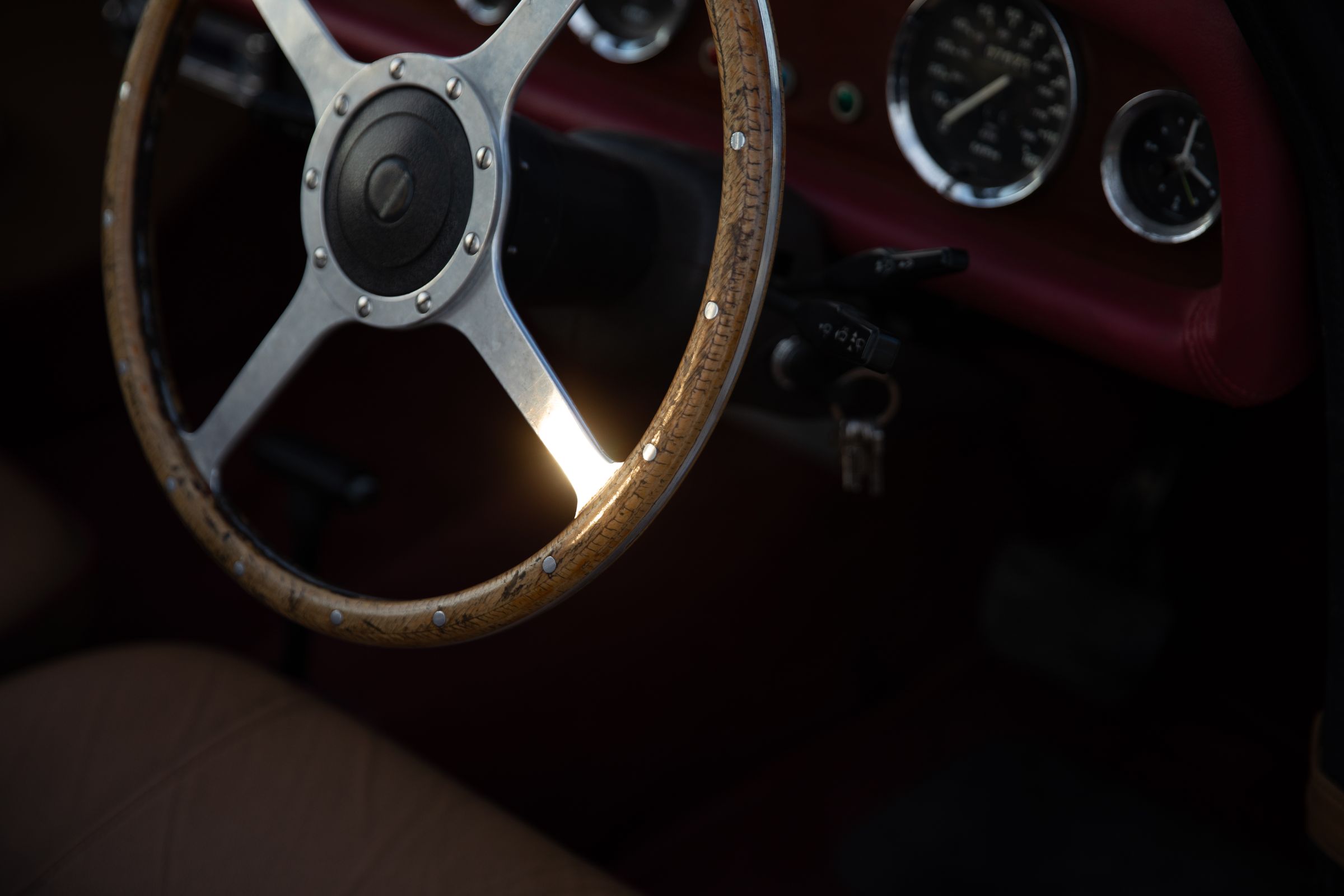
I step back in front of the car on stage. The dashboard is closed again, the wooden rim of the steering wheel carries its fine cracks, and that’s exactly what makes it more beautiful than any replica. I rest my hand on it for a moment. It feels like an object that’s more than just well preserved. It feels like something someone kept because it deserved to be kept.
According to the FIVA, a vehicle is considered a classic when it is at least thirty years old, preserved in historically accurate condition, and not used for daily transport. Age alone isn’t enough-proper preservation is essential.
Patina develops only through real time and genuine use. It proves a car has lived, and it cannot be convincingly faked. Preserving original traces safeguards the vehicle’s life story-something connoisseurs prize far more than a flawless but interchangeable surface.
It means fidelity to the original in every detail: correct screws, original paint tone, matching materials, authentic stitching, and original labeling. Modern substitutes may last longer, but historical accuracy prioritizes authenticity over mere convenience.
Verified provenance and uninterrupted care make a vehicle’s history traceable. Provenance is the collector’s currency: a car with solid documentation commands higher value than a pristine rebuild lacking a past.