Cashmere: The Anatomy of a Luxury Winter Sweater
June 20, 2026
Cashmere is not all the same, and the sweater that feels like silk against the skin yet only has “cashmere” on the label is usually a matter of fiber, not name. Those who understand what happens to the animal and what is allowed on the label buy not softer, but more accurately. This is the material science that carries a winter sweater through the season.
- The Fiber: Cashmere is the underhair of the cashmere goat, not the outer hair, and measures between 15 and 19 micrometers in fiber diameter.
- The Amount: About 150 grams of raw wool come from each animal per year, but after cleaning, significantly less remains.
- The Label: “cashmere” means at least 85 percent cashmere content according to EU law, and “100 percent cashmere” is only allowed for pure cashmere wool.
- The Market: In 2023, the global production of unprocessed cashmere wool was around 25,600 tons, a small number for a large market.
Cashmere is often marketed as the finest wool in the world, and this statement is imprecise in two directions. First, in a biological sense, cashmere is the underhair of the cashmere goat, the soft fleece that the animal wears underneath its coarser guard hair and sheds naturally in spring. Second, not every fiber that feels soft is also fine. The difference lies in the fiber diameter, which ranges between 15 and 19 micrometers for cashmere. Commercial sheared wool is significantly larger, and a human hair is many times that. What you register as “soft” is therefore not a marketing promise, but physics.
A Fiber That Is Not Hair From the Upper World
The diameter is the true currency of the fiber. The smaller it is, the smoother it lies against the skin, the easier it spins, and the more insulation it provides per gram. The natural crimp of the cashmere fiber traps air between the fibers and stores body heat, while the smooth surface reduces friction against the skin. This is why a light cashmere knit can warm you where a coarse wool sweater has already failed. The anatomy of the fiber is thus also the anatomy of warmth.
This very smoothness, however, comes at a cost that has nothing to do with the label, but rather with the animal. The fine fiber must first be obtained, and this is not an industrial process, but a seasonal handcraft. Holding a cashmere sweater in your hands means holding the result of a year, not the press of a button.
De-fibering and the Mathematics of Quantity
The goat does not release the fiber willingly, but it also doesn’t do so all year round. In spring, when the fleece naturally loosens, it is combed rather than sheared. This difference is not stylistic: during combing, the fine underhair is pulled out from the coarser outer hair without damaging the animal’s surface layer. The process is slower, gentler, and yields cleaner batches. Scouring, the fast route, brings more contamination and shorter fibers.
On average, about 150 grams of raw wool can be collected per animal per year through combing. That’s not much. Anyone wanting to knit a full-quality sweater needs several animals and must rely on them over multiple years. Added to this is the cleaning loss: from those 150 grams of raw wool, significantly less spinable fiber remains after washing, degreasing, and sorting. Dirt, fat, plant residues, and short fibers are discarded. The math explains why a genuine cashmere sweater commands a price that doesn’t compete with entry-level blends.
This scarcity is not a flaw but the very essence of the material. It cannot be rationalized away without compromising the quality of the fiber. Precisely because of this, the price of a cashmere sweater is rarely arbitrary and often serves as a first, honest indicator of what lies within the yarn.
Spinning Methods: How Fiber Becomes Yarn
From the combed fiber comes a web, from the web a strand, and from the strand a yarn. Two spinning methods dominate: worsted and woolen. In the worsted method-the combing yarn process-the fibers are laid parallel, lightly combed, and twisted into a smooth, firm yarn. The result is a clean knit that pills less and shows a cooler, clearer surface. In the woolen method-the carded yarn process-the fibers remain disordered, resulting in a yarn that is airier, softer, and slightly more restless in appearance.
Worsted is not better than woolen, and vice versa. It’s a matter of design intent. A clean, round-knit garment for a business look favors the worsted method, while a heavy, fluffy weekend sweater leans toward woolen. Those who pay attention to the surface can distinguish the differences: smooth and dense versus rough and open. Those who only touch often buy by feel, and that feeling is rarely calibrated to real wool quality anymore, since cotton and synthetics have dominated recent handling.
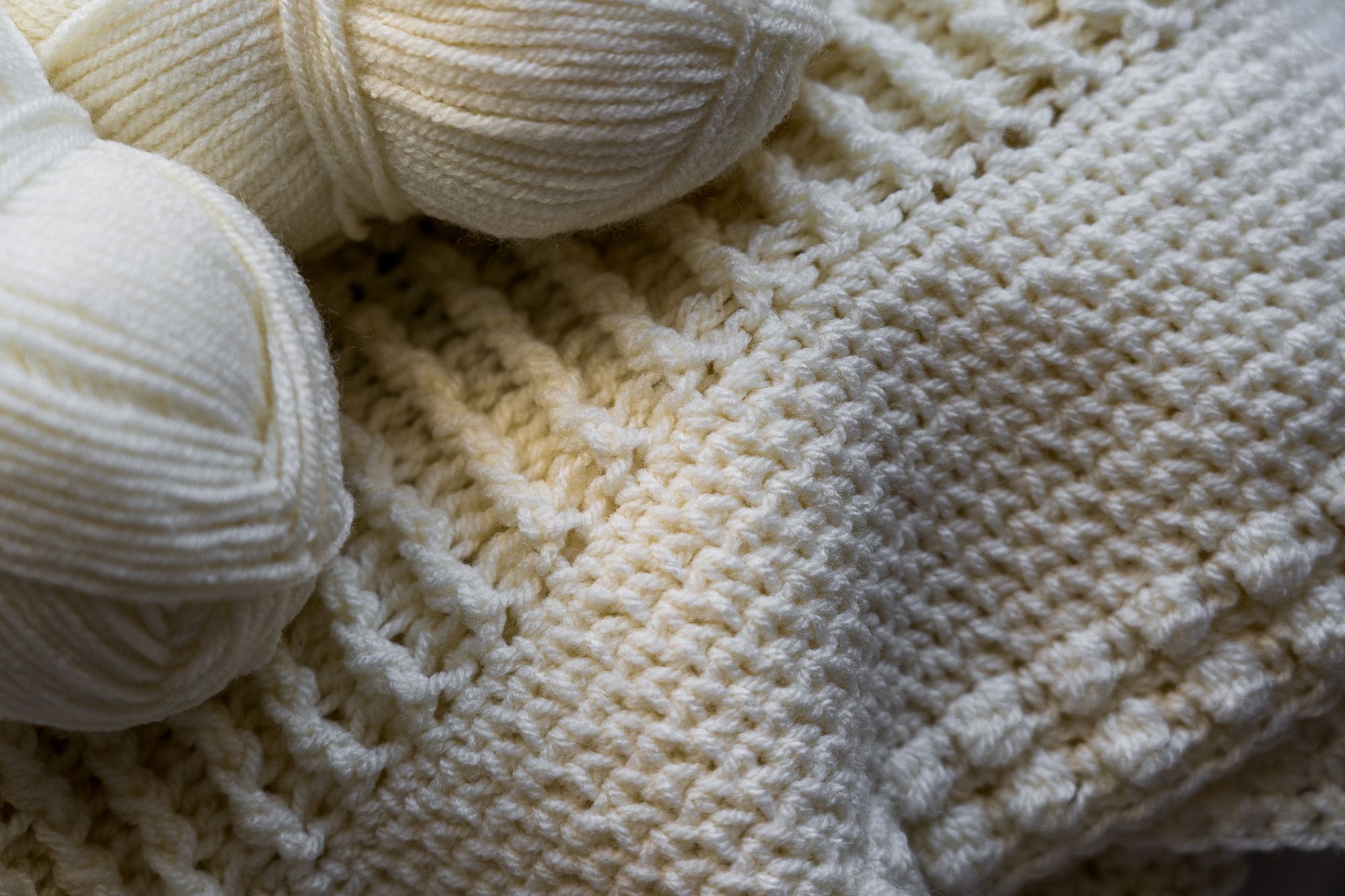
Once you understand this, you read a knitted piece like a text. The stitches tell how the yarn was twisted, and thus how the sweater will behave: whether it holds its shape or sags quickly, whether its surface remains calm or puffs up fast. This isn’t specialized knowledge for display windows-it’s a buying aid for the next season.
Label Literacy: What’s Actually Allowed
A label isn’t the absolute truth; it’s a legal document. And legally speaking, “cashmere” is a term with some wiggle room. Under EU Textile Regulation 1007/2011, a product can be labeled as “cashmere” as long as it consists of at least 85 percent cashmere wool. The remaining 15 percent can be anything: nylon for stability, wool for structure, or silk for drape. This isn’t fraud-it’s permitted practice.
If you want the real deal, you need to read the fine print. The designation “100 percent cashmere” is strictly reserved for pure cashmere wool. That might sound obvious, but it’s not. A product with a lower cashmere content simply cannot call itself “cashmere,” while a blend with a higher percentage can. The leap from 85 to 100 is therefore a jump not just in material, but in nomenclature.
When you read “cashmere” on a label, you aren’t reading a promise-you’re reading a legal document with a 15 percent margin of error.
What does this mean for you standing at the clothing rack? That tiny tag on the inner seam might read like dry legalese, but it’s the one place the industry is forced to be honest. If you’re hunting for “100 percent cashmere,” you’ll either find it there or not at all. If it just says “cashmere,” you have no idea what makes up the other 15 percent – and that’s a compromise you should make with your eyes wide open.
The History of a Global Commodity
When you buy cashmere, you’re buying into one of the world’s oldest textile traditions. In the cashmere region, this fiber has been spun into textiles since roughly 1000 BC. For centuries, shawls from this area of origin were the ultimate luxury export, driving European weavers to create imitations. The famous Scottish Paisley weaving industry, for instance, was essentially built on cashmere knock-offs. It emerged simply because the original was in such high demand and couldn’t be supplied fast enough.
Today, the lion’s share of global production no longer comes from its namesake region, but from Mongolia and the surrounding steppes. The climate there, characterized by extreme temperature swings between day and night, produces the dense undercoat the goats need to survive the winter. This fiber is deeply tied to its geography, and if you feel it blindfolded, you’ll often find yourself holding a garment born in those exact high altitudes.
Market Dynamics: A Small Number for a Massive Industry
In 2023, roughly 25,600 tons of raw cashmere wool hit the global market. “Raw” means exactly that: complete with grease, dirt, plant matter, and whatever else the animal brings to the table. After washing and sorting, significantly less remains. Measured against the sheer volume the global textile market moves, this number is tiny. It’s also the exact reason why cashmere can never truly be cheap, regardless of how efficient the supply chain becomes.
From those 25,600 tons of raw fiber, a staggering number of sweaters, scarves, blankets, beanies, and socks are ultimately produced-spanning everything from luxury boutiques to discount bins. Do the math, and it becomes obvious: not everything bearing a “cashmere” label can possibly come from the finest grade. The fiber is stretched, blended, spun into ultra-thin yarns, and knitted into fine gauges to give the mass market the soft hand-feel that the name promises.
This isn’t a judgment against blended fabrics. Rather, it’s the realization that price is your first clue. If you’re buying a cashmere sweater for the price of a standard cotton T-shirt, you aren’t getting fiber from the top tier. There’s nothing wrong with that if you love the feel of it-you just need to know exactly what you’re holding in your hands.
Buying Criteria That Stand the Test of Time
Material expertise is only useful if it helps you at the rack. Three criteria reliably filter the market. First: the label. “100 percent cashmere” rather than just “cashmere” reduces the margin for error to zero. Second: the feel against the skin, not just the hand. A sweater that feels soft in your palm might scratch your neck if the fibers were sorted too coarsely. Trying it on beats reading the tag. Third: the density of the knit. Hold the sweater up to the light. A tight, even stitch structure lasts longer and pills less than a loose knit that feels softer at first touch.
Then there is pilling. Pilling isn’t a sign of poor quality; it is physically almost inevitable when short fibers rub against the surface. The finer the fiber, the more likely it is to pill, as it loosens from the yarn more easily. Anyone looking for pill-free cashmere is actually looking for a tight worsted knit with a synthetic blend. Every genuine cashmere garment will form little balls over time at friction points-under the arms and along the sides of the torso. Shave it, wash it, keep wearing it.
The washing routine is the second half of the durability equation. Don’t just toss cashmere into the washing machine, and certainly never into the dryer. Hand wash or use a gentle wool cycle at a low temperature, with a mild, enzyme-free detergent. Skip the fabric softener, dry it flat, and never hang it up. Follow these rules, and you will have a sweater that lasts well beyond a single season.
A Wardrobe That Defies the Hype
Cashmere is no passing seasonal fad. The fiber has been spun into textiles in the cashmere region since around 1000 BC, which serves as a far better benchmark for your purchasing decision than any trend report. A good cashmere sweater in a muted color, with a straight cut, no logo, and no embellishments, is a garment that will serve you for years if treated right, and it will never look out of place in any season. In recent years, the fashion industry has turned cashmere into a mass-market material, squeezing it into every price bracket from luxury boutiques to outlet chains. This hasn’t made the fiber any worse; it has simply made the market much more confusing.
When you shop today, you aren’t just buying fabric; you are buying a stance. Either you purchase a material piece that holds a specific place in a mindful wardrobe, or you buy a statement piece that will be out of style next season. Both are legitimate, and both cost money, but only one pays off over the years. The fiber itself is a reliable compass for this. It is old enough not to care about passing fads.
Quick Answers
▸Why does cashmere feel softer than sheep’s wool of the same diameter?
Diameter is only half the story. Cashmere fibers have a significantly smoother scale layer than sheep’s wool. The scales lie flatter, are more evenly distributed, and create less friction against the skin. At the same micron count, sheep’s wool is more likely to scratch, while cashmere glides. Additionally, the fiber’s natural crimp creates an air cushion between skin and fabric, further enhancing the softness.
▸What exactly does ‘cashmere’ on the label mean?
Under EU Textile Labeling Regulation 1007/2011, a product may be labeled ‘cashmere’ if it contains at least 85 percent cashmere wool. The remaining 15 percent may consist of other fibers. Those seeking pure material must specifically look for ‘100 percent cashmere,’ a designation permitted only for pure cashmere wool.
▸Why is a genuine cashmere sweater so expensive?
Per animal per year, combing yields approximately 150 grams of raw wool. After cleaning, significantly less spinnable fiber remains. To make one sweater, you need multiple animals and several years’ harvests. In 2023, global production of unprocessed cashmere wool totaled around 25,600 tons-a small amount for a large market. Limited supply, labor-intensive harvesting, and fine fiber diameter: these factors drive up the price.
▸Pilling on a cashmere sweater: material defect or normal occurrence?
Normal occurrence. Pilling occurs when short fibers detach from the yarn due to friction and tangle on the surface. The finer the fiber, the more likely this happens. A fine cashmere with 15 to 19 microns is more prone to pilling than a coarse wool knit. Maintenance with a cashmere brush or specialized shaver restores the surface. Pilling is not a defect but wear and tear.