Guide · Value retention
Box, papers, service: what holds a watch’s value
Service intervals, an authorised workshop and service records determine how well a watch retains its value at resale.

 Watches & Jewellery
Service intervals, an authorised workshop and service records determine how well a watch retains its value at resale.
Many collectors extend service intervals to save money. What looks like caution can measurably weaken resale value and warranty cover. This guide weighs manufacturer advice, consequential damage, workshop choice and documentation so you can assess costs and loss of value.
Service recommendations are more than a cosmetic addition to the manual. They set out when seals, lubrication and power reserve should be checked and renewed as scheduled. If your only sources for intervals are forums or dealers’ stock phrases, you are working with assumptions instead of the manufacture’s guidance.
The actual windows vary by calibre, case and use. A sports watch exposed to greater demands often needs closer checks than a dress watch worn only occasionally. According to its own FAQ, Rolex recommends a service approximately every ten years, depending on the model and actual use. Omega’s German customer service recommends a complete maintenance service every five to eight years and an annual water-resistance check. Patek Philippe’s watch-care pages specify eight to ten years for quartz and mechanical watches and refer owners to official service centres or authorised retailers. IWC’s current FAQ gives no fixed number of years and advises wearing the watch until its performance, functions or rate change; water resistance should be tested at least annually. Audemars Piguet publishes no fixed multi-year interval but recommends annual checks of rate, functions, water resistance and magnetisation. A. Lange & Söhne calls for a “regular overhaul”, citing wear and ageing lubricants without publishing a numerical interval. Where the manufacturer also requires a water-pressure test after opening, that forms part of the interval rather than an optional extra.
It is important to distinguish the warranty period from the service window. The warranty covers material and manufacturing defects for a defined period. The service window addresses wear and water resistance. Waiting until the warranty expires does not establish the right time for maintenance. Rolex grants an international five-year warranty on new watches from official retailers and excludes normal wear, improper handling and the fitting of parts not made by Rolex. Omega’s international five-year warranty covers material and workmanship defects and excludes watches opened by unauthorised persons, for example for battery replacement, servicing or repair. IWC’s International Limited Warranty excludes damage and defects caused by service or repair outside authorised boutiques, retailers or service centres, as well as the use of non-recommended parts. Patek Philippe states that the manufacturer’s warranty ends if unauthorised third parties intervene; services within its authorised network carry a two-year service warranty.
In practice, check the original documents and the brand’s current service offering. Many manufactures publish intervals as recommendations rather than strict requirements. For resale, however, what matters is what buyers and valuers accept as continuous care. According to a Chrono24 Magazine analysis based on market data, premiums for box and papers on common references were in double-digit percentages: an average of around 17.8 per cent for the Rolex Submariner 16610 and around 13.2 per cent for the Omega Speedmaster Moonwatch. In the same analysis, watches with box and papers also sold around 13.1 per cent faster. Service records and original receipts are considered additional provenance in specialist discussions – a missing or greatly overdue service remains a point for negotiation, although the market data primarily measures the complete set.
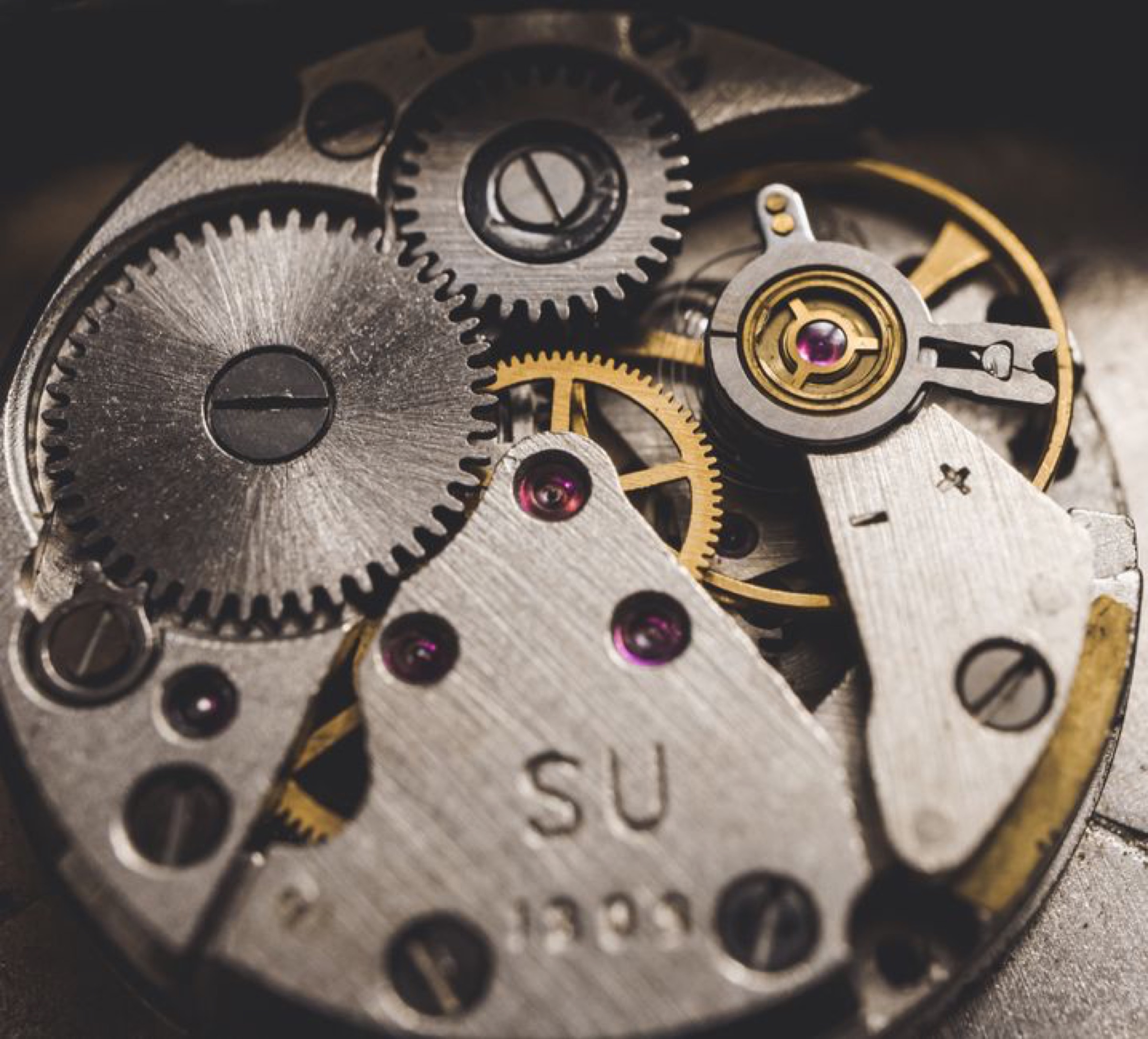
Delaying the opening of a watch saves money in the short term but increases the work needed later. Old lubricants congeal, increasing friction and placing strain on the drive train and escapement. A watch that appears to be “still running well” may already have uneven wear.
Seals age regardless of how the watch feels on the wrist. Dry or brittle seals admit moisture and dust. A. Lange & Söhne explains in its service information that mechanical watches are subject to wear despite resin-free synthetic oils and that external effects such as knocks or water ingress can trigger additional repairs. Omega’s care advice stresses that seals at the crown, pushers, crystal and case suffer from temperature changes, dirt or chemicals and must be replaced regularly. Corrosion of the wheel train, balance staff or barrel costs more than a scheduled seal replacement.
Water resistance is not permanent. After years without a pressure test, the metre rating on the dial is a historical specification. If you swim or expose your watch to splashes in daily use without a current test, you take a risk that the next buyer will look for in the records.
Rate deviation alone is not a complete health check. A watch can remain within tolerance while having dry bearings or ageing oils. Rolex defines a rate tolerance of approximately −2/+2 seconds per day for its Superlative Chronometer after casing – according to a Rolex brochure, more than twice as strict as the COSC requirement of −4/+6 seconds per day for the uncased movement. According to METAS criteria, Omega Master Chronometer watches must achieve 0 to +5 seconds per day in the final test (with a graduated allowance of up to 0 to +7 seconds for smaller movements). A service checks function, water resistance and the condition of parts together – not just seconds per day.
Costs rise when wear requires replacement parts. An interval service with cleaning, fresh lubrication and seals remains predictable. Work after corrosion or broken components becomes a repair with a longer time out of use. Patek Philippe publishes maximum prices for a full service (public maximum prices in CHF, excluding tax): manual-winding mechanical 900 francs, automatic 1,000 francs, complication I (annual calendar, Travel Time, moon phase and comparable functions) 1,500 francs, complication II (perpetual calendar, chronograph) 2,100 francs; case and bracelet refinishing adds 500 francs. In its Geneva boutique price list (CHF, excluding tax), Audemars Piguet lists the Royal Oak Complete Maintenance Service at approximately 950 francs for an automatic, 1,700 francs for a chronograph and 2,200 francs for QP complications. Omega offers a public price calculator and indicative price list; the brands do not publish binding euro tables including VAT for authorised Rolex service centres across the DACH region or a comprehensive fixed German Omega price overview in that form. Repairs after water damage or broken parts cost more and are quoted after diagnosis.
Old lubricants congeal, increasing friction and placing strain on the drive train and escapement.
Your choice of workshop affects originality, documentation and often resale. The manufacture’s service uses original parts and manufacturer-specific procedures. Waiting times are often longer, but documentation is clearest for buyers and insurers.
Authorised service centres combine local access in the DACH region with a connection to the brand. They use approved parts and processes and issue service records regarded by the market as close to the manufacturer. Patek Philippe puts turnaround at six to twelve weeks. IWC gives around four weeks for regular service and around thirteen weeks for vintage pieces in the manufacture’s Heritage department in Schaffhausen. Rolex cites at least four to six weeks for a complete overhaul, depending on condition. Audemars Piguet gives around five weeks for Core Collection models and prioritises warranty cases at approximately three weeks.
Independent watchmakers can be faster and less expensive, particularly for older or heavily modified pieces. Quality depends on training, measuring equipment and parts policy. For collectible watches with high resale value, establish whether independent work affects originality and warranty cover. Omega makes clear that the service warranty expires if persons without authorisation from Omega SA intervene. Patek Philippe ends warranty cover for unauthorised third-party work. IWC excludes service and repair outside its authorised network from warranty cover. Rolex ties its five-year warranty to sale through an official retailer and excludes watches fitted with non-original replacement parts.
Specialisation offers a middle course: some independent ateliers focus on particular calibres or eras and document the origin of parts transparently. For modern production watches under an active manufacturer’s warranty, the authorised route often remains safer. For vintage pieces, independent restoration can be more appropriate if the work is reversible and documented.
The lowest estimate alone is not decisive. Check the source of parts, scope of inspection, rate report, water-resistance test and form of final documentation. A cheap service without reliable records can make the next sale costlier than the amount saved.
On the secondary market, paperwork matters alongside visual condition. Buyers want service history, ideally with dates, workshop, scope and measurements. Without it, there is room to negotiate downwards even if the watch looks immaculate.
Typical documents include the original warranty card or digital registration, past service invoices, water-resistance reports and, where applicable, a current rate report. For more expensive pieces, box, papers and an uninterrupted chain of ownership are added. Chrono24’s market analysis of box and papers shows that a complete set supports price and speed of sale; service documents and original receipts add provenance, although the published percentages primarily reflect the inclusion of box and papers. No standard auction-house checklist quantifying discounts solely for missing service history is publicly available.

Sellers should organise records before listing, rather than searching only when asked. A complete file shortens due diligence and reduces mistrust. If there are gaps, state them clearly rather than smoothing them over.
Buyers check whether the last service fell within the recommended window and whether the workshop belonged to the authorised network. A very recent service shortly before a sale can be legitimate. It calls for explanation if it conceals cosmetic defects or if the seller cannot document the scope and workshop. Without a reliable market report, this remains a qualitative warning sign rather than a quantified price discount.
Insurers and valuers also rely on history. After water damage, a knock or an unexplained rate problem, demands for evidence increase. Regular servicing and record-keeping make claims settlement and valuation easier.
First establish the manufacturer’s recommendation and the date of the last service. If the window is approaching, book early because authorised workshops have waiting times. Published guide times are roughly four to six weeks (Rolex minimum for a complete overhaul), around four weeks (IWC, modern pieces), six to twelve weeks (Patek Philippe) and around five weeks (Audemars Piguet Core Collection).
Then assess honestly how you use the watch. Daily wear, sport, moisture and temperature changes warrant closer checks. A rarely worn watch still needs its seals and oil checked within the recommended window, because ageing continues even in a safe.
Comparing estimates means comparing the scope of work. Cleaning, fresh lubricants, seals, pressure testing, rate adjustment and the service warranty should be transparent. For Patek and Audemars Piguet, the published CHF lists support comparison of standard full services; Omega provides guide prices and a calculator. Manufacturers do not publish a comprehensive comparison of current euro quotes from several authorised DE/AT/CH centres for each brand with identical scopes of work.
Photograph the condition and inventory accessories before handing the watch over. On its return, check the reports and file them digitally and on paper. If you plan to sell, you have the evidence ready rather than having to explain the value afterwards.
Service is part of preserving value and has effects beyond its immediate cost. Extending intervals defers spending and risks more expensive repairs and discounts on sale. The reliable approach is to follow the manufacturer’s specific windows, choose a workshop that provides traceable records and keep a complete file before the next appointment.
The annual water-resistance check covers seals and pressure but replaces neither lubrication nor worn movement parts. Manufacturers such as Omega and IWC deliberately separate the two steps: water resistance annually, full service at a multi-year interval. A pressure test alone provides an everyday record; congealed oils and uneven wear remain untouched. Both records matter for value retention and sale.
For vintage pieces or heavily modified references, a specialised independent workshop may be more appropriate if the source of parts and the work are documented and reversible. For modern production watches under an active manufacturer’s warranty, the authorised route remains clearer because Omega, Patek Philippe and IWC exclude unauthorised work from warranty cover. A rate report, water-resistance test and traceable final documents belong alongside price when choosing a workshop.
Missing invoices, dates or workshop records create room for downward negotiation even if the watch looks immaculate. Chrono24 market data primarily quantifies the premium for box and papers; service documents are considered additional provenance in specialist discussions and support trust among buyers, insurers and valuers. Sellers organise their file before listing and state any gaps openly. An explainable history shortens due diligence and reduces discounts caused by mistrust.
More pieces with technical depth and restraint.