Botswana: Where the Best Safari Needs No Stagecraft
No engine roar, no motorcades, no performance. For decades, Botswana’s premium camps in the Okavango and Linyanti have stuck to one simple rule: fewer guests, higher revenue, untouched wilderness.
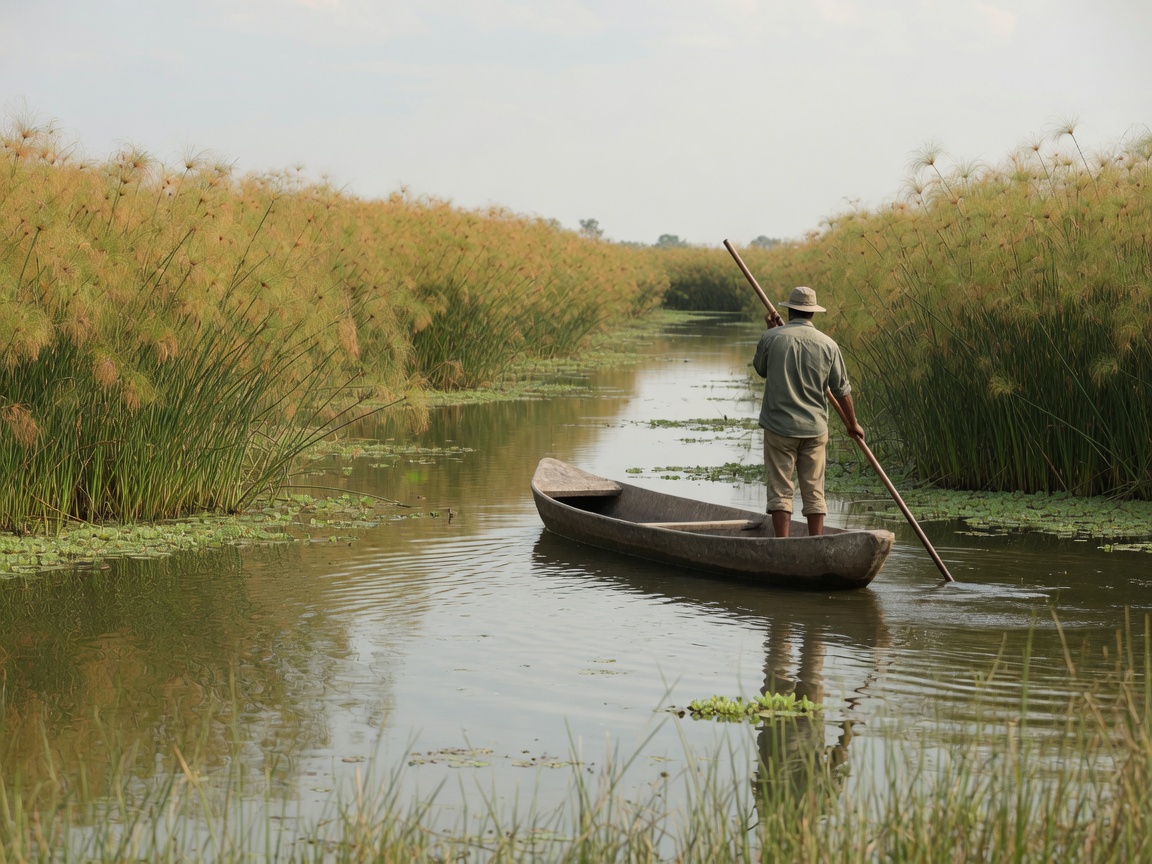
A mokoro makes no engine noise. The guide stands at the stern, pushing off the riverbed with a pole while the shallow-draft dugout glides soundlessly through hand-width channels in the Okavango Delta. That silence is Botswana’s true luxury promise, not an add-on, but the entire concept.
- The Okavango Delta was inscribed on the UNESCO World Heritage List in 2014 as its 1,000th site
- Since 1990, Botswana has pursued a policy of few, expensive camps instead of mass-market package safaris
- The dry season from June to August coincides with the annual flood peak in the Delta
A Delta That Grows in the Dry Season
What sounds paradoxical is routine in the Okavango: the annual flood typically peaks between June and August, right in the middle of Botswana’s dry winter. During this phase the Delta swells to three times its permanent area, drawing wildlife toward the remaining water arteries. The Moremi Game Reserve in the eastern Delta covers almost 5,000 square kilometres, of which only about 30 percent is dry land; the rest lies inside the watery maze itself. These water surfaces shift week by week, one camp that sat on solid ground in May can be ringed by channels by July. That unpredictability is part of the allure; no two Delta trips are ever the same.
A Park That Intentionally Stays Small
Moremi is expressly a low-impact park: few vehicles, few people, and sightings often mean you’re alone. It’s the operational opposite of overcrowded show safaris elsewhere on the continent. Peak wildlife viewing traditionally runs from July to October, when seasonal pans dry out and animals concentrate at permanent water, a phase that already begins slowly in late June.

A Motor-Free Boat as Policy
Traditionally, mokoros were carved from straight trunks of ebony or African sausage trees. Today, increasingly fibreglass-reinforced boats are used to spare old trees, another visible detail of the region’s low-impact ethos. The guide stands at the stern, pushing the boat through the water; there’s no engine noise, only the soft scrape of the pole on the riverbed and the gentle lapping against the hull. Even in mild June evenings the air can dip just above freezing after sunset; frost is not uncommon in the Botswanan winter.
No engine roar, only the soft scrape of the pole on the riverbed.
Linyanti, where elephants take the lead
To the northwest, the Linyanti Marshlands adjoin, bordering the Chobe National Park and the Kwando River, with the Selinda Reserve as its western neighbour. During the dry season, elephant herds from across the entire Chobe region gather here; estimates for the park put the number at around 50,000 animals. Linyanti delivers the concentration, not the spectacle: no choreographed waterhole moments, just the simple fact that at one of the last reliable watering holes, many animals come together. When you see an entire herd standing on the bank here, you’re not witnessing a scene arranged for cameras, but simply what happens when water becomes scarce in the dry season.
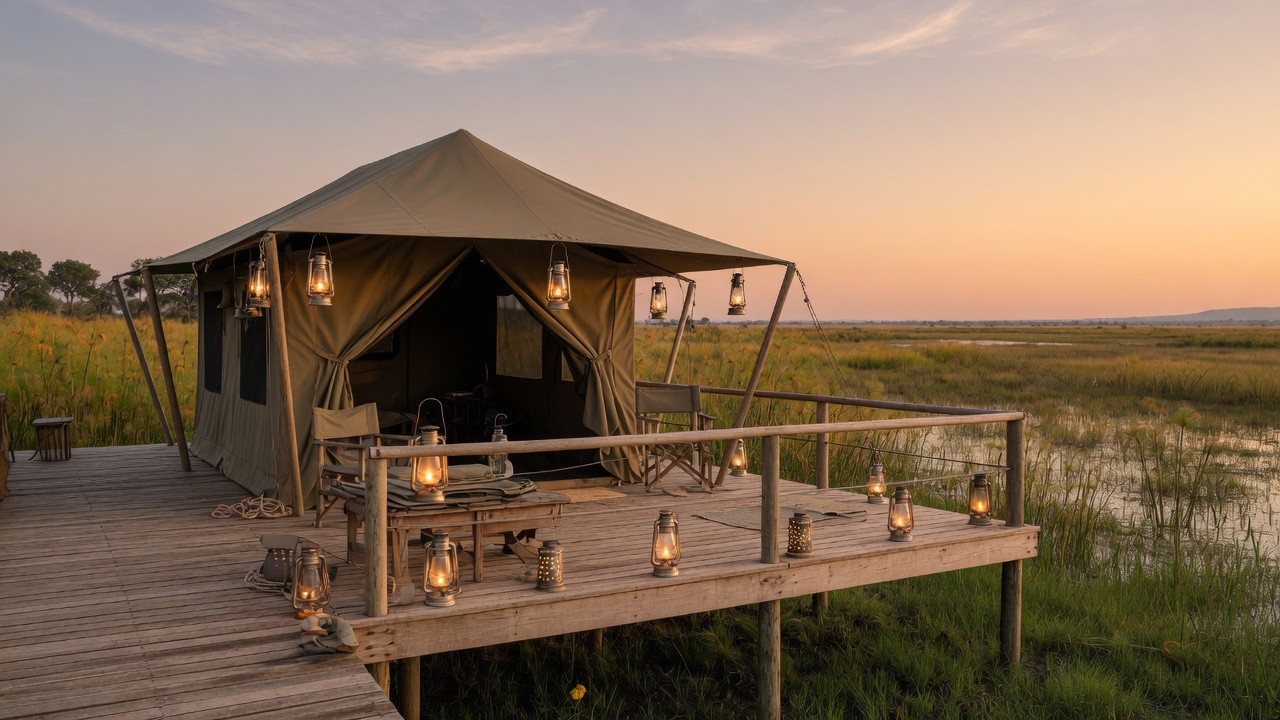
A policy built around a select few guests
Since 1990, Botswana’s tourism policy has deliberately targeted affluent international visitors from Europe, North America, Australia and New Zealand, creating a commercial foundation for fewer, high-end camps rather than mass-market safaris. Leading operators divide the country into four distinct regions, Okavango Delta, Linyanti, Moremi and Chobe, an arrangement that translates into different landscape experiences: water in the Delta, concentration in Chobe, quiet in Moremi. Travellers who combine all three regions experience more facets of the country in a single trip than they would by focusing on just one park.
Why unspectacular is high praise here
Visitors rarely return from Botswana boasting about a single dramatic moment, even though there are plenty of opportunities. Instead, it’s the quiet, unassuming instants that linger: dust on the Savuti Channel, a lone vehicle at a silent lion sighting, the noiseless glide of a mokoro through dense papyrus. This deliberate less, whether in architecture or visitor numbers, elevates the country to one of the last true reference destinations for unfiltered wildlife observation. Once you’ve experienced a lion sighting without the usual convoy of cars, you understand why seasoned safari travellers keep coming back instead of chasing new horizons.
Good to know
▸When is the best time to visit Botswana?
The dry season from June to October offers the best wildlife viewing, as animals congregate around permanent water sources. It also coincides with the annual flood peak in the Okavango Delta.
▸What is a mokoro?
A flat-bottomed dugout canoe from the Okavango and Chobe regions, traditionally carved from ebony. The guide stands at the stern and propels the boat silently through the water using a pole.
▸How does Botswana differ from other safari countries?
A tourism policy since 1990 favours fewer, pricier camps over large visitor numbers. The result is parks like Moremi, where you may have a wildlife sighting all to yourself. That very emptiness is the ultimate luxury, one no five-star lodge can replicate.
Image source: Cover and article images AI-generated.