Before the Brand Comes the Condition
When buying a pre-owned watch, the brand is not the only thing that counts. Condition, provenance, service history, seller and documentation decide whether you make a genuinely good choice.
You are standing in front of a display case or scrolling through a platform, and the watch looks right at first glance. The dial clean, the name familiar, the photo well lit. This is exactly the moment when most first-time buyers make a mistake. Not because the watch is bad. But because the first impression does not show everything that really matters in a used watch. Brand and dial are the entry point. Condition, provenance and documentation are the real examination.
- Pre-owned and vintage are two different categories. The difference starts with understanding, not with price.
- Condition beats brand name. A well kept case with non-original parts tells a story you should know.
- Who is selling matters as much as what is being sold. Transparency is not a bonus, it is the foundation.
- Papers and box are not mere decoration. They tell the story of a piece before you ask.
Hodinkee, one of the most respected watch media worldwide, draws a clear line between pre-owned and vintage. Pre-owned describes a used watch without any particular age marker. Vintage refers to a category in which condition and provenance carry considerably more weight. The distinction is not merely semantic: it changes what you need to check. An older watch has a longer history. History can mean several previous owners, unknown repairs, replaced components invisible in the photos.
Pre-owned and vintage: a difference that counts
For your first purchase this distinction is a helpful anchor. With a younger pre-owned watch the relevant questions are more manageable. In the vintage field you need more time, more patience and more sources. Hodinkee explicitly recommends asking about timekeeping, provenance, seller, condition and the originality of components with vintage watches. That is not distrust. That is the diligence that makes the difference.
A case that has been polished loses edges that were originally cut sharp. That sounds like a small detail. It is not. Original cases are not repolished if you want to keep their shape. Polishing marks on the bezel, rounded lugs, a crystal with scratches that scatter the image: all of that is information. A well aged watch looks lived in. A badly treated one sometimes looks younger than it deserves.
Reading condition before you decide
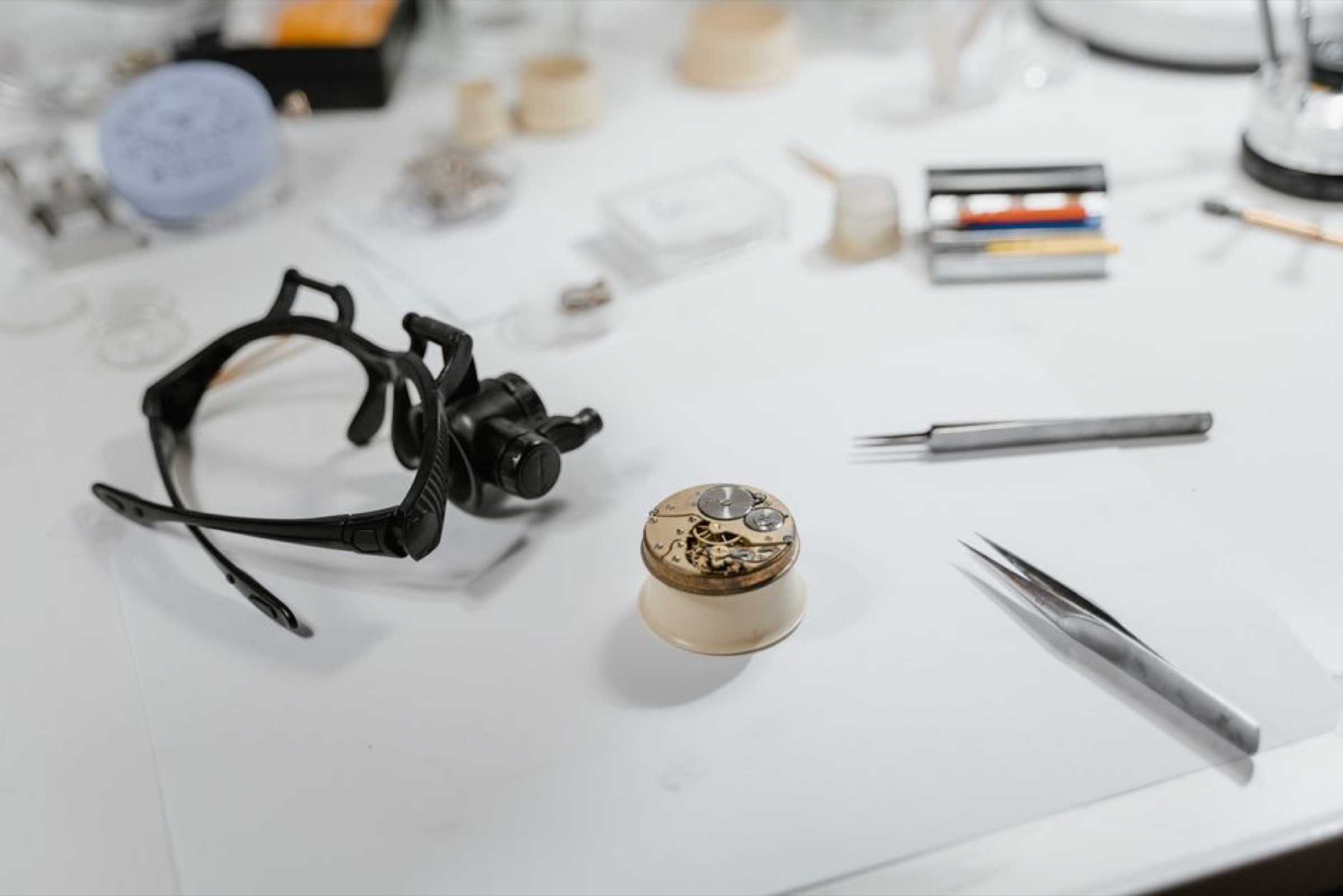
The look at the movement follows. Does the watch run cleanly? Does it keep time reliably? Are there noises that do not belong there? Dealers who include a service record show that they have engaged seriously with the piece. That is not a luxury. It should be the standard. Whoever cannot or will not give details about the last service is providing information of their own.
Bucherer Certified Pre-Owned is an example of how established dealers handle this subject. The programme describes authenticated watches inspected by specialists. For certain brands there are warranties that go beyond the purchase. That does not mean you should buy exclusively through such programmes. It does show what a serious inspection consists of: a look into the movement by someone who knows movements, transparency about condition, and a clear statement on the components.
Service history, documentation and the right questions
Documentation is not a collector’s privilege. Box, papers and service receipts tell the story of a piece before you ask a single question. You do not necessarily have to demand complete records, but you should know what is missing and judge whether that is a problem or not. A watch without papers is not automatically a concern. A watch whose seller cannot or will not answer a single question about its provenance is.
You do not buy a used watch by brand alone. You buy it by what you know. And by what the seller is willing to tell you.
This is where the difference between owning and choosing begins. One accumulates things; the other asks whether they match your own sense of quality.
The Look at the Detail
A good purchase does not grow louder as you come closer. It grows more precise: in the surface, in the documentation, in the way material and provenance fit together.

The Watch Register recommends checking pre-owned luxury watches against the relevant databases as part of due diligence. Stolen or reported lost watches surface on the market, often without buyers knowing. A serial number registered in a loss report is an unambiguous signal that needs no further interpretation.
The last step before the decision
That sounds like a complicated step. It is not. Many reputable dealers run this check before they even list a watch. If you buy privately, you can arrange the check yourself. Anyone who cannot or does not want to should at least ask the seller whether such a check has taken place. The answer already tells you something about the person you are buying from.
Choosing this way is not a search for the loudest signal. It is a search for a piece that still convinces once the first impulse has passed.
The Final Check
In the end what counts is whether an object can carry its story quietly: not as a pose, but as quality you can trace.

What Remains
Luxury reads stronger when you read it more slowly. Then the focus shifts from price to coherence.
Briefly Explained
What is the difference between pre-owned and vintage?
Pre-owned describes used watches without any particular age marker. Vintage, according to Hodinkee, refers to an older category in which condition and provenance carry considerably more weight. For beginners, pre-owned is often the clearer entry point because the history of the piece is shorter and easier to follow.
Do I absolutely need papers and the original box as a beginner?
Not necessarily. A watch without complete documentation is not automatically suspicious. You should still know what is missing and judge whether the piece is being treated fairly. Whoever consistently dodges questions about provenance is sending a signal of their own.
What does a check against watch databases achieve?
The Watch Register recommends this check as part of due diligence with pre-owned luxury watches. It shows whether a serial number appears in loss reports or theft registers. Reputable dealers usually run this verification themselves. With private purchases the initiative lies with you.
Placing It in Context
This article belongs to the new InspiredByLuxury way of reading: less a quick list, more material, provenance, use and editorial taste.
Image sources: Pexels / Gunnar Hoffmann; Pexels / Jimmy Liao; Pexels / Zulfugar Karimov. Sources and further information: Hodinkee, Chrono24, Bucherer.