
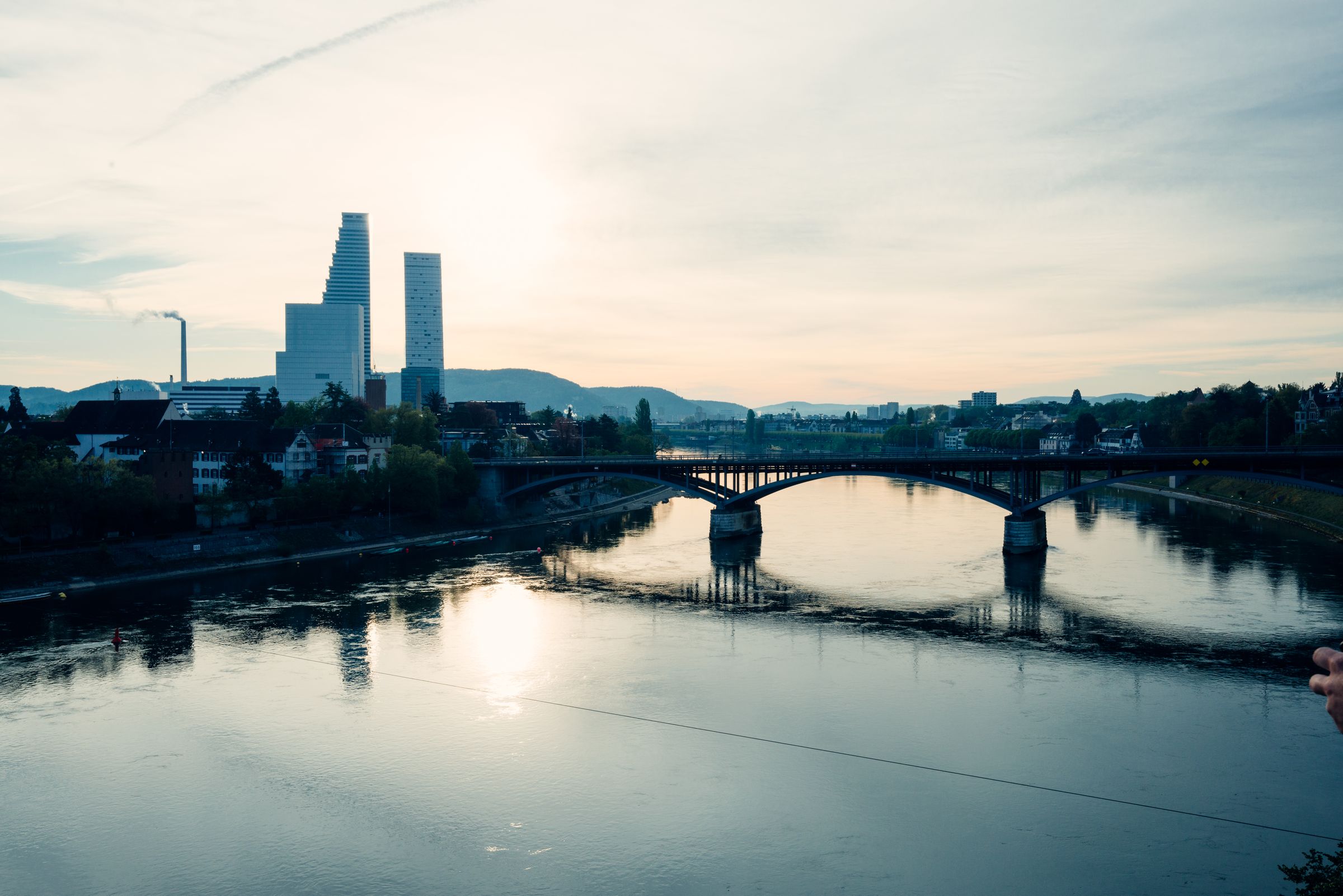
Basel in June: Art Basel as the Art Market’s Clock
20 June 2026
There’s no bell in the art market that divides the year. And yet an astonishingly large slice of the art world still pivots around a single June date when a few halls on the banks of the Rhine open their doors. To understand why galleries hold back their best works, why museums reschedule their openings and why collectors fold their travel calendars around it, you don’t need to talk prices. You need to talk Basel.
- The origin: founded in 1970 by gallerists Ernst Beyeler, Trudl Bruckner and Balz Hilt in Basel.
- The beat: held every June on the Messeplatz Basel, run by the MCH Group.
- The network: spin-offs in Miami Beach since 2002, Hong Kong since 2013, Paris since 2022.
- The architecture: the exhibition extension with the City Lounge by Herzog & de Meuron, completed in 2013.
- The market: according to the Art Basel and UBS Global Art Market Report 2026, Old Masters and Modern segments are growing, with fairs accounting for about 35 percent of gallery turnover.
Imagine the art market not as a marketplace but as a vast, loosely connected orchestra. Hundreds of galleries, dozens of museums, several auction houses, plus advisors, foundations, collectors and the press-each playing its own score at its own tempo in its own city. To turn that cacophony into harmony, you need a conductor. For decades, that conductor has been Art Basel.
The date that orders the entire market
The mechanism is simpler than it sounds. A fair of this magnitude forces every stakeholder to converge on one week. A gallery with a booth in Basel plans its entire year around that seven-day window. The strongest works don’t leave the gallery in March for a private client; they wait for June, when the most important eyes in the trade are gathered in one place. What’s too good to sell offhand is kept for Basel.
This logic radiates far beyond the exhibition halls. Museums in the region and across Europe schedule major openings for the same week because the international crowd is already in town. Foundations open their doors, collections unveil pieces that normally stay in storage. Even auction houses think in this rhythm: their key summer sales and second-half strategies quietly align with the mood emanating from Basel.
The upshot is a calendar densification you can see on any schedule. A handful of June days suck in attention, capital and personnel at a single point. Beforehand comes preparation; afterward, evaluation. The fair acts like a fixed star around which other dates orbit – not because anyone decreed it, but because it pays for everyone to align.

Anyone who has walked through an art city during that week knows the feeling: hotels are full, restaurants are booked, bars buzz with talk of works instead of weather. A fair doesn’t just set the tempo for commerce; it sets the tempo for mood. And in Basel, that mood has earned its fixed place in the year-reliable as a public holiday.
From a gallerist’s idea to a firmly established institution
That Basel, of all places, holds this rank is no coincidence, yet neither is it a given. The story begins in 1970, when gallerists Ernst Beyeler, Trudl Bruckner and Balz Hilt launch an art fair in the city. It is the brainchild of people who actually trade in art and want to create a place where supply and demand meet at a high level. Over the decades, this initiative has grown into one of the most important addresses in the industry.
Basel brings excellent prerequisites to the table. The city sits at the tri-border junction, easily reachable from Germany, France and the whole of Switzerland, with a long-standing tradition as a hub for art and collections. The fair is supported by the MCH Group headquartered in Basel, which has organised the event and professionalised the format over the years. What started as a dealers’ initiative has thus become an institution with its own infrastructure and a fixed slot on the international calendar.
An art fair does not become important simply because many people attend. It becomes important when the entire year begins to revolve around it.
This ambition is also visible in the architecture. The Basel exhibition grounds are no run-of-the-mill venue, but a carefully designed space. The fair expansion featuring the iconic City Lounge was created by Basel architects Herzog & de Meuron and completed in 2013. A building that architecturally confirms the significance of what takes place within. Anyone walking through this space should feel that what is traded here is not just any commodity, but something that merits this stage.
The fusion of commerce and ambition lies at the heart of the concept. Such a fair is never merely a marketplace. It is an inventory of what currently matters in the market, which names are rising, which works are sought after, which epochs are returning to the spotlight. That is precisely why people travel here on days when they have no intention of buying anything. They come to see where the market stands.
From the Rhine to the world
Perhaps the greatest proof of its role as a pace-setter is that this rhythm has been exported. Basel is no longer the sole date. Since 2002 there has been an edition in Miami Beach, giving the American and Latin American scenes a fixed appointment. Since 2013 Hong Kong has joined, anchoring the brand in the Asian market. Since 2022 Paris has also been part of the network, with an edition in one of Europe’s key art cities.
What began as a single June date has thus become an entire year-long framework. The various editions are spread across the calendar and the continents, yet Basel remains the origin and the benchmark. The other dates are not copies, but distinct chapters with their own audiences. Together they form a rhythm that guides the global art market through the year, from one important station to the next.
For galleries and collectors this means a kind of map with fixed landmarks. You know when and where to be, which fair matters for which segment of the market, where particular works find their public. This predictability is an underrated asset. In a business that thrives on personal trust, on encounters and on the direct gaze at the work itself, reliable dates are hard currency. They reduce uncertainty and concentrate energy.
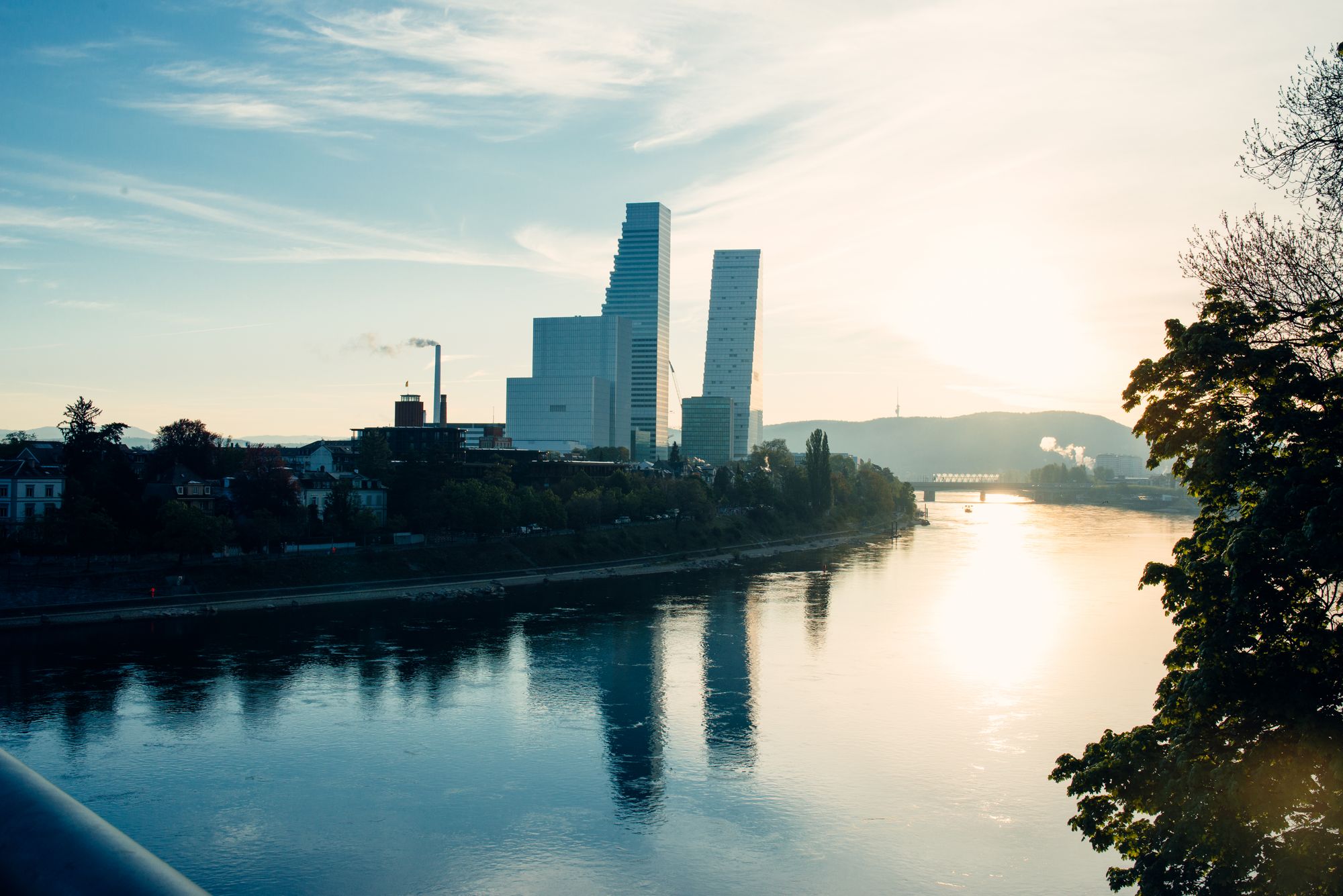
It is worth pausing to consider what this export truly signifies. A city has invented a format so compelling that today it sets the beat on multiple continents. No corporation imposed this rhythm; an idea has prevailed because it works. The market has voluntarily adopted a cadence, and that cadence bears the name of a Swiss city.
What the market is saying in June 2026
A yearly clock only matters if it shows something. The fair does exactly that. It’s not just a date on the calendar, but a barometer of what’s moving the market right now. When you look to Basel in June 2026, you’re reading more than a sales report. You’re reading which way taste – and capital-are headed.
A glance at the data points the way forward. According to the Art Basel and UBS Global Art Market Report 2026, the Old Masters and Modern segments are growing. That’s notable because for years contemporary art dominated the headlines. Now that older epochs and classical modernism are in stronger demand, the market is placing higher value on substance and verified provenance. A market that no longer chases only the newest, but looks more closely at origin and endurance.
One more figure from the same report explains why the fair is so central. Exhibitions account for roughly 35 percent of gallery revenue. That’s not a side channel-it’s a core pillar of the business. When over a third of gallery turnover comes from fairs, it’s clear why calendars revolve around these dates. The fair isn’t the shop window beside the real business. It’s a major part of the business itself.
From these milestones emerges a picture. The fair is metronome, stage and gauge in one. It tells the industry when to come together, shows what matters now, and delivers the numbers by which the year is measured. Three roles in a single event, anchored by a city that has filled this role since 1970.
Why Basel is irreplaceable on the calendar
You can clone a fair, launch a spin-off, or schedule a similar date. What can’t be easily replicated is the function of a fixed point. That role isn’t built overnight or through marketing. It emerges when, over years, enough people align their routines around a single date until the date itself becomes second nature. That’s exactly what has happened in Basel.
For collectors, it’s a twofold invitation. Anyone serious about art doesn’t just find pieces to buy in Basel each June-they encounter a concentrated cross-section of the entire market. What would otherwise be scattered across the year and the globe is visible in one place. That doesn’t just save miles of travel; it sharpens judgment, because quality is easier to assess in direct comparison than in isolation.
And for everyone else who will never step behind a booth or bid at an auction, there’s a quieter insight. A market as vast and unwieldy as this one has voluntarily adopted a shared rhythm. Once a year, in June, in one location. It’s not a rule or a law, but a convention that has grown over decades. The next time you read that the art world is in town for the summer, remember: more than a fair is taking place. The clock of the year is being set.
Quick Clarification
▸When does Art Basel 2026 take place, and what should first-time visitors know?
The Basel edition will be held, as every year, in June 2026 at the Messeplatz Basel. First-time visitors should book accommodation and travel early, as the city fills up quickly that week, and allow plenty of time-the halls are large and the programme is packed. It’s worth checking out not only the fair itself but also the parallel exhibitions and openings staged across the region, which deliberately coincide with the same week.
▸Who founded the fair?
The art fair was founded in 1970 by gallerists Ernst Beyeler, Trudl Bruckner and Balz Hilt in Basel. From this dealers’ initiative grew one of the most important addresses on the international art market.
▸What other locations exist besides Basel?
In addition to Basel, there are editions in Miami Beach since 2002, in Hong Kong since 2013 and in Paris since 2022. This spreads the format across multiple continents while Basel remains the origin and benchmark.
▸Why is the fair considered so important for the art market?
Because it sets the calendar for many galleries, museums and collectors. According to the Art Basel and UBS Global Art Market Report 2026, trade fairs account for around 35 percent of gallery turnover, while the Old Masters and Modern segments are also growing. The fair is therefore a marketplace, meeting point and barometer of mood all in one.


