Your Brain Needs Idle Time: Why Some Problems Need a Country Road, Not a Meeting
If you spend all day curating meetings, you unlearn how to think. The solution isn’t in the next call, it’s on a road that demands nothing from you.

 //DRIVE
If you spend all day curating meetings, you unlearn how to think. The solution isn’t in the next call, it’s on a road that demands nothing from you.
It’s just past six, the city hasn’t woken up yet and I’ve cracked the window two centimeters. The air smells of concrete and dew, tires hum on damp asphalt and something in my head, blocked for days, suddenly gives way. Not with a bang. Quietly. The way an idea arrives when you stop chasing it. That’s the point: some problems can’t be solved in another meeting.
I know the kind of day that argues against this. Seven calls, two lists, an inbox that never empties and the nagging sense you’ve processed everything but thought nothing. Productivity and thinking aren’t the same. When you spend the day reacting, you don’t go to bed with solutions, just leftover tasks. Eventually, you realize the truly important questions never make the agenda because they’re too big for a time slot.
The excuse is always the same: no time. The truth? Your head is too full to be empty. And that’s where a road comes in, one that wants nothing from you for three hours.
There’s an old insight from cognitive research that everyone knows but no one takes seriously: the best ideas strike in the shower, on a walk or while doing the dishes. In 2014, Marily Oppezzo and Daniel Schwartz of Stanford University measured this precisely in four experiments. The result? Walking stimulates what’s called divergent thinking, exactly the kind of mental activity that forges new connections instead of retracing old paths. Just a few minutes of movement unlocks a flow of ideas that remains blocked when you’re seated. Indoors or outdoors. The environment wasn’t the driver. The movement was.
Driving isn’t walking and I’m not equating the two. But the underlying mechanism is similar. When an activity becomes routine, when your hands and feet know what to do, your brain takes a step back. Neuroscience calls this the Default Mode Network, the system that activates when you’re not focused on a specific task. Daydreaming. Remembering. Planning things that aren’t due in the next fifteen minutes. Something similar happens during long, familiar drives: your attention stays sharp enough for safety but disengaged enough to wander elsewhere.
If you spend all day reacting, you won’t go to bed with solutions, just leftover tasks.
This isn’t some esoteric sales pitch. Mind wandering was long dismissed as a flaw, proof of a distracted mind. Research now sees it differently. In this unstructured state, the brain weaves connections between information that stays siloed at a cluttered desk. The problem you’ve been stuck on for a week often isn’t about missing input. It’s about that input never having space to organize itself.
Not every drive lends itself to mental clarity. Stop-and-go highway traffic is stress, not a reset. A city loop with traffic lights is a series of micro-decisions, not downtime. What works is a route with enough flow to engage the body but enough consistency to free the mind. Curves, open stretches, a rhythm you stop consciously steering after twenty minutes.
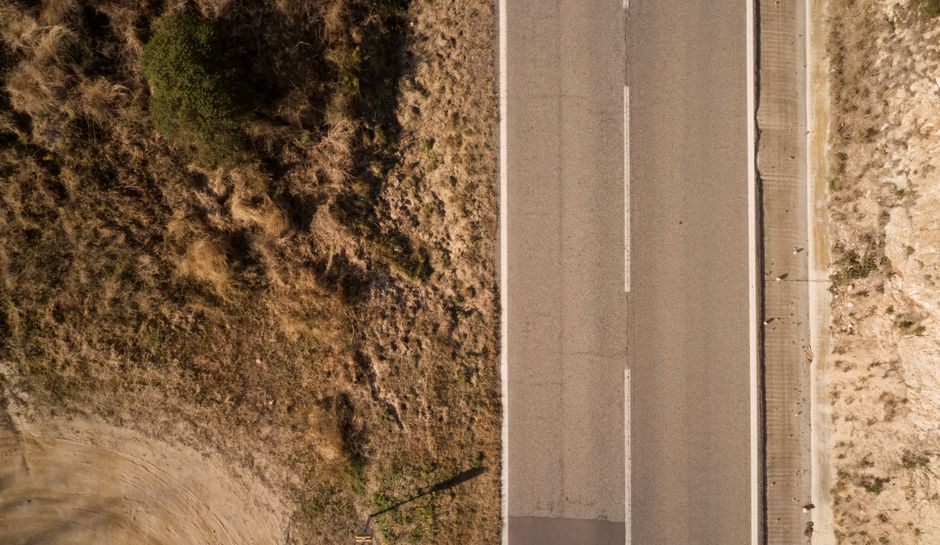
That’s why the route matters more than the car. A perfect sports car in rush hour is just an expensive chair. A decent car on a good country road at dawn is a tool, not for emails, but for thinking.
I notice it in myself: after about forty minutes, the shift happens. The mental to-do list fades, the voice constantly planning the next step falls silent and in its place comes a kind of clear slowness. Often, that’s when a question I’ve been carrying suddenly takes shape. Not the answer. The right question. Sharpen the problem and you’ve already done half the work.
The irony is glaring. The kind of person who needs this reset the most is the same one who’s least likely to take it. Founders, executives, people who make decisions all day and realize by evening that the call on the company’s direction had to be squeezed between two meetings. The big questions don’t fit into any calendar slot. They demand a window of time where the mind has nothing to do but let them in.
It’s no coincidence that so many of these people run, row or drive. Not for the sake of fitness. Out of necessity. The body is the trick they use to outsmart the mind. If you set out to think deeply about a problem, you’ll usually end up skimming the surface. But if you set out to drive for three hours, the deep thinking happens on the side. That difference is everything.

Some roads are only worth it if someone knows the route.
This morning, after two hours, I return and the problem I took with me looks different. Not solved. Sharper. I’ve found the question I should have been asking all along and that’s more than any meeting would have given me that day. The mind isn’t an inbox. You can’t empty it by filling it up. Sometimes the fastest way to an answer is a country road that demands nothing for three hours except attention to what’s right in front of the bumper.
Not exactly. Research confirms the effect for walking and general mind-wandering. The link to driving is a plausible extension of the same mechanisms: movement, routine and undirected attention. There’s no lab proof specifically for the steering wheel, though.
A brain network that activates when you’re not focused on a specific task. It kicks in during daydreaming, remembering or planning. Studies tie it to creative problem-solving and connecting dots that stay separate in focused mode.
One with flow and consistency: curves, open stretches, minimal stop-and-go. Rush-hour highways are stress. City traffic with its constant red lights is a barrage of micro-decisions. The best routes are those you can stop consciously steering after twenty minutes.