

When an Entire City Becomes a Stage
For a few weeks, Salzburg transforms into one giant stage. A preview of the 106th Festival, its venues, and the idea that culture can take over an entire place.
Some festivals you attend. Others take over an entire city. For a few summer weeks in Salzburg, the baroque old town becomes one continuous stage where opera, theatre and concerts unfold at dozens of locations simultaneously. The idea isn’t new, it dates back to co-founder Max Reinhardt. Yet it still holds true today: the whole city is a stage.
- The 106th Salzburg Festival turns the old town into a single stage for weeks
- The official opening ceremony with keynote speech takes place in the Felsenreitschule
- Highlights include a new production of Messiaen’s “Saint François d’Assise”
- The “Jedermann” on the Cathedral Square remains the iconic heart of the programme
The City as Stage
The festival’s opening is an event in itself. The opening festival spreads across several consecutive days, filling the city with concerts, open rehearsals and guided tours at numerous venues. It fully embraces Max Reinhardt’s vision: culture shouldn’t be confined to a single building but should spill into alleys, squares and churches.
The formal framework is set by the opening ceremony with its keynote speech, held in the Felsenreitschule. This year’s much-anticipated speech will be delivered by Belarusian flutist and activist Maria Kalesnikava. Just beforehand, the Ouverture spirituelle begins, a season-opening devoted to the theme of Miserere, launched with a concert project by Patricia Kopatchinskaja. Already before the main programme starts, a bridge is built from music to the present day. The Ouverture spirituelle is more than a prelude; it prepares the audience for a theme that runs through the entire summer. It weaves sacred music together with contemporary questions. To truly understand the festival, start here.
A Saint in the Felsenreitschule
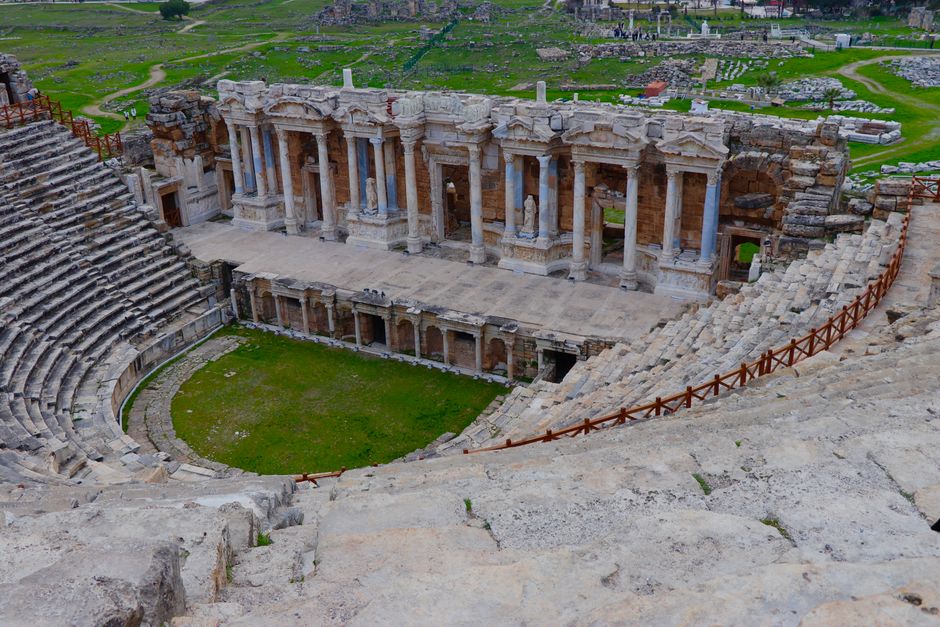
The season’s centrepiece is Olivier Messiaen’s “Saint François d’Assise,” staged in the Felsenreitschule, the unique venue whose arcades are carved straight into the Mönchsberg. Directed by Romeo Castellucci with musical direction by Maxime Pascal, the premiere is set for 4 August, marking the 800th anniversary of the saint’s death.
From a distance, you sense the special power of the production. Messiaen’s sound world features, among other elements, three ondes Martenot, early electronic keyboard instruments played with a ring. In the Felsenreitschule, these instruments will surround the audience from multiple sides, making the music seem to rise from the rock itself. It’s the kind of experience only possible in such a place. The Felsenreitschule began as a Baroque riding school whose seating was hewn directly from the mountain. Today, that raw rock forms the backdrop of one of Europe’s most extraordinary opera stages. No set designer could invent a more striking setting, it’s already there. It’s these very places that make Salzburg unmistakable. You don’t just hear the music here; you hear it in a space that already carries its own story long before the first note sounds.
Culture shouldn’t be confined to a single building but should spill into alleys, squares and churches.
The Everyman and the Heart of the Programme
No other work is as closely tied to Salzburg as Everyman. Hugo von Hofmannsthal’s play about the death of the rich man returns to Domplatz in a production directed by Robert Carsen, with Philipp Hochmair playing the title role for the third time. Joining him this season are several new performers who give the piece a markedly different face. The allure of Everyman lies precisely in its capacity to renew itself again and again without ever losing its core. A story from the early 20th century, a medieval motif, and yet the question of a life well lived strikes every audience anew.
What makes Everyman special is its vulnerability to the weather. The play is performed in the open air on Domplatz. Whether the show goes ahead is often decided only two or three hours before curtain-up. If rain falls, the venue moves to the Großes Festspielhaus. Standing room on Domplatz can be had for just a few euros, making the piece one of the most accessible highlights of the entire festival. This weather ritual keeps the city on tenterhooks every summer.
A New Leader, Timeless Grandeur
This year’s programme is helmed by an interim artistic director. Karin Bergmann has taken the reins following Markus Hinterhäuser, whose summer line-up had already been announced. Such personnel changes are par for the course at an institution of this scale, yet they never threaten the continuity of the programme. A festival that has endured for more than a century has learned to navigate transitions. The names at the top may shift from time to time, but the high artistic standards remain unchanged across the decades.
The guiding idea of this summer is captured in the title “Of the Birth of Time and the Power of the Heart,” weaving opera, theatre and concert into a single thematic vision. Alongside Messiaen, the season includes a Rossini production that premiered at the Whitsun Festival and returns for the summer run. The result is a dense web of premieres, revivals and concerts that sustains the city for weeks.

Culture for All, Not Only for the Few
One might mistake the Salzburg Festival for an exclusive affair, but that view is too narrow. Alongside the grand premieres there are formats designed to be open to everyone. The long-standing main sponsor, for example, supports the Fest>Spiel>Nights on Kapitelplatz, a free public screening of classical music that ranks as the world’s largest of its kind. Under the open sky, people experience opera without buying a ticket. It is a deliberate signal: the great works belong not merely to paying audiences but fundamentally to the whole city and all its visitors.
It is precisely this blend that makes the city so magnetic in summer. Those who wish can indulge in a premiere in the Felsenreitschule; those who prefer the outdoors will find music in the square. Between the priciest seat and the free standing room on Domplatz lies an entire world. Both belong to the same festival. The city opens up. For a few weeks every corner seems part of one vast performance. That is the real luxury of this festival, not the price of a ticket, but the experience of a place, for a limited time, so thoroughly permeated by culture that you encounter it even on the way to the bakery.
What You Should Know
▸What makes the Salzburg Festival unique?
Instead of performing in a single venue, the festival transforms Salzburg’s entire old town into a stage for weeks. Opera, theatre and concerts take place simultaneously at multiple locations, from churches and squares to the cliff-carved Felsenreitschule.
▸Why is Jedermann so famous?
Hugo von Hofmannsthal’s “Jedermann” is traditionally staged outdoors on the Cathedral Square and is considered the festival’s centrepiece. Whether the performance goes ahead depends on the weather, often decided only shortly beforehand. Standing-room tickets start at just a few euros.
▸Can you experience the festival for free?
Yes. At Kapitelplatz there’s a free public screening of classical music, billed as the world’s largest of its kind. You can enjoy open-air opera without buying a ticket.
Image sources: Title image SevenStorm JUHASZIMRUS; Contributor images Withanonim and Jacob Yavin (Pexels).
Sources and further reading: Salzburg Festival.


