

When a city becomes a gallery
In Arles, Provence transforms into the world capital of photography every summer. A preview of a festival that turns churches, monasteries, and industrial halls into exhibition spaces.
There’s a small town in Provence where, in summer, you don’t need a guidebook to find art, you stumble upon it. In Arles, photography isn’t confined to a museum; it hangs in Gothic churches, former monasteries, and abandoned industrial spaces. For a few weeks, the entire city becomes a gallery. The walk from one exhibition to the next winds through 2,000 years of history.
- The 57th Rencontres d’Arles carries the theme “Des mondes à relire”
- The festival runs from early July through October, occupying around 40 venues
- Exhibitions are staged in churches, monasteries, and former industrial halls
- A festival pass covering all shows costs €42, reduced €33
A festival without museum walls
The Rencontres d’Arles is one of the world’s most important photography festivals, launching in 1970. This year marks its 57th edition under the theme “Des mondes à relire,” roughly translating to “Worlds to Reread.” The festival kicks off in early July with an intense opening week and runs through October. Over these months, people from around the globe converge on the small town, photographers, collectors, gallerists, and the merely curious. For a few months, Arles becomes a meeting point for anyone who takes photography seriously.
What sets Arles apart from a conventional museum circuit is its sprawl across the city. About 40 venues dot Arles and its surroundings, from churches and monasteries to industrial halls, with some exhibitions even extending into nearby Nîmes and Marseille. This year, roughly 28 curators are behind the program, a deliberately decentralized approach that favors many voices over a single curatorial hand. The result is a deliberately polyphonic program. Visitors who want to see everything won’t find a smooth, curated path, but rather a collision of distinct perspectives on photography. It’s this friction that keeps Arles alive.
Art in Unusual Spaces
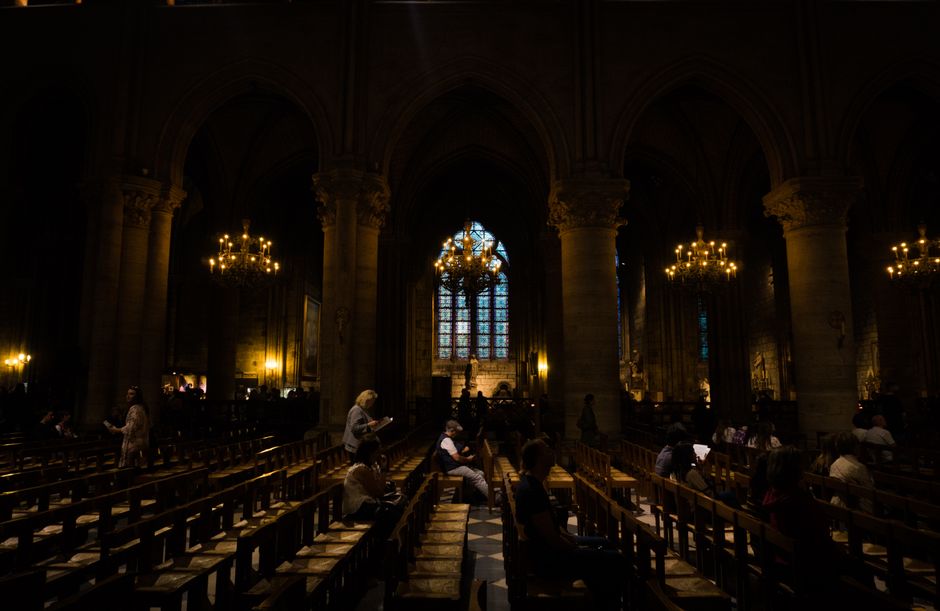
The festival’s allure lies in its venues. An exhibition titled “Ghana ! Rêver l’indépendance 1957–1976” is housed in the Palais de l’Archevêché and weaves together historical archive photography with contemporary voices. The arc from past to present is a recurring motif this year, fitting the theme of rereading worlds. It’s not merely about showing new images, but about placing familiar ones in fresh contexts. Photography is thus understood not as a finished work, but as something that can be interrogated anew time and again.
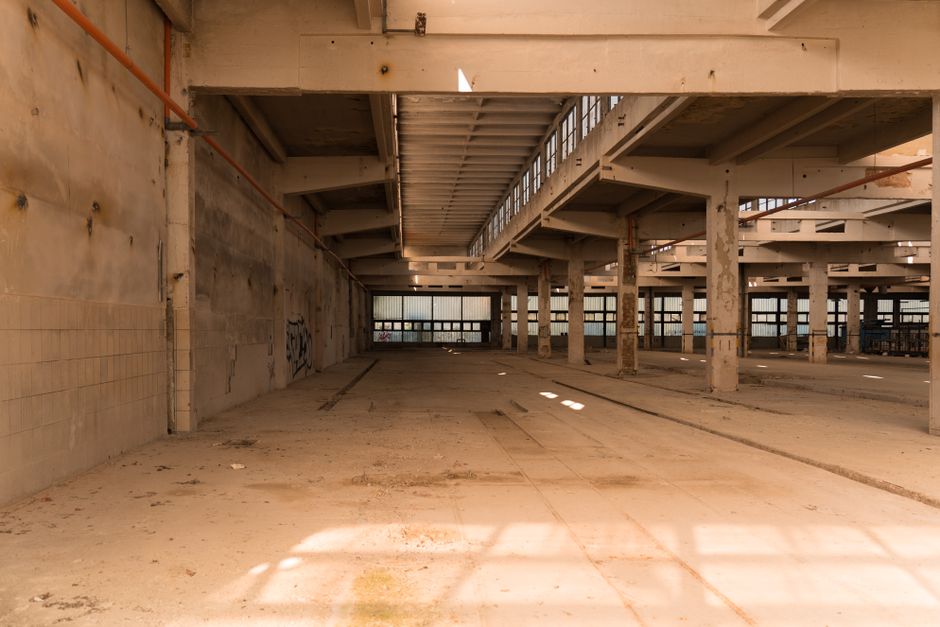
Nowhere is this more striking than where space and image charge each other. Sammy Baloji’s show on Congolese image archives unfolds in the Église des Trinitaires, a former monastic complex. Stone, dim light and historic masonry become the stage on which Western archival images meet personal memory. Elsewhere, in the former industrial hall La Mécanique générale, an exhibition spans two centuries of animal photography. A rhythm of contrasts emerges: here the sacred hush of a church, there the industrial grit of a workshop, between them the quiet of a cloister courtyard. It quickly becomes clear that in Arles the space itself is always speaking. No image hangs in a vacuum; each gains an added layer of meaning from its setting.
The walk from one exhibition to the next passes through two thousand years of history.
The Night as the Highlight
A festival that takes over an entire city also has its communal crescendos. The best-known is “La Nuit de l’Année,” a night when large-scale projections unfurl on vast screens. It happens at the Papeteries Étienne, a nocturnal industrial riverside site, with free entry and a program running deep into the night.
From a distance it sounds like a hybrid of exhibition and festival. That’s precisely the point. Photography here is not hushed reverence before a framed print, but a public event under the open sky. The day’s heat gives way to night culture, the screens glow, and the old paper mill becomes the regional hub for a few hours. Evenings like this turn a gallery visit into an experience you’ll remember.
Planning Made Easy
Arles demands a marathon schedule. The festival pass covering all exhibitions costs €42, reduced €33; single shows run from €6 to €15. Most exhibitions remain open daily through late August. The generous hours invite you to split the day into stages, with pauses in the shaded lanes of the old town. Between two shows, a glass of rosé in a café, then on to the next hall in another ancient building, this is the true rhythm of these summer days.
A tip for early birds: the opening week in early July packs vernissages, awards and special events, including the book prizes announced in the ancient Théâtre Antique. If you want the atmosphere at its densest, come then, but expect crowded streets and scarce lodgings. For quieter viewing, travel later in summer when exhibitions unfold at their own pace.
More than just a festival
Parallel to the Rencontres, Arles has established a second magnet. On the grounds of a former railway workshop, the Parc des Ateliers, the cultural institution LUMA Arles launches its summer programme, featuring its own exhibitions and events. This permanent venue for contemporary art complements the festival’s temporary energy. So even outside the festival season, Arles still offers plenty of reasons to visit. Over the past few years, the city has become a firm address for art and photography, far beyond the summer weeks.
Ultimately, it is this fusion of place and image that makes Arles unique. Photography is not seen inside a neutral white cube but in spaces that themselves carry history. An archival print feels different beneath the vaulted ceiling of an old church than against a blank wall. A contemporary series gains a raw power in an industrial hall. For anyone who loves photography, this Provençal city offers, for a few summer weeks, perhaps the most beautiful place to encounter it. And even those who rarely engage with photographic art may struggle to resist its pull. Here, it’s not merely about pictures on walls but about a city that, for a summer, decides to make pure seeing the most important thing of all.
Good to know
▸What are the Rencontres d’Arles?
One of the world’s most important photography festivals, held every summer in the Provençal city of Arles since 1970. Exhibitions are spread across some 40 venues city-wide, including churches, monasteries and former industrial halls.
▸How much does it cost?
A festival pass covering all exhibitions costs €42, reduced €33. Individual shows range from €6 to €15. Most exhibitions remain open daily until the end of August, with extended hours.
▸When is the best time to go?
The opening week in early July is at its liveliest, packed with openings, awards and the Nuit de l’Année. Travellers preferring calm can arrive later in summer and explore the shows in peace, both seasons have their own appeal.
Image credits: cover Trash Art; contributor images Carlos and Tibor Szabo (Pexels).
Sources and further reading: Rencontres d’Arles and LUMA Arles.


