
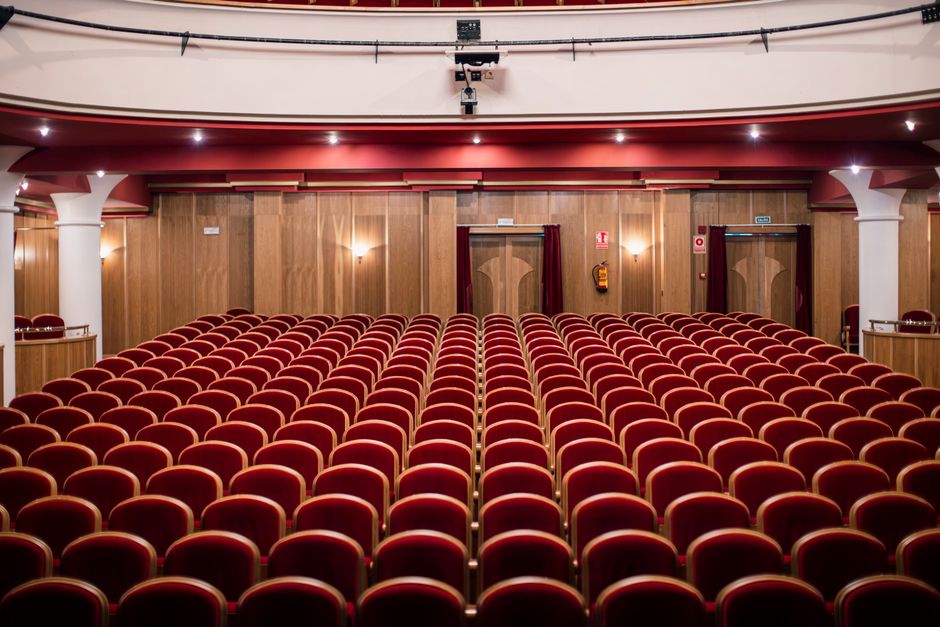
The hall that plays before the first note
Two halls, two philosophies of listening: Hamburg builds the vineyard, Vienna guards its golden shoebox. Why architecture shapes sound before the orchestra even begins.
You take your seat, the lights dim. Before the first bow touches the string, the space has already made its choice. A concert hall is no neutral container for music. It is an instrument that joins in. Anyone who has sat in a truly great hall knows the luxury of listening doesn’t begin with the orchestra.
- The Elbphilharmonie follows the vineyard principle with terraces surrounding the stage
- Its “White Skin” consists of more than 10,000 individually milled panels
- The Vienna Musikverein relies on the older shoebox principle with about two seconds of reverberation
- Both halls prove: the room decides the sound before the first note is struck
Hamburg builds the vineyard
The Elbphilharmonie in Hamburg’s HafenCity crowns the former Kaispeicher A, designed by architects Herzog & de Meuron. It opened in 2017. The Grand Hall follows the vineyard principle: the terraced seating rises like vineyard slopes around the stage, so the orchestra sits in the middle and no one is far away. The hall seats 2,100. No seat is more than 30 metres from the conductor’s podium.
The heart of this idea is the so-called White Skin. For the acoustics, the architects collaborated with acoustician Yasuhisa Toyota. The result: more than 10,000 individually milled gypsum-fibre-concrete panels cladding walls and ceiling. Each panel has shallow and deeply cut areas that reflect or scatter sound deliberately. Imagine a stone landscape that doesn’t just bounce the sound back but distributes it.

How you build silence in the first place
For a hall to sound this way, everything that could disturb it must first disappear. The Grand Hall of the Elbphilharmonie rests on 362 groups of spring-loaded mounts and is decoupled from harbour noise by a double wall. Concertgoers hear undisturbed while hotel guests and residents are not woken by music along the Elbe. This is the invisible part of luxury: a room standing in the middle of a noisy city that creates an inner silence where even a pianissimo can truly resonate. This decoupling is no small feat. The entire hall practically floats inside its shell so no footstep on the street, no train below and no wave against the quay reaches the ears. Only this painstakingly crafted quiet turns a generic rehearsal space into a great hall where every faint detail of a score arrives intact.
Interestingly, the building unites two listening worlds under one roof. Beside the vineyard, the rectangular Small Hall with 550 seats deliberately follows the classic shoebox model. In doing so, the Elbphilharmonie makes an architectural statement: it places the modern terraced form next to the centuries-old box model and lets both stand on their own. The route there is already part of the staging: the public plaza sits 37 metres above ground, reached via an 82-metre-long, gently curved escalator lined with about 8,000 glass panels that takes roughly two and a half minutes to the viewing platform.
A concert hall is no neutral container for music. It is an instrument that joins in.
Vienna safeguards the golden shoebox
Standing in contrast is Vienna’s Musikverein, more than 150 years its senior. Opened in 1870 and designed by architect Theophil von Hansen as a temple of music, its Großer Saal, the Golden Hall, regularly seats 1,744 and offers about 300 standing places. Since opening night it has been home to the Vienna Philharmonic and remains one of the world’s most revered concert halls.
What is striking is how differently the two halls came into being. The Elbphilharmonie is a 21st-century precision instrument whose sound was calculated on computer and in scale model until each of its 10,000-plus panels knew its exact role. The Golden Hall, by contrast, was built in an era before room acoustics became a science. Hansen worked by instinct, experience and proportion, yet the result has withstood every measuring device for more than 150 years. Two eras, two methods, one equally high claim on what an ear deserves.
The acoustics follow the shoebox principle: a tall, narrow rectangle. Without scientific studies to lean on, Hansen intuitively hit proportions still regarded as ideal. Reverberation time hovers around two seconds, long enough for a note to bloom warmly, short enough to keep it from blurring. Above, August Eisenmenger’s ceiling fresco of the nine Muses watches over the space, while the historic organ front defines the stage as the hall’s signature mark.

Two paths, one promise
The fascination lies in the comparison. The Elbphilharmonie draws the listener close to the orchestra and scatters the sound across a sophisticated surface. The shoebox captures it in a clean volume and lets it rebound warmly and roundly from the sides. Both halls aim for the same effect: music that is not merely heard but physically felt. They achieve it by opposite routes, turning any visit into a masterclass in listening.
From a distance, the halls also tell a story about the luxury they provide. It is not the gilding, nor the dramatic silhouette by the water. It is the precision with which a room responds to a single note. Whoever enters the Elbphilharmonie or the Musikverein buys no picture for the camera; they receive an acoustic precision that can only be grasped while seated when a string section plays pianissimo and the tone still reaches the last row. That is a form of wealth that cannot be photographed.
The ritual is part of the experience
A great hall is more than physics. At the Musikverein the house rule forbids even soft whispers because the acoustics are so refined. The Golden Hall typically opens half an hour before the first note; latecomers are often asked to wait until the interval. It sounds strict, yet it is part of the promise: a space that hears so acutely demands the same acuity from its audience.
Perhaps that is the real point. A magnificent concert hall is not a backdrop where music happens; it is the first player already on stage before the orchestra arrives. Once you understand that, you enter a hall differently, not just rows of seats and gold, but decades of deliberate choice about how a note should arrive at your ear.
Quick Clarification
▸What’s the difference between the shoebox and vineyard layouts?
With the shoebox principle, the audience sits in a tall, narrow rectangle facing the stage, think Vienna’s Musikverein. The vineyard principle, used in the Elbphilharmonie, features rising seating terraces around a central podium. Both designs deliver excellent sound, though with distinct tonal colouring.
▸What is the Elbphilharmonie’s “white skin”?
That’s the interior cladding of the Grand Hall, made from more than 10,000 individually milled gypsum-fibre-concrete panels. Their irregular surfaces reflect and scatter sound waves so the music reaches every seat evenly.
▸Why is Vienna’s Musikverein considered acoustically outstanding?
The Golden Hall’s tall, narrow volume yields a reverberation time of about two seconds. Architect Theophil von Hansen intuitively chose these proportions without scientific data, yet they remain nearly ideal for symphonic music.
Image credits: Cover image Martin de Arriba; article images Peter Holmboe and Lucia Barreiros Silva (Pexels).
Sources and further reading: Elbphilharmonie Hamburg and Wiener Musikverein.


