At seven o’clock on a quiet morning, a hotel driveway sounds different. No luggage carts, no breakfast trays-just the deep, impatient idle of a dozen engines that all know the countdown has begun. One gurgles, one snarls, one hums with quiet refinement. Doors slam, a hand settles on a still-cool steering wheel, and for a moment there’s that rare stillness before motion. Then the first car rolls, and the others follow – not behind, but alongside. That’s how a circular tour begins.
Quick Facts
- The Circle Tour isn’t about chasing records; it’s about shape: a multi-day arc through a beautiful region that brings you back to your starting point on the final day-the closed loop as an alternative to the straight line.
- The rhythm is the reward. Stage, pause, stage. You drive as a group, you measure nothing. The landscape sets the pace, not the clock.
- It’s the oldest idea of Grand Touring: the car as a means of being underway, not just arriving.
- What lingers aren’t fastest times, but images: a sunlit pass, a convoy threading a bend, dinner where everyone still talks about the same corner.
A Circle Tour is less a place than an idea. A route that doesn’t chase a finish line but savours the road itself. It arcs through a region over several days in stages, and it closes where it began. No trophy waits, no stopwatch runs. What matters is the line the car draws across the landscape – and the company you draw it with.
That sounds like the opposite of performance, and that’s exactly the point. A circular tour doesn’t measure how fast you arrive; it measures how well you travel. And that’s a nearly forgotten discipline.
Why the Circle
Most routes are arrows. They point from A to B, and their entire purpose is to reach B as quickly as possible. The circular tour flips that logic. It has no B other than the A it left behind. The rush falls away. There’s nowhere to get to that you don’t already know, so everything in between becomes the whole story.
A circle compels nothing and permits everything. You can leave early or late, drive hard or drift gently, take a bend twice because the first felt so good. The form only sets the frame: a beginning that is also the end. What happens in between belongs to the day and the road alone.
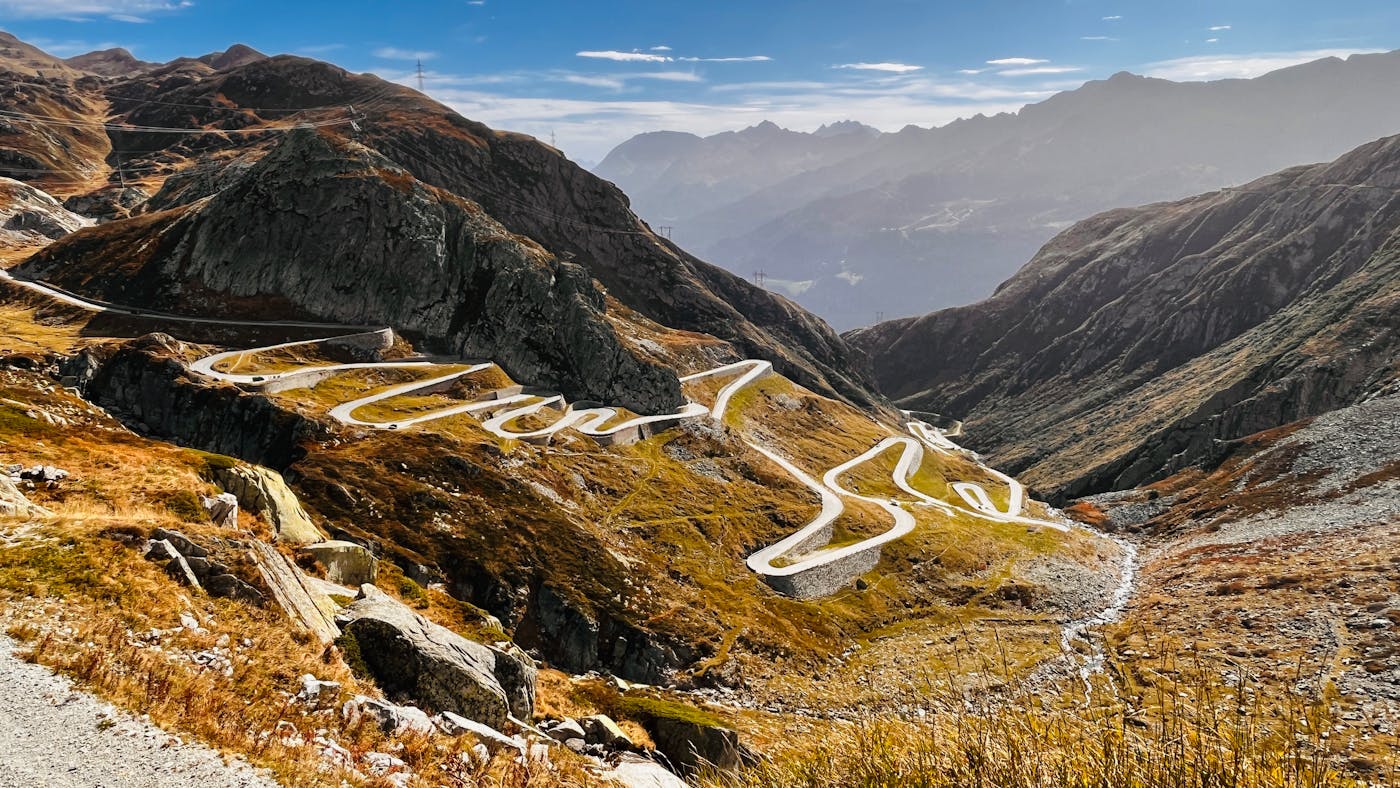
It’s no accident Europe’s most beautiful driving roads are often loops. A pass climbs and then descends, and whoever summits must eventually descend. The mountains practically write the circular tour themselves; you only need to follow their script.
There’s an old elegance in this. The journey that returns to its starting point has existed as long as travel itself: the Grand Tour of the eighteenth century was nothing more than a wide arc that brought you home changed yet exactly where you began. The car has simply lent speed to the form without erasing its meaning. A circular tour is Grand Touring in the truest sense-condensed into a long weekend.
The Rhythm of the Landscape
Anyone taking part in a circular tour for the first time is surprised to discover how slowly it can feel – and how little that has to do with the speedometer. On a single stage, the pace is constantly shifting: an open valley invites you to open the throttle, then the road narrows, a village intrudes, and suddenly you’re creeping past a fountain at walking speed. The machine beneath you is capable of so much more, yet it doesn’t need to prove anything. It breathes with the road.
That is the true art of grand touring, and it has nothing to do with deprivation. A car that can do a thousand things, yet on the right day is asked to do only one (to drive well), is a form of luxury no spec sheet can capture. The goal isn’t to extract the last drop of performance, but to coax out the best of what’s already there.
And the landscape rewards you for it. At two hundred kilometres an hour, you miss the valley floor. At sixty, you notice how the light filters through the poplars, how the asphalt darkens after a shower, how a lake appears beyond the next rise-one no one knew existed. Speed isn’t the opposite of pleasure, but confusing the two is just as mistaken.
A circular tour doesn’t measure how fast you arrive. It measures how well you travelled. And that’s a different discipline altogether.-On the culture of the Circle Tour
Driving as a Group
Driving alone has its own quiet beauty, and no one should belittle it. Yet the circular tour is, by nature, a communal ritual. Several cars, one day’s destination, a rough route, and in between plenty of room for each person’s quirks. One driver leads out front with a sporting edge, another hangs back and watches. At the pass everyone reconvenes, because a pass is, after all, the perfect place to meet.
What emerges is a strangely wordless intimacy. After three stages you may still not know everyone’s name, but you know their driving style: who brakes early, who turns in late, who hunts the clean line through the bend. It’s a language without words, spoken through steering wheel and pedals, and by evening, over dinner, it becomes real words-usually about the very corner that stuck in everyone’s memory.
The convoy has its own choreography. From a bird’s-eye view, a chain of paint and chrome winds through the switchbacks, each car a single breath behind the next, all moving as one. It looks like a single organism, and on good days it feels that way too.
There’s an unwritten etiquette that holds every good circular tour together. You let the faster driver pass without taking offence, and you wait for the slower one without rushing them. If someone does drop off the pace, they’ll find the group again at the next stop, because no one drives so far ahead that they arrive alone. This consideration isn’t a sacrifice of speed; it’s the condition that lets everyone enjoy theirs. A circular tour only works because no one experiences it alone.
Where the Loop Looks Most Beautiful
Some regions are practically made for the round trip. The Alps first and foremost: anyone who loops through Tyrol, Trentino or Swiss Graubünden strings together pass after pass, each with its own character-the one broad and sweeping, the other tight and concentrated. At Lake Garda, where the mountains give way to the northern Italian lake district, the route shifts within an hour from alpine austerity to southern openness. The Dolomites stage a day like no architect could design.
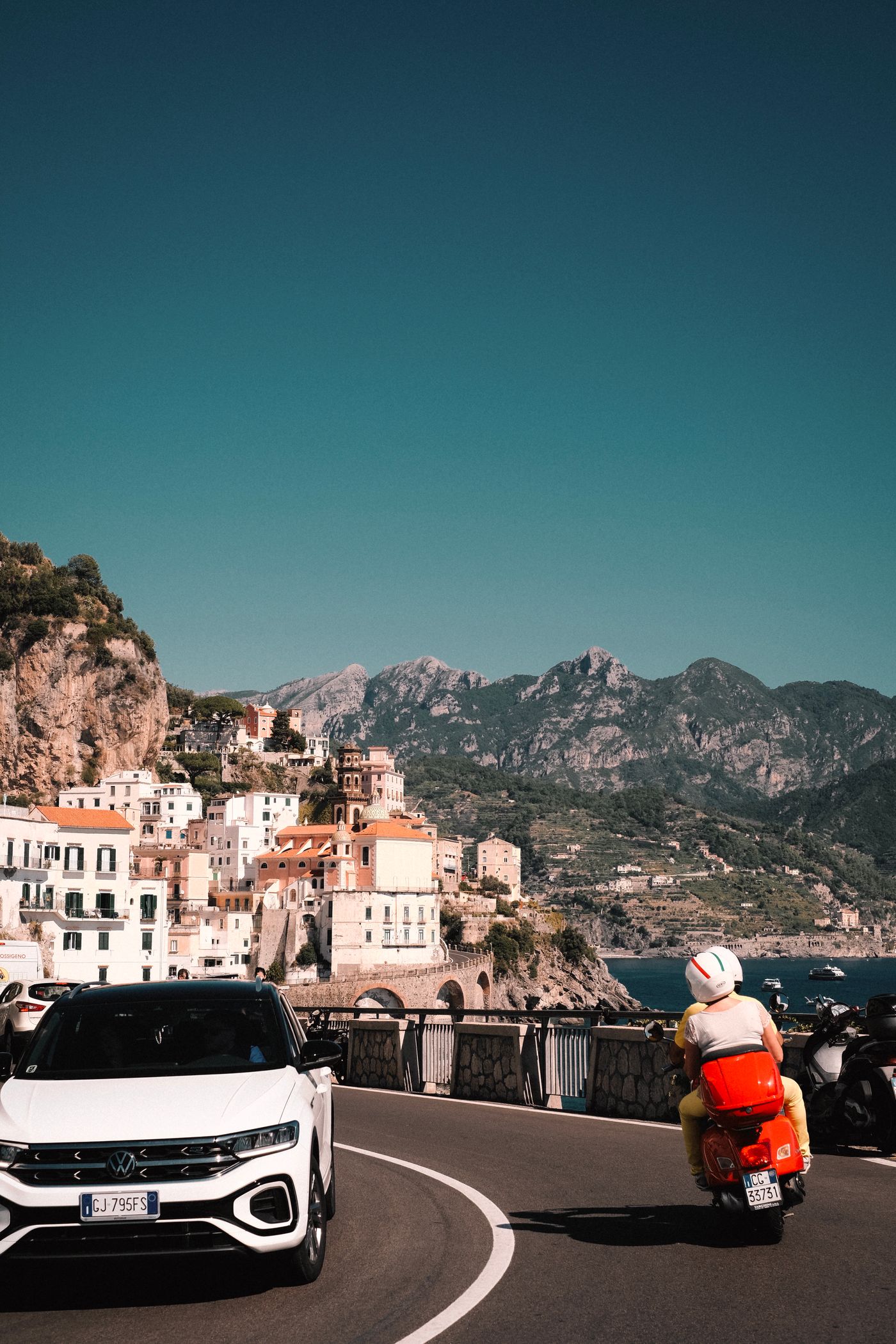
And then there’s the south, which almost invented the round trip. When you descend from the Maritime Alps to the Mediterranean coast, you eventually arrive on those coastal roads of the Côte d’Azur that have set the standard for what a driving route can be for a hundred years. A loop that begins in the hills of the hinterland, drops down to the water and returns via the high road has everything a circle tour needs – and, with a bit of luck, ends with a late lunch above the harbor. Anyone eager to take the idea further will find a dedicated piece on InspiredByLuxury under //Travel about Saint-Tropez and the Côte d’Azur that captures exactly this coast, where so many round trips enjoy their finest day.
What these regions share isn’t spectacle alone. It’s density. Within a small space, so many different roads crowd together that a single day feels like an entire journey. That’s what makes the round trip: a lot of world in very little distance.
Anatomy of a Round Trip
The Shapea closed arc over several days, start and finish in the same place. No point-to-point, no rush.
The Rhythmstages with pauses in between. Driving is done in a group; the landscape sets the pace.
The Routetwisting before it’s fast, passes before highways, views before shortcuts.
The Destinationno clock, no trophy. What remains are images and the people with whom you shared them.
What Remains at the End
On the final day, when the loop closes and the same hotel forecourt reappears, something is different from the morning of the first day. The cars are dustier, the conversations shorter, the gazes calmer. No one has won because there was nothing to win. And yet everyone returns richer than they set out.
That’s the paradox of the round trip: it brings you back exactly where you started, yet you are no longer the same. A good route changes the driver not by what stands at the end, but by what happens along the way. A pass summit backlit by the sun. A convoy that flows like a single animal into a bend. A dinner where everyone still talks about the same corner as if it were a mutual friend.
Perhaps this is the truest form driving knows. Not the arrow that only wants to arrive, but the circle that knows there’s nowhere more beautiful to be than here – and so stays nowhere, keeps turning one curve after another, until it catches itself again in the evening. Tomorrow the forecourt will sound different. And somewhere else, the next loop is already drawing its first line across the landscape.
The Details
Is the Circle Tour a specific event?
No, this article uses “Circle Tour” as a concept rather than a single branded event. There are many multi-day ride providers, but the loop described here refers to the principle itself: a closed circuit through a scenic region, ridden in stages and in company.
How does it differ from a normal ride-out?
Duration and form. A ride-out is usually a day and a destination. The loop spans several days and returns to the starting point: the journey is the whole, not the arrival.
Do you need a super-sports car?
No. Power is irrelevant; what counts is the feeling on long, winding roads. A well-tuned grand tourer with range and comfort often fits better than the latest hot hatch.
Which regions work best?
Anywhere dense with curves: the Alps and their passes, the lakes around Lake Garda in northern Italy, the hinterland of the Côte d’Azur. What matters is lots of road crammed into a small space.
❖
Source for cover image: Pexels / Kayser Yamin
Jakob Bach writes for InspiredByLuxury about driving as an attitude, about routes that are worth the miles, and about what unfolds along the way. This piece is a personal take, not an event announcement.
//Drive
More from //Drive
Cars you own instead of merely drive. Engineering, materials, and the things that last. Stay in //DRIVE.
To the section →

 //DRIVE