
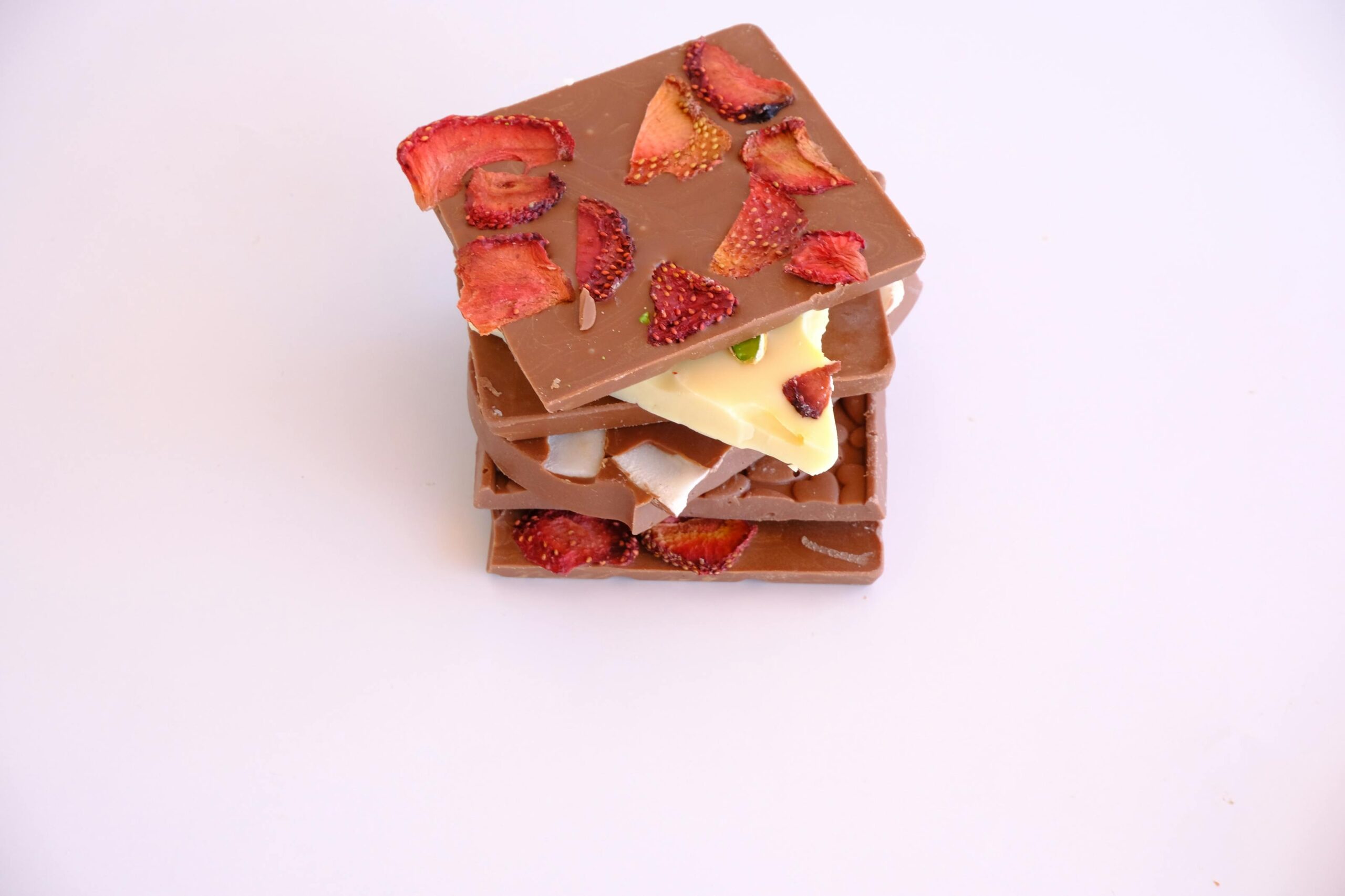
The biggest chocolate innovation in 80 years: “Ruby” chocolate
In 2017 Barry Callebaut announced the first new chocolate variety in 80 years: Ruby, naturally pink and berry-like, with no added dye. We reported on it at the time. Here’s what has become of it-and whether the fourth variety truly sparked a revolution.
Ruby arrived in 2017 as the first new chocolate variety in 80 years, naturally pink and berry-like, with no added colour or fruit. Eight years later it’s clear: the fourth variety has carved out a niche in every well-stocked confectioner’s, on KitKat shelves, and in patisseries. It wasn’t a true revolution, but something lovelier: a colour that no one had previously put on the menu.
- Ruby is the fourth chocolate variety after dark, milk and white, unveiled in 2017 by Swiss giant Barry Callebaut.
- The pink colour and berry notes come from the cocoa bean itself, not added berries or dyes.
- The first consumer product was a pink KitKat in Japan and South Korea in 2018; today Ruby is available in dozens of markets.
- In Germany you can find Ruby as bars and sticks at confectioner Heilemann, online, and in specialty shops.
- Whether Ruby is botanically its own variety remains contested: in the US it is still not officially classified as chocolate.
Until now we’ve known three chocolates: dark, milk and white. White chocolate arrived in 1936 when Nestlé sold the first bar in Switzerland. After that, the chocolate sky stayed quiet for a long time. Then, on 5 September 2017, Swiss manufacturer Barry Callebaut invited the press to an event in Shanghai and unveiled something unprecedented: a chocolate that is naturally pink. Ruby.
Where does the pink come from if there are no berries?
That’s the question everyone asks, and the answer is more surprising than any marketing story. The colour and fruity flavour come from the cocoa bean itself. Barry Callebaut calls it the Ruby cocoa bean, grown in classic growing regions such as Ecuador, Brazil and the Ivory Coast. It’s not a separate plant, but a selection of specific beans with the right characteristics.
The secret lies in the processing. Industry insiders have deduced from patent filings that the beans are barely or not at all fermented and treated with citric acid. The colour pigments present in every unfermented cocoa bean react to the acidity and shift from violet to pink-red. No dye, no strawberry, no raspberry powder. The acid is also the reason for the slightly tart note reminiscent of yoghurt or red berries that makes Ruby so distinctive.
Ruby is not tinted white chocolate. The colour and the flavour are already in the bean; the process simply brings them out.
This point has been controversial from the start. Critics call Ruby a clever marketing construct because a patented process makes the colour visible in the first place. Advocates counter that nothing is added that wasn’t already in the bean. Both sides are right, depending on how strictly you define naturalness. Either way, the flavour remains exciting.
What does Ruby actually taste like?
Fresh-almost refreshing, something you rarely say about chocolate. Ruby is noticeably more acidic than whole-milk chocolate and tastes of red berries without any berry ever having been involved. On the tongue it melts delicately like white chocolate, yet finishes tart and fruity. If you like raspberry and white chocolate, you’ll like Ruby. If you love bold dark chocolate, you may find it too mild.
The initial hype has settled into everyday life, and that’s the best news. Ruby hasn’t remained a showpiece; it has earned its place. Pastry chefs use the colour for cakes and pralines where artificial hues would otherwise be needed. The first major consumer launch came in 2018 when Nestlé introduced a pink KitKat first in Japan and South Korea, shortly afterwards in the UK and Australia. Today Ruby is available in dozens of markets.
Where can you get Ruby in Germany?
Even here you don’t have to look far. Confiserie Heilemann sells Ruby as thin tablets and in stick form, available through its own shop and retailers such as Viba. Many chocolatiers also work Ruby into pralines, often seasonally. If you want the pure experience, pick up a tablet and let it melt slowly instead of biting into it-this is when the berry note shines best.
One detail many don’t know: in the USA Ruby still isn’t allowed to be called chocolate without further ado. The FDA has granted Barry Callebaut only a temporary marketing permit because Ruby doesn’t fit any existing definition of chocolate. In Europe that’s a non-issue; here the bar already sits naturally on the shelf. A small reminder that even a pretty colour can be a regulatory political football.
Eight years after its debut in Shanghai, a sober balance can be drawn: Ruby hasn’t upended the chocolate world, but it has enriched it. It’s the rare variety you buy because it looks different and keep because it tastes different. That’s more than most new products can claim.
If you’re suddenly craving more: anyone interested in the power of colour on the plate will enjoy our Eat the Rainbow. And if you want to style Ruby yourself, borrow ideas from our sweet baking recipes.
Good to Know
▸Does Ruby chocolate really contain no berries?
No. The pink hue and berry-like taste come from the Ruby cocoa bean itself. No berries, fruit powder or colourants are added. The secret is processing barely fermented beans so that citric acid shifts the natural pigments to a pinkish-red.
▸Who invented Ruby chocolate?
The Swiss giant Barry Callebaut, one of the world’s largest chocolate manufacturers. Ruby was unveiled on 5 September 2017 at an event in Shanghai, roughly 80 years after white chocolate first appeared.
▸What does Ruby chocolate taste like?
Fruity and lightly tart, with hints of red berries, yet as delicately melting as white chocolate. Many find it refreshingly different compared with milk or dark. Let it melt slowly on your tongue for the best experience.
▸Where can I buy Ruby chocolate in Germany?
Among other places, from Confiserie Heilemann as bars or sticks via their online shop, and retailers like Viba. Many chocolatiers also offer Ruby-filled pralines, often on a seasonal basis.


