

Concrete you can touch
For years raw concrete was dismissed as cold and unwelcoming. Today people collect, inhabit and covet these very surfaces. A look at why formwork seams suddenly feel sensual.
It starts with a wall nobody smoothed. No plaster, no paint, just the imprint of the wooden boards into which the concrete was once poured. In the past such a thing was called unfinished. Today you stand in front of it and run your hand over the pores because this stone tells a story no lacquered surface ever could.
- The term traces back to Le Corbusier’s “béton brut,” popularised by critic Reyner Banham
- London’s Barbican shows how much handwork hides inside a seemingly raw surface
- The book “Brutalist Interiors” (Blue Crow Media) turns living in concrete into a collector’s item
- Under the label “Soft Brutalism,” the mass of concrete is now moving into warm interiors
From insult to catch-all label
Misunderstanding is baked right into the word. Brutalism sounds like violence, yet it stems from “béton brut,” raw concrete, exactly as Le Corbusier named it. British critic Reyner Banham made the term mainstream in the 1950s. Tate places the style squarely in the 1950s and 1960s: block-like shapes, exposed structure, materials left in their found state. In London the most visible monuments to this idea stand openly, the Hayward Gallery and the National Theatre.
What makes the shift fascinating is the mood swing. For decades exposed concrete stood for social housing, neglect and grey weather stains. Now the verdict is flipping. One reason is the backlash against digital overload. When everything is filtered, smoothed and optimised, a surface with flaws feels refreshingly honest. The 2024 film “The Brutalist” helped drag the style from academic debate into pop culture. Suddenly raw-concrete walls appear on interior mood boards where marble and brass ruled just a few years ago. What once felt like an affront is now read as character. Skepticism hasn’t vanished, thankfully, because a material you have to learn to appreciate lasts longer than one that wants to please you straight away.
The Barbican and the art of the raw skin
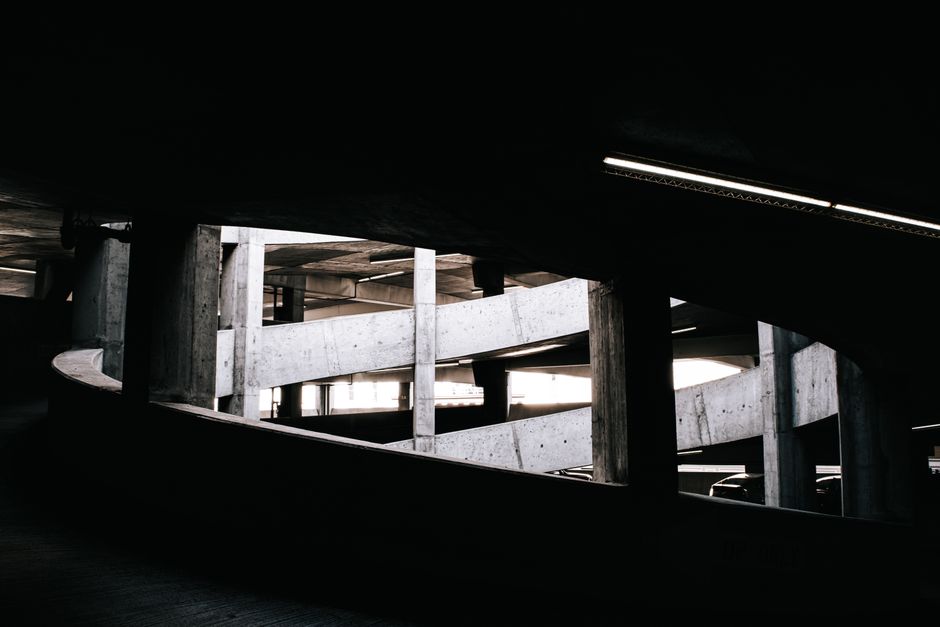
To grasp why concrete can feel sensual, head to the Barbican Estate. Historic England counts more than 2,000 flats and 4,000 residents across the City of London complex. Yet the raw look is anything but accidental. Concrete columns were cast in ring sections and then hand-tooled with bush hammers until the joints vanished and a uniform texture emerged. It’s the opposite of what luxury usually promises: not mirror polish, but controlled roughness as a sign of care.
This is the point most concrete critics miss. The surface is not random; it is craft. Someone decided the building’s skin should stay rough. Someone else made that happen with a hammer. The Queen opened the Barbican Centre in 1982; the housing estate was finished back in 1974. Half a century later the estate is no memorial, it’s a sought-after address. Banham spelled out three principles early on: the pictorial quality of a building, the clear display of its structure, and the value of materials in the state in which they are found. You can feel all three when you place your hand on one of the tooled columns and trace the tool marks.
Living in raw concrete as a collector’s item
That this aesthetic has long since arrived in the living room is shown by a book. “Brutalist Interiors,” published by Blue Crow Media under editor Derek Lamberton, brings together seven essays and more than 100 photographs and made the Financial Times’ list of the best art and architecture books of 2025. It demonstrates that raw concrete need not be merely a façade, but can become a living interior.
The concrete is wall, ceiling and character all at once. Those who live within it do not set themselves against the space, but with it.
One example from the volume is Moshe Safdie’s Habitat 67 in Montreal, a residential complex of 354 prefabricated concrete cubes. From the outside it resembles a child’s stacked toy, yet inside it feels like a habitable manifesto. The appeal lies in the fact that no one here tried to hide the material. The concrete is wall, ceiling and character all at once. Those who live within it do not set themselves against the space, but with it.
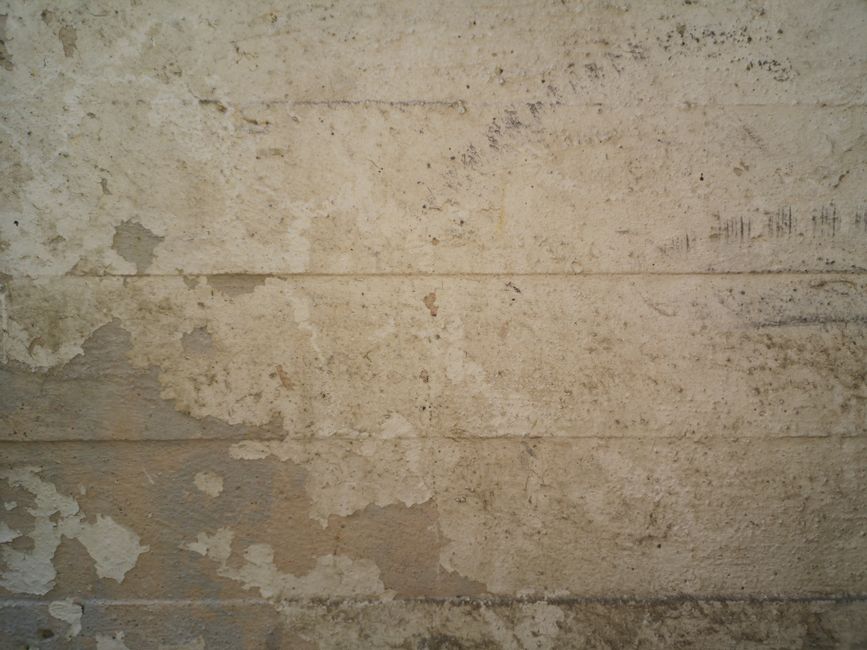
The book even ventures into the most intimate corners of a home. It describes, for instance, a shower stall of board-marked concrete whose walls carry the grain of the formwork boards, so that the skin meets a surface that feels more like grown wood than a cold stage set. That is the moment when raw concrete stops being a statement. It becomes a material to touch. The formwork scar is no longer a flaw, but a tactile trace of its making.
Soft Brutalism: how the mass warms up
The real trend now goes by the name “Soft Brutalism.” The idea behind it is described by tile manufacturer FAP Ceramiche for this year’s interior-design season as follows: concrete feels velvety instead of cold, stone stays porous, metal turns matte and patinated. Raw concrete and steel meet wood, copper and glass, set against a palette of white, beige, taupe and ecru. Monumentality remains, but harshness recedes.
That is the decisive trick that makes concrete livable without betraying it. The goal is not to soften the material until it looks like something else. The goal is to use its mass as an anchor of calm and surround it with enough warm materials so that a space emerges in which one wants to linger. Anyone who has stood inside a well-executed concrete interior knows that cool, matte presence that soothes the whole body.
Why patina makes all the difference
In the end, it is the surface that decides. Freshly poured concrete can feel cold, but aged concrete tells a story. Rain, light and time leave their marks. It is precisely these traces that collectors and residents seek today. The Barbican Conservatory, London’s second-largest of its kind, opened in 1984 behind its concrete shell and houses more than 1,500 plant species. Humid air, leafy green and raw stone are no contradiction, but a symbiotic whole.
The installation remains in motion. In 2026 the City of London Corporation approved the first phase of a refurbishment program with a budget of £231 million; construction is slated to begin in 2027. Raw concrete therefore does not age in silence, it is cared for, reinforced and passed on. Perhaps that is the true luxury of this aesthetic: it asks for no perfection, it rewards care.
Quick Clarification
▸Where does the term Brutalism come from?
It derives from Le Corbusier’s “béton brut”, raw concrete, and was popularised by critic Reyner Banham in the 1950s. The word has nothing to do with violence or brutality, despite how it sounds.
▸Why is exposed concrete attractive again today?
In an age of filtered, smoothed images, surfaces with visible texture feel honest. Added to that is the realisation that a well-crafted concrete finish is often true craftsmanship, as seen in the hand-worked columns of London’s Barbican.
▸What is Soft Brutalism?
The interior-design term describes spaces where concrete’s mass and monumentality remain, yet its harshness is softened by warm materials such as wood, copper and muted colour palettes. Concrete becomes liveable without losing its presence.
Image credits: Cover image Kaan Keskin; contribution images KEHN HERMANO and Jan-Roger Antonsen (Pexels).
Sources and further reading: Tate, Historic England, Barbican and the illustrated book “Brutalist Interiors” (Blue Crow Media).


