
Plastic Straws Are a Thing of the Past: We Show You the Best Alternatives
How every household can take a small step toward a greener future right now is demonstrated by the alternatives to plastic straws.
In 2019, we reported on alternatives to plastic straws as the debate around single-use plastics became highly visible. What has become of it? A cocktail doesn’t need a plastic straw, but every alternative deserves an honest look: stainless steel is elegant, bamboo is natural, paper is pretty, and edible straws are charming.
- Plastic straws are single-use plastics that end up in the trash after brief use.
- Stainless steel straws look elegant, are reusable, and easy to clean.
- Bamboo is a rapidly renewable resource but harder to keep clean.
- Paper straws look nice but involve manufacturing effort and chemical use.
- Edible straws made from cornstarch can complement the drink but remain more of a detail for special occasions.
The Little Straw Tells a Bigger Story
A straw is a tiny object. Precisely because of this, it serves as such an effective symbol. It sits in cocktails, Hugo sippers, and iced coffee, used for just a few minutes before disappearing into the trash. The original article classified it as single-use plastic, alongside disposable drinking cups. That was the right perspective: The individual straw isn’t the entire problem; rather, it’s the taken-for-granted nature of disposal that long became a ritual.
At the time, politics also responded with proposals to curb the flood of plastics. However, the text didn’t want to wait for regulations to take effect. Instead, it asked what every household could do immediately. This remains the stronger stance. Sustainability isn’t just a big decision for later, but often a small one on the table right now: What do I place next to the glass when guests arrive?
Crucially, this means not automatically romanticizing every alternative. A good substitute must fit daily life. If something ends up looking sad in a drawer after a single use, little has been gained. If it looks good, feels pleasant in the mouth, and is easy to clean, it stands a chance. Luxury in the IBL sense here doesn’t mean expensive. It means: consciously chosen.
The better straw isn’t the one that looks the most sustainable at first glance. It’s the one you actually reuse.
Stainless Steel Is the Cleanest Gesture by the Glass
In the original text, the stainless steel straw was the elegant option. That holds true. It gives a drink a clear line, doesn’t look like a children’s birthday party, and fits a bar just as well as a quiet terrace. Its smooth surface makes it easy to clean and reuse. This is precisely its advantage: It isn’t a compromise that looks like deprivation.
This is especially important with cocktails. No one wants a beautiful drink to suddenly feel preachy. Stainless steel does the opposite. It enhances the glass visually and, depending on shape and color, can even be the small detail that sticks in your mind. The fact that various colors and shapes are available now only shows how quickly an ecological alternative can become a design object.
However, this only applies if cleaning is considered from the start. Reusable isn’t the same as automatically practical. Stainless steel works only if the straws don’t end up lying around somewhere after the party, but are rinsed clean and put away again. So, it’s less a question of material than of attitude: Those who want to reuse things must give them a place.
Bamboo, Paper, and Edible Straws Have Their Own Tone
Bamboo brings a different mood. The natural material appears warmer and less urban than stainless steel. The old text described bamboo as antibacterial, biodegradable, and already widespread in many sustainable products as a fast-growing raw material. Its look fits this description: somewhat irregular, natural, closer to a picnic than to a hotel bar.
At the same time, bamboo has a weakness. You can’t clean the straw as effectively. For this reason, it belongs more in situations where the natural impression matters more than perfect long-term practice. It’s nice that it can end up on the compost heap at the end. But here too, the rule applies: Just because something looks natural doesn’t automatically make it the best choice for every evening.
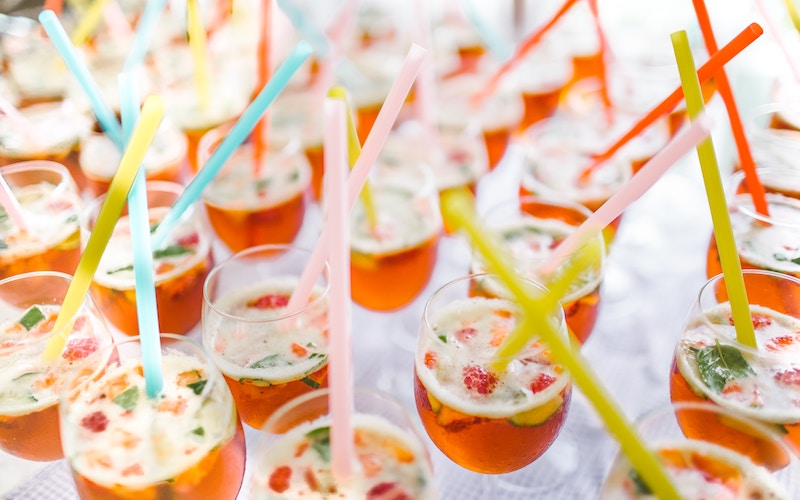
Paper straws were the prettiest option, according to the old article. Colorful patterns, light atmosphere, quickly bought at a home goods store or party shop. Yet production can involve high resource consumption and chemicals. So paper is primarily an aesthetic solution for one evening, not necessarily the cleanest answer to every problem.
Edible straws made from cornstarch are finally the charming special case. Various flavors can complement cold drinks. This sounds playful and can work if the drink isn’t meant to be taken too seriously. For an elegant bar, stainless steel remains stronger. For a summer party, an edible straw can be the small conversation starter by the glass.
The best solution fits the occasion
For a home bar, stainless steel is probably the most sensible choice. For a garden party, paper can look nice, as long as you remember that nice doesn’t automatically mean better. For a natural picnic, bamboo feels more appropriate. For a playful drink, an edible straw made from cornstarch might work. The old article was strong because it didn’t blindly crown one alternative as the winner.
This kind of careful consideration is what matters. Sustainable everyday life rarely comes from a single perfect product. It emerges when we consume less carelessly and pay closer attention to small things. The straw is a great example. It’s small enough to replace immediately, yet visible enough to spark conversations. In the end, that might be its greatest value.
The bar doesn’t become any less beautiful
Some sustainable alternatives fail because they look like a chore. With straws, that doesn’t have to happen. A stainless steel straw can make a drink look cleaner, bamboo brings warmth to the table, paper can take on color, and an edible straw plays with the beverage. These are aesthetic choices, not declarations of sacrifice.
That’s exactly why this topic fits well in a lifestyle magazine. It’s not about ruining the fun of cocktails. It’s about solving a small habit in a cleaner way. Starting with your glass won’t save the world alone. But it shows that style and responsibility can sit at the same table.
Good to Know
▸Which alternative looks the most elegant?
Stainless steel. It looks clean in the glass, is reusable, and its smooth surface makes it easy to clean.
▸Is bamboo always the better choice?
Not necessarily. Bamboo is natural and biodegradable, but harder to clean. It suits certain occasions, but as a permanent solution, it requires care.
▸Are paper straws sustainable?
They avoid plastic, but come with their own drawbacks. The old article mentions high resource use and chemicals involved in producing colored straws.


