
Tips for Perfect Smartphone Photos
The first rays of sun are breaking through the ice again, heralding spring. The perfect time to gather content for your Instagram account.
In 2019, we reported on taking better photos with smartphones, back then with a strong focus on Instagram and a springtime vibe. What has become of it? The technology has improved, but the core truth remains unchanged: It’s not just the camera that makes the photo, but your eye for light, subject, and distance.
- Light remains the most important factor, especially with smartphone cameras.
- A calm composition is more impactful than an overloaded image.
- Zooming degrades quality; moving closer is almost always better.
- A clean lens, two hands, and maximum resolution make an immediate difference.
Look first, then shoot
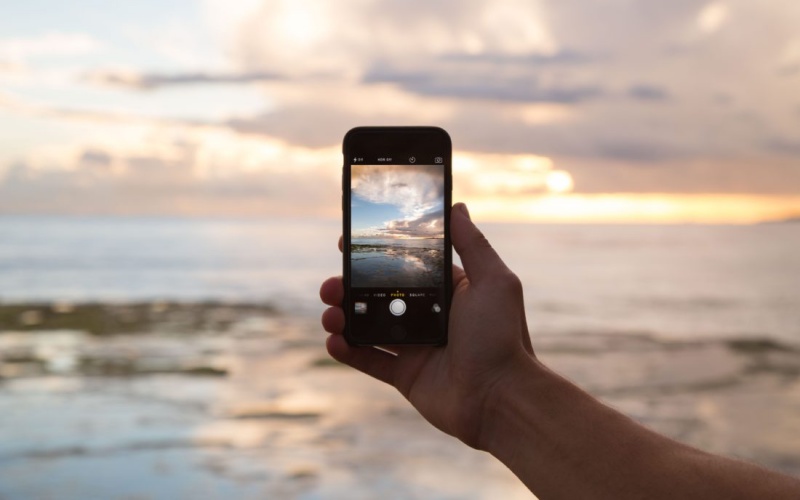
The original article began with the first sunbeams after winter. The image still fits perfectly. As soon as the light softens, we want to go out, photograph landscapes, take portraits, and capture small moments. But often the same thing happens: The smartphone is drawn quickly, the shutter pressed even faster, and in the end, the image looks flatter than the moment itself.
The most important improvement rarely lies in an app. It lies in pausing. Even modern cameras with many features need someone who selects the subject, perspective, and mood. The photographer is not an accessory but part of the image. Once you accept this, you immediately photograph differently. You are no longer just looking for the object, but for the relationship between light, background, and proximity.
This sounds grander than it is. It is enough to walk around the subject once before pressing the shutter. From the front, a scene may look normal; from the side, it gains depth. At eye level, intimacy emerges; from above, it becomes more graphic. Smartphone photography is not the little sister of photography. It is more direct, faster, and ruthlessly honest: What you do not consciously see, no filter will save later.
The best smartphone photo is not taken by swiping through filters. It is created in the moment you take a step closer.
Light is not an extra; light is the image
The original text was clear: The right light is everything. On cloudy days or in dark rooms, it becomes harder for smartphones to capture moods cleanly. But that does not mean you have to wait for the perfect sunset. You can seek out existing light or work with simple sources.
LED light panels were mentioned back then as aids. These included string lights, candles, light bulbs, and colored light. The point is not to recreate a studio. The point is to give your subject direction. A face directly under a ceiling lamp rarely looks good. Side light can reveal contours. A candle makes a glass more interesting. String lights in the background provide depth without being loud.
It is important that light is not treated as decoration. It decides what is important in the image. If everything is equally bright, nothing stands out. If you consciously allow shadows, the photo gains posture. This way of thinking is particularly worthwhile for smartphones because the camera compensates for much automatically. So you must give it a subject clear enough not to be smoothed over.
Composition is the art of omission
The simpler the image composition, the more pleasant it becomes for the viewer. The old text said it more directly: Do not overload your image. The focus should lie on your subject, not be crushed by countless impressions. That is a good sentence because it hits the most common mistake.
A good smartphone photo does not need five interesting things. One is enough if it is positioned correctly. The background may play along but should not shout. A quiet section of wall, a piece of sky, a table edge, or a shadow can achieve more than a cluttered room. Especially in portraits, eye level makes a difference because it gives the subject dignity. You do not photograph someone from above but encounter them.
One more point remains important: Move instead of zooming. Digital zoom only enlarges a crop and costs quality. When you get closer, you change not only the sharpness but also your relationship to the subject. You become more selective. You see details. The photo looks less accidental. Exactly there begins the difference between snapping and photographing.
The small grips are not small
In conclusion, the old article named three grips with great effect: Clean the lens, photograph with two hands, and set the resolution or image quality to maximum. This sounds banal, but these things save more photos than any post-processing.
A smudged lens makes every light milky. Two hands prevent minor shakes, especially in low light. And the highest image quality gives you more leeway if you want to crop later. These are not glamorous tips. Precisely because they are not, they work. Good photos often result from unspectacular discipline.
Editing begins before the shot
Many smartphone photos fail not due to a lack of post-processing, but due to a lack of decision-making before the shot. What should be important in the image? What can disappear? Which line guides the eye? The old article formulated this through subject, perspective, and focus. Today, one would say it more concisely: If the photo has no idea at the moment of capture, it will only be polished later, not improved.
This makes smartphone photography pleasantly democratic. You don’t need a large setup to photograph more consciously. A step to the left, a lower angle, a calm background, a window as a light source, a cleaned lens. These are small gestures, but they change the result immediately. Those who internalize them don’t just photograph more often. They also look more closely.
A good image doesn’t need a loud stage
Landscapes and portraits especially benefit when you give them breathing room. An empty sky, a quiet wall, or a simple path in the background can give the subject more power than a crowded location. The smartphone mercilessly shows everything you hold up to it. That’s why leaving things out is worth it.
This counts for sharing too. A photo that is immediately readable sticks stronger than one that fights for attention. The old Instagram mindset from the original seems almost secondary today. The better benchmark is simpler: Would you keep this image even if no one saw it? If yes, the perspective was probably right.
Quick Answers
▸Should I zoom with my smartphone?
Not really, if you can avoid it. Move closer to your subject, because digital zoom costs image quality and makes details look muddy faster.
▸What lighting suits smartphone photos?
Soft, side lighting is often more forgiving than harsh overhead lights. Candles, fairy lights, bulbs, or an LED panel can create mood, as long as the subject remains clear.
▸What improves my photos immediately?
Clean the lens, hold the smartphone with two hands, and check if the camera is set to high resolution. Only then comes the creative work with perspective and background.


