
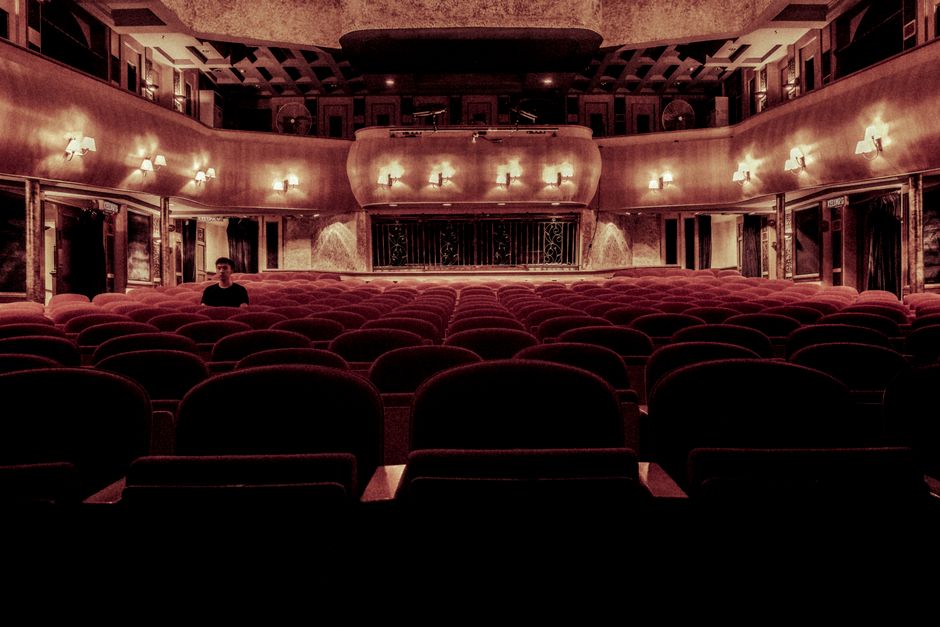
Five stages worth the journey
From Manaus to Milan: a curated route through opera houses that remain an experience even when the curtain stays down. About venues that define entire cities.
There are opera houses you visit for a single performance. And then there are houses for which you travel, no matter what’s on the bill. The space itself is the event, the architecture the true lead role. Five of them lie as far apart as the Amazon and the heart of Milan. Yet they share one idea: that a hall can be more than a place where music happens.
- The Teatro Amazonas in Manaus brought European operatic splendor deep into the rainforest
- The Sydney Opera House wears more than one million Swedish tiles on its shells
- The Opéra Garnier blends Second-Empire opulence with Marc Chagall’s ceiling frescoes
- The Vienna State Opera and La Scala in Milan round off a route that has shaped cities
Manaus: Opera in the Rainforest
The most improbable stop first. The Teatro Amazonas stands in Manaus, deep in the Brazilian rainforest. It opened in 1896 with Ponchielli’s “La Gioconda.” A stone monument to the rubber boom, when a jungle metropolis earned so much money it ordered European operatic grandeur. The dome is clad in roughly 36,000 colored faience tiles from Alsace, a visible testament to the global supply chains of the era.
The magic lies in the contrast. Outside, the Amazon’s humid heat; inside, Carrara marble and imported chandeliers. In the park in front, rubber cobblestones echo the wealth that financed the whole project. Travellers don’t come here just for the music. They come to see how far the desire for culture can carry a place. The dome’s tiles, fired in Europe and shipped across the Atlantic, tell of a time when money and ambition dragged an entire opera through the jungle. No wonder the house remains one of the most idiosyncratic opera projects on Earth.
Sydney: A Sculpture on the Water
No building has defined a city like the Sydney Opera House. Opened at Bennelong Point in 1973 and a UNESCO World Heritage Site since 2007, it is less a building than a landmark you spot from an airplane. Its sweeping shells are its signature. Their secret is in the surface.
The roof consists of 1,056,006 prefabricated Swedish ceramic tiles in two tones, glossy white and matte cream. They sit on fourteen segments of the famous shells and give the structure a different face with every shift in weather. When it rains, water cascades over more than a million tiles; from the shore, the sound of ferries mixes with the building itself. The house proves that a single silhouette can become the calling card of an entire nation. The path there, however, was anything but straight. The shell construction was long considered a near-unsolvable geometric puzzle until a surprisingly simple idea saved the shape. Today the result feels so inevitable you’d think there had never been another possibility.
Paris: Grandeur before the Curtain Rises
The Opéra Garnier in Paris proves that the journey to your seat can be part of the performance. The grand auditorium opened in 1875 with a gala performance. Even the foyer, with its sweeping marble staircase, is a spectacle in itself. The building stands as an architectural monument of the Second Empire and remains a stage for the Paris Opera to this day.

The real surprise hangs from the ceiling. The ceiling frescoes in the auditorium date not from the 19th century, but from Marc Chagall, unveiled in 1964. They cover around 220 square meters. It’s a rare interplay: the heavy, gilded architecture of the Second Empire and above it, the floating, colorful modernity of one of the 20th century’s great painters. Tilt your head back, and you see two eras at once.
It’s this very mix that sets Paris apart from the other houses on the route. Elsewhere, the opulence is seamless; here, old and new rub shoulders. Both gain from the encounter. You come for the opera and stay for the ceiling. Sometimes, it’s the other way around.
The space itself is the event, the architecture the true leading role.
Vienna and Milan: The Benchmark Stages
Two venues close the European leg of the route. The Vienna State Opera on the Ring opened in 1869 with “Don Giovanni” and was reopened in 1955 after World War II. It is the Central European benchmark, a house whose name alone conjures an entire musical ecosystem. After wartime destruction, the State Opera was painstakingly rebuilt, a signal that the city could not do without its most vital musical institution. Today, stepping beneath the Ring is to enter a restored sense of normalcy.
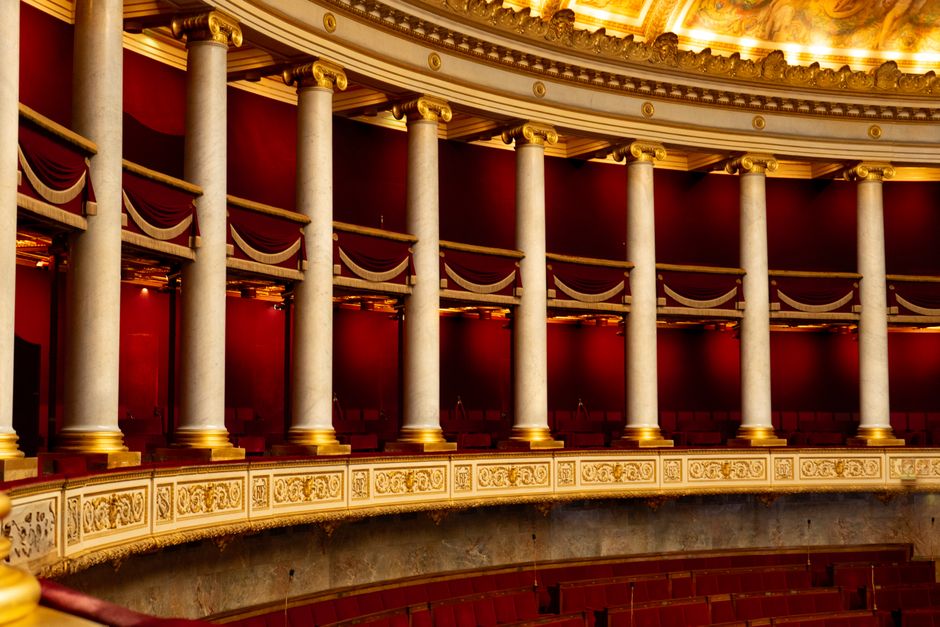
The Teatro alla Scala in Milan is the most intimate of the five venues. Inaugurated in 1778 with Salieri’s “L’Europa riconosciuta,” it takes its name from the former church Santa Maria alla Scala whose site it occupies. After its most recent major renovation, the auditorium seats roughly 1,987 patrons, modest capacity for one of the world’s most influential opera stages. From the stalls, the stage feels disarmingly close, almost like a private living room of operatic history. Crimson velvet boxes and gilded stucco frames form a tight, luminous cylinder where every gesture onstage resonates instantly. Anyone who has watched from up here understands why singers both fear and adore La Scala.
What Holds the Route Together
Five houses, five answers to the same question: what makes a hall worth the pilgrimage? In Manaus, it’s audacity; in Sydney, it’s form; in Paris, it’s the journey there; in Vienna, it’s tradition; in Milan, it’s intimacy. Not one of these venues needs an explanation once you’re inside. They speak for themselves, through material, proportion, and the history embedded in their walls.
For planning purposes, a clear-eyed approach helps. Databases like Operabase list worldwide schedules, artists, and venues, letting you align travel windows and performance seasons across all five stops before departure. Though these stages differ wildly, they share one trait: once you’ve sat in one, you grasp why some travelers circle the globe just to gaze at a ceiling. This route isn’t a checklist; it’s an invitation. You don’t need to visit all five to grasp the point. Yet anyone who sees two or three will carry away a different understanding of what architecture can do to an audience. It can intimidate; it can enfold. On the best nights, it does both at once.
Quick Clarification
▸Why is a magnificent opera house located in the middle of the Amazon?
The Teatro Amazonas in Manaus was built during the late-19th-century rubber boom. The region’s sudden wealth made it possible to bring European operatic splendor to the rainforest, complete with marble from Carrara and tiles from Alsace.
▸What makes the roof of the Sydney Opera House so special?
The sweeping shells are clad in 1,056,006 pre-fabricated Swedish ceramic tiles in glossy white and matte cream. This combination makes the structure appear different depending on the light and weather.
▸Who painted the ceiling frescoes of the Opéra Garnier?
The colorful ceiling frescoes in the auditorium were created by Marc Chagall and unveiled in 1964. They cover roughly 220 square meters and deliberately contrast with the gilded Second-Empire architecture below.
Image credits: Cover image Donald Tong; article images Masood Aslami and Eyden Lascombes dhotel (Pexels).
Sources and further reading: Teatro Amazonas, Sydney Opera House, Opéra de Paris, Wiener Staatsoper and Teatro alla Scala.


